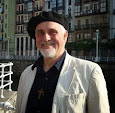
Inter-faith Wales and the Community Development Foundation arranged a meeting today for those in receipt of CDF funding, bringing people together from West and North Wales. It was held at the officers of Women Connect First, a local cross cultural womens' empowerment and education organisation, led by a dynamic Egyptian woman called Soad Hamdi.
There wasn't a great deal that was new in the meeting content, but it was good to hear what a different group of grant recipients are up to. Most memorable was a woman from Penllergaer called Pam Evans who founded an organisation to educate young people about religious and racial tolerance, focussing around the wearing of a simple multi-coloured bead bracelet, representing fourteen different world religions with a common essential teaching and message about peace. The bracelet is called a Peace Mala. Their website is worth looking at.
One thing that annoyed me however was that speakers wanted to use a laptop and projector for presentations, but full mastery of the technology was absent, so the wall used for a screen behind the speaker flashed distractingly with images that didn't connect with what was being said. Totally pointless.
It's wonderful to meet people who are passionate about reconciliation and diversity, who see these things as real good news, and constantly look outwards to engage with others. So much more cheering than people who struggle to remain stuck in their chosen rut.
I had to slip out of the meeting and pedal in the rain over from Riverside to St John's to offer the midday Eucharist, and then return for the rest of the session. I should really have peddled in the opposite direction, over to Roath for the Deanery Chapter meeting following lunch, but sad to say it was in my diary but not in my field of vision. More often than not I come away from our official gatherings with fellow clergy feeling frustrated and depressed. But there was enough at the other meeting to draw me back to it, laptops notwithstanding.
Wednesday, November 28, 2007


Saturday, November 24, 2007
Time warp
Today, another Match Day, the weather not being good enough for a decent walk, we ventured out to Nelson to visit Llancaiach Manor, a sixteenth century dwelling, which I recall as a shabby old farm house, growing up, and going hiking in that area as a young Boy Scout in the fifties. Since then it has changed hands, and is no longer owned by a farmer. It has been well restored as an historic visitor attraction by Rhymney Valley District Council, and is open to the public.
It's an impressive venture, and the place is well used, with a varied programme of activities, some of which exploit its reputation as one of Britain's Most Haunted houses. Apart from its posh tourist shop and its scenic modern restaurant, it has an excellent visitor interpretation programme. The place, after renovation was restored to represent the house as it appeared in 1645 equipped with period artifacts.
The tour guides are in the period costumes of household servants and speak in period English. You are invited to imagine that you are invited to the house of Colonel Thomas Pritchard, Lord of the Manor, and at that time co-incidentally governor of Cardiff Castle. The Colonel and his family are away from Llancaiach, but the servants welcome visitors and show them around, telling the story of life in their times as they go, in fascinating detail.
Pritchard was a Puritan and prominent local Baptist, initially loyal to the king, then to Parliament, eventually taking a more independent stance seeking to shield Glamorganshire and the neighbouring counties from being sucked into the Civil War - was his armed militia a kind of prototype Free Wales Army, I wondered?
It was good to see such creative imagination being applied to bringing an historic monument to life for the modern age. It reminded me of 'Brother' Thomas, the Cistercian costumed guide to Tintern Abbey, seen during our Parish Pilgrimage back in the summer.
Will there come I time, I wonder, when St John's visitors will be shown around by a role-playing guide emulating the last generation of active believers to have served God in the heart of a totally secularised city?
It's an impressive venture, and the place is well used, with a varied programme of activities, some of which exploit its reputation as one of Britain's Most Haunted houses. Apart from its posh tourist shop and its scenic modern restaurant, it has an excellent visitor interpretation programme. The place, after renovation was restored to represent the house as it appeared in 1645 equipped with period artifacts.
The tour guides are in the period costumes of household servants and speak in period English. You are invited to imagine that you are invited to the house of Colonel Thomas Pritchard, Lord of the Manor, and at that time co-incidentally governor of Cardiff Castle. The Colonel and his family are away from Llancaiach, but the servants welcome visitors and show them around, telling the story of life in their times as they go, in fascinating detail.
Pritchard was a Puritan and prominent local Baptist, initially loyal to the king, then to Parliament, eventually taking a more independent stance seeking to shield Glamorganshire and the neighbouring counties from being sucked into the Civil War - was his armed militia a kind of prototype Free Wales Army, I wondered?
It was good to see such creative imagination being applied to bringing an historic monument to life for the modern age. It reminded me of 'Brother' Thomas, the Cistercian costumed guide to Tintern Abbey, seen during our Parish Pilgrimage back in the summer.
Will there come I time, I wonder, when St John's visitors will be shown around by a role-playing guide emulating the last generation of active believers to have served God in the heart of a totally secularised city?
Friday, November 23, 2007
On reflection
Strange to find myself doing battle against the sale of alcohol. I've enjoyed buying and drinking wine most of my adult life, and appreciated the growing variety of choice from all over the world. Now I find myself wanting to challenge the complacency that seems to surround the habitual debauchery which is damaging the health of young and old alike, leading to increased crime and disorder, and generating a great deal of damage to family and social life.
The controls that local Police implement have resulted in a some improvement in public order over the past two years, but with no real change in personal behaviour. Excessive consumption of alcohol by the masses, like 'bread and circuses' is a sign of the deep dysfunction arising from the way society works today.
The pressures of work, debt, competition exalted over co-operation, the cult of celebrity, obsession with image and appearance, consumer materialism, confusion of spirituality and sensuality - all conspire to leave individuals anxious, struggling with loneliness and self acceptance, with a huge inner spiritual void, painfully unsatisfied. People go to extremes with drink. drugs, sex, or risk dangerous pursuits to work around their real lack of fulfilment.
Until there a major crisis affecting general well being, whether a natural disaster or a disastrous economic recession, I don't suppose there's be much change. Sadly, all this weakens society's ability to respond and overcome great tribulation. How long, I wonder, before the bubble bursts and reality penetrates the world of illusion we have made with the wealth we think we have created?
The controls that local Police implement have resulted in a some improvement in public order over the past two years, but with no real change in personal behaviour. Excessive consumption of alcohol by the masses, like 'bread and circuses' is a sign of the deep dysfunction arising from the way society works today.
The pressures of work, debt, competition exalted over co-operation, the cult of celebrity, obsession with image and appearance, consumer materialism, confusion of spirituality and sensuality - all conspire to leave individuals anxious, struggling with loneliness and self acceptance, with a huge inner spiritual void, painfully unsatisfied. People go to extremes with drink. drugs, sex, or risk dangerous pursuits to work around their real lack of fulfilment.
Until there a major crisis affecting general well being, whether a natural disaster or a disastrous economic recession, I don't suppose there's be much change. Sadly, all this weakens society's ability to respond and overcome great tribulation. How long, I wonder, before the bubble bursts and reality penetrates the world of illusion we have made with the wealth we think we have created?
Standing up to be counted
.
A new swish Spar convenience store has opened on the corner of Queen Street adjoining St John Street. A few weeks ago a notice went up on its outside window advising of an application being made to the City licensing committee for permission to sell alcohol from 8.00am until midnight - the opening hours of the store. Local social workers have frequently spoken about the problems surrounding other liquor selling stores in the city centre, and the substance abusers from nearby hostels or sleeping rough, who tend to loiter there, so this notice set alarm bells ringing in my head. Aggressive begging from passers by, fights and quite disturbing behaviour by intoxicated people in such a public place does nobody any good. Just the refusal to sell alcohol to known troublesome customers can create uproar and conflict. It's hard to control, let alone to provide help for the needy in such a setting. The City centre still lacks a suitable place where street people can get help.
With the impending demolition of the central bus station building in the New Year, I could foresee such gatherings being displaced from that area, to the street around Nye Bevan's statue, and carrying on as they do outside the station. There are still no bye-laws in Cardiff prohibiting on-street drinking or litter dropping, and the whole environment suffers despite efforts to keep it all under control. Whenever I clear litter from the various enclosed spaces surrounding the church, there are alcohol bottles with the soft drinks and fast food containers tossed over the fence. The arrival of a convenience store in the vicinity threatens to add to the mess, because so many eat on-street and throw containers away regardless.
So, I decided to lodge an objection to the application, and obtained support from all present at the Churches Together meeting last week. My letter of objection was passed on to the Police, who were also making a case for refusal, expressing their concerns about public order issues associated with booze sales at convenience stores.
The hearing took place in City Hall today. In addition to elected members and officers, there were a dozen people attending as observers present, including, I noticed, the Leader of the Council.
After the Police presented their case I was invited to speak in support of my letter of objection. I took the opportunity to remind the committee of the city licensing policy which had recently been agreed by the Council, which recognised that a saturation point for licensed premeses in the St Mary Street area had been reached and that no new licenses should be granted. The applicant's shop lies a hundred yards outside the zone of restraint, in a place where there could be new concerns about public order, particularly in the evenings, when people arrive to go clubbing. Doesn't this undermine the principal of having a policy? I asked, going on to point out that the policy, good though it was, had been written without consulting and religious communities that might have views about alcohol abuse and the culture of debauchery that gives Cardiff such a negative image. If they had been asked, they might have proposed restraining or even reducing numbers of licenses, moving towards changing a culture which many are not proud of, which does little to promote the declared vision of a Proud Capital city.
Sure, I said more than I should, and was an embarrassment at what in the mind of many was no more than a routine hearing. But it's clear that religious communities of all kinds have been left out of the social equation, ignored by those who run the city. Maybe when the intentions of the new Equalities Act have been articulated, there will be grounds for challenging policies which disregard the ten percent of citizens who have an active religious affiliation, and calling elected representatives and officers to account legally. So much better to be able to do this, than to let the frustration and resentments of powerlessness build into a reactionary political backlash for nurturing by the extreme right.
The applicant from Spar and his lawyer defended their application reasonably, stating that they had in place all the necessary checks and balances to ensure nothing gets out of control. The store's policy is to be an up-market resort for passing trade, eliminating the poor contingent by over pricing what they sell, including their small range of 'fine wines', the list of which remains undisclosed, as do the prices. They promised there would be no cut-price promotions on bulk purchased booze. All these good intentions would keep out the riff-raff, they anticipate. Well, time will tell whether they get enough high spending custom to pay their £100k per annum rent. The shop is not very big, relatively easy to control. They seem confident of success without resorting to fast turnover special discount offers. They have 16 CCTV cameras in quite a small area - who are the looking out for? Do quality clients need to be watched so closely?
Needless to say, their license was granted. That makes five establishments in the quarter mile of Queen Street with alcohol take-away licenses, quite apart from clubs and pubs in the vicinty. I didn't really expect to succeed, but without taking part in the debate, without a measure of protest on social issues, religious communities shall continue to be marginal to the functioning of civil society. I shall be watching developments closely. No doubt the Police will be also.
A new swish Spar convenience store has opened on the corner of Queen Street adjoining St John Street. A few weeks ago a notice went up on its outside window advising of an application being made to the City licensing committee for permission to sell alcohol from 8.00am until midnight - the opening hours of the store. Local social workers have frequently spoken about the problems surrounding other liquor selling stores in the city centre, and the substance abusers from nearby hostels or sleeping rough, who tend to loiter there, so this notice set alarm bells ringing in my head. Aggressive begging from passers by, fights and quite disturbing behaviour by intoxicated people in such a public place does nobody any good. Just the refusal to sell alcohol to known troublesome customers can create uproar and conflict. It's hard to control, let alone to provide help for the needy in such a setting. The City centre still lacks a suitable place where street people can get help.
With the impending demolition of the central bus station building in the New Year, I could foresee such gatherings being displaced from that area, to the street around Nye Bevan's statue, and carrying on as they do outside the station. There are still no bye-laws in Cardiff prohibiting on-street drinking or litter dropping, and the whole environment suffers despite efforts to keep it all under control. Whenever I clear litter from the various enclosed spaces surrounding the church, there are alcohol bottles with the soft drinks and fast food containers tossed over the fence. The arrival of a convenience store in the vicinity threatens to add to the mess, because so many eat on-street and throw containers away regardless.
So, I decided to lodge an objection to the application, and obtained support from all present at the Churches Together meeting last week. My letter of objection was passed on to the Police, who were also making a case for refusal, expressing their concerns about public order issues associated with booze sales at convenience stores.
The hearing took place in City Hall today. In addition to elected members and officers, there were a dozen people attending as observers present, including, I noticed, the Leader of the Council.
After the Police presented their case I was invited to speak in support of my letter of objection. I took the opportunity to remind the committee of the city licensing policy which had recently been agreed by the Council, which recognised that a saturation point for licensed premeses in the St Mary Street area had been reached and that no new licenses should be granted. The applicant's shop lies a hundred yards outside the zone of restraint, in a place where there could be new concerns about public order, particularly in the evenings, when people arrive to go clubbing. Doesn't this undermine the principal of having a policy? I asked, going on to point out that the policy, good though it was, had been written without consulting and religious communities that might have views about alcohol abuse and the culture of debauchery that gives Cardiff such a negative image. If they had been asked, they might have proposed restraining or even reducing numbers of licenses, moving towards changing a culture which many are not proud of, which does little to promote the declared vision of a Proud Capital city.
Sure, I said more than I should, and was an embarrassment at what in the mind of many was no more than a routine hearing. But it's clear that religious communities of all kinds have been left out of the social equation, ignored by those who run the city. Maybe when the intentions of the new Equalities Act have been articulated, there will be grounds for challenging policies which disregard the ten percent of citizens who have an active religious affiliation, and calling elected representatives and officers to account legally. So much better to be able to do this, than to let the frustration and resentments of powerlessness build into a reactionary political backlash for nurturing by the extreme right.
The applicant from Spar and his lawyer defended their application reasonably, stating that they had in place all the necessary checks and balances to ensure nothing gets out of control. The store's policy is to be an up-market resort for passing trade, eliminating the poor contingent by over pricing what they sell, including their small range of 'fine wines', the list of which remains undisclosed, as do the prices. They promised there would be no cut-price promotions on bulk purchased booze. All these good intentions would keep out the riff-raff, they anticipate. Well, time will tell whether they get enough high spending custom to pay their £100k per annum rent. The shop is not very big, relatively easy to control. They seem confident of success without resorting to fast turnover special discount offers. They have 16 CCTV cameras in quite a small area - who are the looking out for? Do quality clients need to be watched so closely?
Needless to say, their license was granted. That makes five establishments in the quarter mile of Queen Street with alcohol take-away licenses, quite apart from clubs and pubs in the vicinty. I didn't really expect to succeed, but without taking part in the debate, without a measure of protest on social issues, religious communities shall continue to be marginal to the functioning of civil society. I shall be watching developments closely. No doubt the Police will be also.
Thursday, November 22, 2007
Real Comedy
Tonight, Clare and I went to watch the Royal Shakespeare Company perform 'A Comedy of Errors' at the New Theatre. The production was hilariously funny, fast moving, and very physical. The 'commedia dell'arte' influences were strong. It was presented more like adult pantomime than classical theatre. I was amazed at how the use of movement really helped make sense of the text.
We were also treated to a couple of North Country accents, a strong Italian accent and a right-on Jamaican yardie accent from various characters, alongside the expected Received Pronunciation Shakesperian Delivery of the rest of the cast. All this made the point that the characters portrayed were themselves a multi-cultural bunch, and the speeches lost nothing. If anything this device made one pay more attention. The youngsters in the audience, including primary age children clearly loved it. I have no doubt the Bard would have approved with this vigorous, engaging, entertaining interpretation of his work.
A dozen of the cast stayed behind afterwards for a Q&A session with members of the audience. Although I was tiring by this stage, it proved a very worthwhile half hour, encountering the personalities behind the personae of the actors. We've spent so much time at the opera since we've been back in Cardiff that theatre visits have become quite rare for us. If there are productions of this quality around these days, we should change out habits and get out more.
We were also treated to a couple of North Country accents, a strong Italian accent and a right-on Jamaican yardie accent from various characters, alongside the expected Received Pronunciation Shakesperian Delivery of the rest of the cast. All this made the point that the characters portrayed were themselves a multi-cultural bunch, and the speeches lost nothing. If anything this device made one pay more attention. The youngsters in the audience, including primary age children clearly loved it. I have no doubt the Bard would have approved with this vigorous, engaging, entertaining interpretation of his work.
A dozen of the cast stayed behind afterwards for a Q&A session with members of the audience. Although I was tiring by this stage, it proved a very worthwhile half hour, encountering the personalities behind the personae of the actors. We've spent so much time at the opera since we've been back in Cardiff that theatre visits have become quite rare for us. If there are productions of this quality around these days, we should change out habits and get out more.
Wednesday, November 21, 2007
Rubbish - keeping on the case
Since Friday last, a large un-emptied wheelie bin with a Council logo on the front, has stood at the north west corner of the church tower overflowing with rubbish on to the street. In fact, it was joined in that position by two bins from the Owain Glyndwr, and left there, after they were emptied and not put away in their bin store. Sunday Evening I rang the Council's 101 problem solving referral unit to report the bin, and was told it would be emptied on Monday morning.
Monday passed. Tuesday morning came. On my way to the City Centre Retail Partnership monthly meeting I took a photo of the bin to show to Steve, the operations manager, to see if he could get it cleared away on the fifth day since its arrival. He was not un-surprised at my report, as Waste Management seems to be fraught with management problems at the moment, such that the boss is on sick leave. He kindly printed out the picture, so we could get a better look at it and show it around the office. Then it occurred to me that I was about to walk into a meeting with the Council's Chief Executive Byron Davies. He's always friendly and considerate towards me, and when I saw him he came over and shook my hand and asked how things were going. I just couldn't resist showing the picture and telling the story. He calmly took out his phone and exused himself while he spoke to some poor soul in waste management. He returned after a few moments promising it would be removed straight away.
He spoke at the meeting, addressing retailers' concerns over the impact of pedestrianising St Mary Street, the inadequacy of shoppers parking and public transport issues. He announced the set up of a weekly forum of all involved in service delivery, presided over by himself, to ensure every problem was spotted and tackled, during the next two years of reconstruction and major change to the appearance and running of the city centre. When I returned to the church two hours later, the wheelie bin was still there, and it remained there all night.
When I arrived for the Wednesday Eucharist, it was still there, half emptied. And this obstructing part of the very busiest pedestrian thoroughfare of the city! Not even the city's CEO can work miracles. For all the rhetoric about partnership working, there remains a protectionist proprietorial culture in which section bosses don't always take orders willingly. You'd think they'd all want to work for the good of the city all the time not some of the time, but so often it seems this is not the case. The next couple of years will be a real challenge for the city's elected members and local government officers. Can they deliver the vision of a 'proud capital' which they proclaim? Will the world want to invest in it?
Monday passed. Tuesday morning came. On my way to the City Centre Retail Partnership monthly meeting I took a photo of the bin to show to Steve, the operations manager, to see if he could get it cleared away on the fifth day since its arrival. He was not un-surprised at my report, as Waste Management seems to be fraught with management problems at the moment, such that the boss is on sick leave. He kindly printed out the picture, so we could get a better look at it and show it around the office. Then it occurred to me that I was about to walk into a meeting with the Council's Chief Executive Byron Davies. He's always friendly and considerate towards me, and when I saw him he came over and shook my hand and asked how things were going. I just couldn't resist showing the picture and telling the story. He calmly took out his phone and exused himself while he spoke to some poor soul in waste management. He returned after a few moments promising it would be removed straight away.
He spoke at the meeting, addressing retailers' concerns over the impact of pedestrianising St Mary Street, the inadequacy of shoppers parking and public transport issues. He announced the set up of a weekly forum of all involved in service delivery, presided over by himself, to ensure every problem was spotted and tackled, during the next two years of reconstruction and major change to the appearance and running of the city centre. When I returned to the church two hours later, the wheelie bin was still there, and it remained there all night.
When I arrived for the Wednesday Eucharist, it was still there, half emptied. And this obstructing part of the very busiest pedestrian thoroughfare of the city! Not even the city's CEO can work miracles. For all the rhetoric about partnership working, there remains a protectionist proprietorial culture in which section bosses don't always take orders willingly. You'd think they'd all want to work for the good of the city all the time not some of the time, but so often it seems this is not the case. The next couple of years will be a real challenge for the city's elected members and local government officers. Can they deliver the vision of a 'proud capital' which they proclaim? Will the world want to invest in it?
Saturday, November 17, 2007
Fresh air
At last a completely free day, with a week's work well done in time, and the possibility of a day away from Cardiff. This is generally a good idea when there's a big Saturday match on at the stadium, as the city gets over-congested with cars and pedestrians, and is no fun for shopping expeditions - noth that I'm good at these at the best of times.
We drove down to the Gower and made our way out to Rhossili where we walked before lunch along the cliff top, and after lunch along the beach. The weather was perfect, mild for the time of year, though the wind was strong. We returned with glowing cheeks full of delight and much refreshed. A photo of Worm's Head now decorates my computer desktop, to remind me more often of the world outside of my workplace.
We drove down to the Gower and made our way out to Rhossili where we walked before lunch along the cliff top, and after lunch along the beach. The weather was perfect, mild for the time of year, though the wind was strong. We returned with glowing cheeks full of delight and much refreshed. A photo of Worm's Head now decorates my computer desktop, to remind me more often of the world outside of my workplace.
Friday, November 16, 2007
Changing how we imagine God
I took time out to attend a lunch at the United Services Mess today, to which I'd been invited to listen to the St Athan Methodist Minister, who is one of the RAF station's long serving chaplains, and had been invited along as guest speaker. The other guests were all well retired military personnel and their spouses. The speaker himself, I guess, was in his seventies, and he opted to speak about the measure of change he had experienced in his lifetime and ministry. It was quite amusing for me to learn that his moment of media fame back in the eighties was due to him being the first Methodist Minister in Wales to learn to use a computer. Another enthusiast ahead of his time!
What he steered his audience's thoughts towards, however, was changing ideas of God - something which he found himself still working on, due to the contact he still had with new recruits who most often had no concept of God in their lives, and even no clear code of values to work from. He explained a little about how he sought for new images that connected with their experience, and then took us back to a 1950's book by J B Phillips with the title 'Your God is too small', one I remember well, although I came across it in the late sixties after the publication of Bishop John Robinson's landmark book 'Honest to God', which was also about perceptions and images of God, the first book to lead me to the discovery of mystical theology. It was hated by the evangelical fundamentalists I know and grew up around in the South Wales Valleys. Our speaker challenged his elderly audience to remain open to change in the way they thought about God, to relate this better to their whole experience of life.
For me, as for him, this is at the very heart of what evangelism today must be.
What he steered his audience's thoughts towards, however, was changing ideas of God - something which he found himself still working on, due to the contact he still had with new recruits who most often had no concept of God in their lives, and even no clear code of values to work from. He explained a little about how he sought for new images that connected with their experience, and then took us back to a 1950's book by J B Phillips with the title 'Your God is too small', one I remember well, although I came across it in the late sixties after the publication of Bishop John Robinson's landmark book 'Honest to God', which was also about perceptions and images of God, the first book to lead me to the discovery of mystical theology. It was hated by the evangelical fundamentalists I know and grew up around in the South Wales Valleys. Our speaker challenged his elderly audience to remain open to change in the way they thought about God, to relate this better to their whole experience of life.
For me, as for him, this is at the very heart of what evangelism today must be.
This evening we went to the Millennium Centre's studio theatre to watch a contemporary dance performance, a collaboration between a Polish group and Wales' Earthfall dance group. It was loosely based on Aristophanes' 'The Birds', containing a mix of very energetic physical theatre, challengingly dissonant a capella vocal music, and bizarre humour. We weren't sure really what it was tying to say or achieve, but the energy and seemingly effortless athleticism of the performers were most impressive and engaging, even if it left us a bit puzzled about the message.
Perhaps this is what Christian liturgy is like for the uninitiated.
Perhaps this is what Christian liturgy is like for the uninitiated.
Reindeer in Working Street
This evening the city's Christmas lights were switched on, and the open air skating rink launched with much festivity, including family entertainment on an open air stage in front of the law courts for a crowd of a couple of thousand, mostly parents with small children who'd come to see the live version of the kiddies screen favourites.
In the afternoon, the St David's Centre marketing team ran their own accompaniment to the main event. A free Santa visit and give-aways for kiddies in the main mall, plus the sleigh and half a dozen real life reindeer in a pen under an open marquee out on Working Street. I was approached by the organising team a week beforehand to ask if the reindeer could stretch their legs and be fed by their handlers in the churchyard, something I was delighted to agree to, if only for the photos I could take.
An animal transport vehicle with huge advertisments for the Cairngorm reindeer herd arrived with the creatures around three, with a couple of handlers - not from as far as Scotland, I believe, but from Kent, although one of the handlers said he was looking after a herd in the Vale of Glamorgan. They were in the churchyard until dusk, quietly feeding. I got my pictures, and so di lots of others, who were forming an orderly queue along the churchyard railings in readiness for a closer look when they went on show.
I sent the best of my pictures to the Western Mail as soon as I got home, but none appeared, and the coverage of the evening's launch had nothing to say about reindeer in the churchyard, let alone reindeer in the street outside the shopping centre. I can't believe they didn't get the press releases. I'm prepared to believe that there's some hidden agenda at work here on the part of the sub-editing team, because the lights switch-on article seemed mainly to be a whinge about energy conservation, as if the city doesn't daily waste unimaginable amonts of energy as a result of an inadequate public transport policy that fails to give incentives to people to forsake their cars.
Anyway, I'm sure Richard the editor of the church magazine will find room on the front cover of the Advent edition for one of my photos - some of them are presentable.
In the afternoon, the St David's Centre marketing team ran their own accompaniment to the main event. A free Santa visit and give-aways for kiddies in the main mall, plus the sleigh and half a dozen real life reindeer in a pen under an open marquee out on Working Street. I was approached by the organising team a week beforehand to ask if the reindeer could stretch their legs and be fed by their handlers in the churchyard, something I was delighted to agree to, if only for the photos I could take.
An animal transport vehicle with huge advertisments for the Cairngorm reindeer herd arrived with the creatures around three, with a couple of handlers - not from as far as Scotland, I believe, but from Kent, although one of the handlers said he was looking after a herd in the Vale of Glamorgan. They were in the churchyard until dusk, quietly feeding. I got my pictures, and so di lots of others, who were forming an orderly queue along the churchyard railings in readiness for a closer look when they went on show.
I sent the best of my pictures to the Western Mail as soon as I got home, but none appeared, and the coverage of the evening's launch had nothing to say about reindeer in the churchyard, let alone reindeer in the street outside the shopping centre. I can't believe they didn't get the press releases. I'm prepared to believe that there's some hidden agenda at work here on the part of the sub-editing team, because the lights switch-on article seemed mainly to be a whinge about energy conservation, as if the city doesn't daily waste unimaginable amonts of energy as a result of an inadequate public transport policy that fails to give incentives to people to forsake their cars.
Anyway, I'm sure Richard the editor of the church magazine will find room on the front cover of the Advent edition for one of my photos - some of them are presentable.
Thursday, November 15, 2007
Churches and change
City Centre Churches Together meeting tonight at Tabernacl Baptist Church, right opposite the huge hole that contains the SD2 construction site, amazingly changing from day to day as new structures if steel and concrete reach up to join the forest of giant tower creans in the late autumnal sky. Tab. is a lively church, but has been caught on the hop by the invasion of its world by the many changes being imposed upon their domain by redevelopment which takes away from them free access rights, and overshadows their building with this massive shopping mall and pedestrian zone designed around entertainment and leisure of a decidedly non-church nature.
I was rather disconcerted and disappointed to discover when I reported on the research project that my colleagues present were quite unclear about whether or not they had received, let alone filled in the questionnaires sent to them. I know how clergy get overwhelmed by mail, but really, had we got all the addresses wrong? Fortunately I was able to had out spare copies that I had taken with me - just in case. It makes me wonder exactly who are the 30% of questionnaire recipients who have returned their forms by the deadline, and how we're going to get more responses, and how useful the final outcome will be. At the moment the research team are being rather un-forthcoming on the outcome so far. Is all this work worth it, I wonder?
Tonight we received a letter from the Pastor of Tredegarville Baptist Church that they no longer intended to be part of the City Centre Church Together. A previous Minister has encouraged the congregation to look towards the city centre, and his successor a conservative evangelical, has led them in the opposite direction. It was brief and formal. There was no quarrel or policy dissent expressed, just disinterest. Sad to say, there are really deep unspoken disagreements between church communities struggling with similar issues in a similar context about the nature and purpose of the Gospel in the modern secular world. It's easy enough to agree about the need for witness, service and proclamation, the need for compassion and reconciliation and forgiveness to fill the world, but little common understanding about the real nature of authority, partnership and how living together with differences.
One crumb of comfort. At yesterday afternoon's meeting, I met the son of the former Tredegarville Baptist Pastor, who told me with great enthusiasm that he and his family had all been received in to the Church in Wales and were greatly enjoying a measure of stimulus and spiritual fulfilment in a suburban parish which they'd not been able to find in the conservative evangelical congregation they'd previously been part of.
I was rather disconcerted and disappointed to discover when I reported on the research project that my colleagues present were quite unclear about whether or not they had received, let alone filled in the questionnaires sent to them. I know how clergy get overwhelmed by mail, but really, had we got all the addresses wrong? Fortunately I was able to had out spare copies that I had taken with me - just in case. It makes me wonder exactly who are the 30% of questionnaire recipients who have returned their forms by the deadline, and how we're going to get more responses, and how useful the final outcome will be. At the moment the research team are being rather un-forthcoming on the outcome so far. Is all this work worth it, I wonder?
Tonight we received a letter from the Pastor of Tredegarville Baptist Church that they no longer intended to be part of the City Centre Church Together. A previous Minister has encouraged the congregation to look towards the city centre, and his successor a conservative evangelical, has led them in the opposite direction. It was brief and formal. There was no quarrel or policy dissent expressed, just disinterest. Sad to say, there are really deep unspoken disagreements between church communities struggling with similar issues in a similar context about the nature and purpose of the Gospel in the modern secular world. It's easy enough to agree about the need for witness, service and proclamation, the need for compassion and reconciliation and forgiveness to fill the world, but little common understanding about the real nature of authority, partnership and how living together with differences.
One crumb of comfort. At yesterday afternoon's meeting, I met the son of the former Tredegarville Baptist Pastor, who told me with great enthusiasm that he and his family had all been received in to the Church in Wales and were greatly enjoying a measure of stimulus and spiritual fulfilment in a suburban parish which they'd not been able to find in the conservative evangelical congregation they'd previously been part of.
Wednesday, November 14, 2007
Farewell John Morris
Today Clare and I said goodbye to an old friend, a quietly radiant man whom we had first got to know forty years ago when I was a student training for ministry at St Michael's College Llandaff. John Morris, dying at eighty-seven was mourned at his funeral in Llandaff Cathedral, where he had been a worshipper for many years, by a congregation of about 150, which included as many as a dozen clergy, male and female, and both our Bishops. He was a life-long layman of spiritual intelligence and learning. He was modest and humble, always enquiring, exploring and discovering wonderful new things about life. You could say he was typical of that breed of teachers who leave a lasting influence on one generation after another.
He came from a non-conformist farming family in Caerphilly, where I served my first Curacy, and had become an Anglican, like his elder brother, in his youth. Although from a radical Christian pacifist background, he served right through the second world war and survived, to complete his higher education and become a teacher of English and Scripture. After his first job, he returned to the Grammar school which had educated him, and remained there forty years. An unspectacular career by restless modern standards, but one which left a lasting impression on generations of students.
John and his wife Mary met Clare and I at St Mike's one evening when they were out looking for some musical students to recruit to take part in experimental liturgy in the Parish of Llandaff North, where they were worshipping at the time. We got on well and kept in touch while I worked in Llandaff diocese. John referred Martin one of his troublesome sixth formers, to me when I was Curate in Caerphilly. Martin caught the faith which shone from John unassumingly, but I was entrusted by John with the challenge of dialoguing with him about the relevance of the Gospel and God to his concerns as a young political activist.
Martin was one of the most original insightful and creative thinkers I have ever known, and made my own critical and rebellious instincts feel quite tame and conservative. He survived the exchanged to be baptized, confirmed and eventually ordained. John was very proud of Martin, and Martin gave a touching eulogy at the service. Only I know how much Martin struggled to say what John meant to him and to so many others. He was on the phone to me several times in the 36 hours before he stood up in front of all those friends and strangers assembled to celebrate a life so well lived.
It was one of those days. Just as I was leaving for the midday Mass at St John's, before going on to the funeral, Martin rang and said his computer printer had died, as he was about to print before leaving his home in Newport to drive over for the funeral. So, he emailed the file to me for printing. It arrived a couple of minutes before the Mass was due to start, and thankfully the office computer system behaved immaculately and delivered to order. That Martin should trust me with this task as an old friend was one thing. That he should trust that my computer system would be able to deliver was a real act of faith.
After the funeral, and before going back to John and Mary's house to gather with other mourners for the funeral tea, I had to go back into City Hall for a meeting of Cardiff Business Safe, to see a presentation on a business crime intelligence data system - a duty required of me as a new Board of Management member. In the midst of death we are in life. Sometimes I wish it wasn't all so crowded.
When we returned to Cardiff from Monaco, we met up again unexpectedly at the local doctor's surgery, the day we were re-registering with the NHS. Then we met again when we went to worship at Llandaff Cathedral, where we found John and Mary in the congregation there, involved in working with others to deepen the spiritual life of the community through a prayer and mediation group. The last time we met was just a month ago, again at the doctor's, each of us getting checked against those troublesome signs of ageing, though he was 25 years older than I. He went fighting through a war at the end of which I was born, yet despite all those brutalising experiences remained meek and gentle to the end, resting calmly in the love of God as his end approached, much in the same way as he had done throughout his life. I could envy faith like his.
He came from a non-conformist farming family in Caerphilly, where I served my first Curacy, and had become an Anglican, like his elder brother, in his youth. Although from a radical Christian pacifist background, he served right through the second world war and survived, to complete his higher education and become a teacher of English and Scripture. After his first job, he returned to the Grammar school which had educated him, and remained there forty years. An unspectacular career by restless modern standards, but one which left a lasting impression on generations of students.
John and his wife Mary met Clare and I at St Mike's one evening when they were out looking for some musical students to recruit to take part in experimental liturgy in the Parish of Llandaff North, where they were worshipping at the time. We got on well and kept in touch while I worked in Llandaff diocese. John referred Martin one of his troublesome sixth formers, to me when I was Curate in Caerphilly. Martin caught the faith which shone from John unassumingly, but I was entrusted by John with the challenge of dialoguing with him about the relevance of the Gospel and God to his concerns as a young political activist.
Martin was one of the most original insightful and creative thinkers I have ever known, and made my own critical and rebellious instincts feel quite tame and conservative. He survived the exchanged to be baptized, confirmed and eventually ordained. John was very proud of Martin, and Martin gave a touching eulogy at the service. Only I know how much Martin struggled to say what John meant to him and to so many others. He was on the phone to me several times in the 36 hours before he stood up in front of all those friends and strangers assembled to celebrate a life so well lived.
It was one of those days. Just as I was leaving for the midday Mass at St John's, before going on to the funeral, Martin rang and said his computer printer had died, as he was about to print before leaving his home in Newport to drive over for the funeral. So, he emailed the file to me for printing. It arrived a couple of minutes before the Mass was due to start, and thankfully the office computer system behaved immaculately and delivered to order. That Martin should trust me with this task as an old friend was one thing. That he should trust that my computer system would be able to deliver was a real act of faith.
After the funeral, and before going back to John and Mary's house to gather with other mourners for the funeral tea, I had to go back into City Hall for a meeting of Cardiff Business Safe, to see a presentation on a business crime intelligence data system - a duty required of me as a new Board of Management member. In the midst of death we are in life. Sometimes I wish it wasn't all so crowded.
When we returned to Cardiff from Monaco, we met up again unexpectedly at the local doctor's surgery, the day we were re-registering with the NHS. Then we met again when we went to worship at Llandaff Cathedral, where we found John and Mary in the congregation there, involved in working with others to deepen the spiritual life of the community through a prayer and mediation group. The last time we met was just a month ago, again at the doctor's, each of us getting checked against those troublesome signs of ageing, though he was 25 years older than I. He went fighting through a war at the end of which I was born, yet despite all those brutalising experiences remained meek and gentle to the end, resting calmly in the love of God as his end approached, much in the same way as he had done throughout his life. I could envy faith like his.
Monday, November 12, 2007
Furniture, and 'God on Mondays'
We re-started 'God on Mondays' this afternoon. The first time since before the summer holidays - mostly due to my need for recovery time after my operation back in September. Eighteen adults and nine children - a cheering start. Kelly once more took charge of leading the worship, and I spoke about heroes and villains, with reference to the stories of Saul and David. I do enjoy being a story-teller!
Yesterday, leaving the Sunday service in school, I noticed lights on in the closed church. It turned out to be a watchman 'embedded' over the past week, due to further break-ins by homeless drug and alcohol abusers who end up sleeping rough because they have refused to keep hostel rules. After one weak spot providing a point of entry to the basement had been fixed a month ago, yet another was penetrated last week, and the watchman had been installed until it could be fixed properly. It's a sad desperate situation, which nobody can feel happy about. Unfortunately buildings taken over by such unfortunates become at risk from being burned down - not intentionally, but because intoxicated people can get careless and do foolish things without thought for safety.
Having chatted to the watchman, it occurred to me to take home from the church two brass war memorial plaques which had been taken down for re-installation in St John's, but the watchman wasn't very happy about this, not having been briefed that this might happen. So I returned home and emailed the man responsible to arrange permission for me to pick them up today instead, which I did after 'God on Mondays' had finished. One plaque, containing the names of World War One Fallen was quite heavy, probably 15 kilos. The Second World War one was much lighter in construction, different in style, and contained fewer names. I wondered about the difference in style and substance between the two of them. I imagined that the relative cost of the former was greater than that of the latter, representing the greater wealth of the St James' church community in the 1920's, than in the late fifties, when the latter was erected. Did the difference also represent a change in attitude towards remembering those who died.
Apart from the big plaque, a chancel screen was erected as a memorial to the Fallen of World War One. A Lady Chapel, designed by prominent local architect and artist George Pace, was erected as a Second World War memorial, along with the plaque. Now the church is finished as a place of worship, the chapel fixtures and fittings will be re-used. Some of them will go with the plaques into St John's War Memorial Chapel, as is fitting. The rest will go, as the Church Font has gone, into the school, to be used appropriately there.
The font was re-located just before half-term, in the school entrance lobby. It fits well, and makes a striking statement about this school being a Church School. One of the school's mums is expecting a baby, and is already lined up to be the first to present a child for baptism in this new setting.
Yesterday, leaving the Sunday service in school, I noticed lights on in the closed church. It turned out to be a watchman 'embedded' over the past week, due to further break-ins by homeless drug and alcohol abusers who end up sleeping rough because they have refused to keep hostel rules. After one weak spot providing a point of entry to the basement had been fixed a month ago, yet another was penetrated last week, and the watchman had been installed until it could be fixed properly. It's a sad desperate situation, which nobody can feel happy about. Unfortunately buildings taken over by such unfortunates become at risk from being burned down - not intentionally, but because intoxicated people can get careless and do foolish things without thought for safety.
Having chatted to the watchman, it occurred to me to take home from the church two brass war memorial plaques which had been taken down for re-installation in St John's, but the watchman wasn't very happy about this, not having been briefed that this might happen. So I returned home and emailed the man responsible to arrange permission for me to pick them up today instead, which I did after 'God on Mondays' had finished. One plaque, containing the names of World War One Fallen was quite heavy, probably 15 kilos. The Second World War one was much lighter in construction, different in style, and contained fewer names. I wondered about the difference in style and substance between the two of them. I imagined that the relative cost of the former was greater than that of the latter, representing the greater wealth of the St James' church community in the 1920's, than in the late fifties, when the latter was erected. Did the difference also represent a change in attitude towards remembering those who died.
Apart from the big plaque, a chancel screen was erected as a memorial to the Fallen of World War One. A Lady Chapel, designed by prominent local architect and artist George Pace, was erected as a Second World War memorial, along with the plaque. Now the church is finished as a place of worship, the chapel fixtures and fittings will be re-used. Some of them will go with the plaques into St John's War Memorial Chapel, as is fitting. The rest will go, as the Church Font has gone, into the school, to be used appropriately there.
The font was re-located just before half-term, in the school entrance lobby. It fits well, and makes a striking statement about this school being a Church School. One of the school's mums is expecting a baby, and is already lined up to be the first to present a child for baptism in this new setting.
Remembrance Sunday
.
It was pretty tough getting up after a short night's sleep to celebrate the 8.00am Eucharist, but somehow I survived. Thankfully Chris, my student on placement was down to preach his first sermon at the 9.30am Eucharist, and made a very good job of it. Unfortunately his speaking voice did not project as well as it should. If I'd realised I would have turned up the sound amplification in advance so that he could be better heard. So many people complained, it at least indicated how keen they were to listen to him.
After the post-service refreshments we gathered in the War Memorial chapel, where Burma Star Veteran and Reader Emeritus Bill John read out the list of the departed from the two Great Wars, reminding us that many of those names were of people his generation grew up with and went to church with. It says something about our times that no names of post World War conflict victims have been added to the Roll of Honour in the past sixty years, because no young men living in the Parish are recorded as having served in the military and died. Very much a sign of the social changes that have taken place in the city.
We actually have one of the city's main military establishments just inside the north boundary of the old Victorian Parish - Maindy - where Lord Kitchener was quartered for a season during one of his famous recruitment campaigns, earning him a mention on our Parish Roll of Honour. Over sixty years, tens of thousands of men have passed through, or served there for a while. If any went on from their to their deaths on active service, they are commemorated, not by us, but in their home Parish, wherever that may be.
After Evensong, just as we were saying goodbye to each other, two visitors, seeing the lights on and the doors open popped into church to look around. One of them was instantly recognisable as ex-Guardsman, Simon Weston OBE, hideously injured in the bombing of the Sir Galahad during the Falklands campaign, but lived to tell the tale, to triumph over his suffering and then become a public speaker and media personality of renown.
He'd been in town for a re-union lunch following the National Service of Remembrance and parade at the end of the morning at the City Cenotaph in Alexandra Gardens. I'd managed to watch the parade on my way home after church.
Simon said it was the first time ever for him to visit St John's. How often we hear the same said by people who've lived most of their lives in the city. We're always glad to welcome newcomers, especially locals. It turned out that Percy, one of our stalwarts who'd worked in the Rhymney Valley as Medical Officer of Health, knew his mother, though he'd not met Simon before. How often this kind of co-incidence also happens.
At the end of this long tiring weekend that included Remembrance Sunday, such a special, timely encounter with a victorious warrior was refreshing to the spirit.
It was pretty tough getting up after a short night's sleep to celebrate the 8.00am Eucharist, but somehow I survived. Thankfully Chris, my student on placement was down to preach his first sermon at the 9.30am Eucharist, and made a very good job of it. Unfortunately his speaking voice did not project as well as it should. If I'd realised I would have turned up the sound amplification in advance so that he could be better heard. So many people complained, it at least indicated how keen they were to listen to him.
After the post-service refreshments we gathered in the War Memorial chapel, where Burma Star Veteran and Reader Emeritus Bill John read out the list of the departed from the two Great Wars, reminding us that many of those names were of people his generation grew up with and went to church with. It says something about our times that no names of post World War conflict victims have been added to the Roll of Honour in the past sixty years, because no young men living in the Parish are recorded as having served in the military and died. Very much a sign of the social changes that have taken place in the city.
We actually have one of the city's main military establishments just inside the north boundary of the old Victorian Parish - Maindy - where Lord Kitchener was quartered for a season during one of his famous recruitment campaigns, earning him a mention on our Parish Roll of Honour. Over sixty years, tens of thousands of men have passed through, or served there for a while. If any went on from their to their deaths on active service, they are commemorated, not by us, but in their home Parish, wherever that may be.
After Evensong, just as we were saying goodbye to each other, two visitors, seeing the lights on and the doors open popped into church to look around. One of them was instantly recognisable as ex-Guardsman, Simon Weston OBE, hideously injured in the bombing of the Sir Galahad during the Falklands campaign, but lived to tell the tale, to triumph over his suffering and then become a public speaker and media personality of renown.
He'd been in town for a re-union lunch following the National Service of Remembrance and parade at the end of the morning at the City Cenotaph in Alexandra Gardens. I'd managed to watch the parade on my way home after church.
Simon said it was the first time ever for him to visit St John's. How often we hear the same said by people who've lived most of their lives in the city. We're always glad to welcome newcomers, especially locals. It turned out that Percy, one of our stalwarts who'd worked in the Rhymney Valley as Medical Officer of Health, knew his mother, though he'd not met Simon before. How often this kind of co-incidence also happens.
At the end of this long tiring weekend that included Remembrance Sunday, such a special, timely encounter with a victorious warrior was refreshing to the spirit.
Sunday, November 11, 2007
Marriage of cultures
.
In the end, I was very pleased with the way the wedding went, although a few unexpected last minute changes dealt me a load of stress I could have done without. The church was nearly full with wedding guests, over 250 of them. I had Ian watching at one door, and Chris my student on placement watching at the other, just in case the thief who plagues us at St John's decided to chance his arm. I was determined nothing be risk. The city traffic wardens did us proud, and let in just the right number of limousines, just at the right time. The bride, much to her astonishment, was applauded by the crowd of well-wishers that had gathered out of the shopping crowds, standing in the sunshine, enjoying her moment with her.
The two scripture readings chosen by the couple for the service (1 Cor 13 and John 15) were augmented with readings from the Baghavad Gita (in English), and a piece of Indian spiritual poetry (chanted in Sanskrit). A poem by Lord Byron, was read, and the long Nuptial Blessing from the C of E Wedding service, translated into Welsh was read by Dafydd Elis-Thomas, Presiding Officer of the Senedd, a family friend. He seemed to take as much delight in the occasion as I did. He was present in Church for the blessing of the British Legion Memorial Garden last Saturday as well, and spoke about that in a radio interview. Nice to have such a good plug for St John's.
Swami Shri Gopal Sharan Ji Maharaj arrived ten minutes late, straight off a plane from Mumbai via Dusseldorf. He got stuck in Cardiff traffic, as did the bride, though not for too long. He entered quietly and slipped into his appointed seat alongside me on the platform, during one of the readings. We greeted quietly and then listened together. He joined me in blessing the congregation at the end, which he did in a curious mixture of Sanskrit, English and Hindi that somehow managed to communicate his thoughts across all cultural frontiers.
The reception, to which Clare and I were invited started with tea at the Hilton at four, and continued with a reception banquet for 300 at City Hall. This began with a procession by the Groom on horseback, accompanied by a marching band, dancing guests and wellwishers (the road was closed for the occasion) from the Hilton. The bride and her mother, having changed into Saris since church, welcomed the Groom Indian style. The banquet started at half past eight and went on until after midnight.
The Hindu marriage blessing, scheduled for midnight was delayed and delayed again because of security staff anxieties about fire safety for the ceremony. Also the ceremonial fire bucket had got left behind in the Mandir and had to be fetched. The ceremony end up taking place in the great Marble Hall, because of the safety problems with the scheduled Council Chamber venue and started at 01h45. Reluctantly, we left at two. I was exhausted and consumed with anxiety about sleeping through a 7h15 alarm, to get me up for the first Eucharist. I sure was feeling tired, despite mediating patiently for the best part of an hour and a half waiting for the ceremony to start. It was meant to go on for another two hours. Age is teaching me to quit before I collapse!
I'm so glad I was asked to play a part in this marriage celebration. What really surprised me, in the course of the reception, was just how many people, Europeans and Indians alike, came and expressed appreciation to me for the church service. Yet, it was the bride and groom who did the work, putting together the readings, seeking permission and encouragement to make their Big Day into a day of meeting and cultural encounter. As you sow, so you reap. Several people, particularly Indians, said how moved they were to see their priest side by side with me, and my hand in blessing on a Hindu boy's head. I guess this says it wasn't always thus in their experience.
There's a disappointingly fanciful account of the event published on a BBC web page and heaven knows where else in the realm of cyber hype. The reality was far more exciting, joyous and lovely than the media drivel suggests. I know, because, as our Max says 'I was there'.
In the end, I was very pleased with the way the wedding went, although a few unexpected last minute changes dealt me a load of stress I could have done without. The church was nearly full with wedding guests, over 250 of them. I had Ian watching at one door, and Chris my student on placement watching at the other, just in case the thief who plagues us at St John's decided to chance his arm. I was determined nothing be risk. The city traffic wardens did us proud, and let in just the right number of limousines, just at the right time. The bride, much to her astonishment, was applauded by the crowd of well-wishers that had gathered out of the shopping crowds, standing in the sunshine, enjoying her moment with her.
The two scripture readings chosen by the couple for the service (1 Cor 13 and John 15) were augmented with readings from the Baghavad Gita (in English), and a piece of Indian spiritual poetry (chanted in Sanskrit). A poem by Lord Byron, was read, and the long Nuptial Blessing from the C of E Wedding service, translated into Welsh was read by Dafydd Elis-Thomas, Presiding Officer of the Senedd, a family friend. He seemed to take as much delight in the occasion as I did. He was present in Church for the blessing of the British Legion Memorial Garden last Saturday as well, and spoke about that in a radio interview. Nice to have such a good plug for St John's.
Swami Shri Gopal Sharan Ji Maharaj arrived ten minutes late, straight off a plane from Mumbai via Dusseldorf. He got stuck in Cardiff traffic, as did the bride, though not for too long. He entered quietly and slipped into his appointed seat alongside me on the platform, during one of the readings. We greeted quietly and then listened together. He joined me in blessing the congregation at the end, which he did in a curious mixture of Sanskrit, English and Hindi that somehow managed to communicate his thoughts across all cultural frontiers.
The reception, to which Clare and I were invited started with tea at the Hilton at four, and continued with a reception banquet for 300 at City Hall. This began with a procession by the Groom on horseback, accompanied by a marching band, dancing guests and wellwishers (the road was closed for the occasion) from the Hilton. The bride and her mother, having changed into Saris since church, welcomed the Groom Indian style. The banquet started at half past eight and went on until after midnight.
The Hindu marriage blessing, scheduled for midnight was delayed and delayed again because of security staff anxieties about fire safety for the ceremony. Also the ceremonial fire bucket had got left behind in the Mandir and had to be fetched. The ceremony end up taking place in the great Marble Hall, because of the safety problems with the scheduled Council Chamber venue and started at 01h45. Reluctantly, we left at two. I was exhausted and consumed with anxiety about sleeping through a 7h15 alarm, to get me up for the first Eucharist. I sure was feeling tired, despite mediating patiently for the best part of an hour and a half waiting for the ceremony to start. It was meant to go on for another two hours. Age is teaching me to quit before I collapse!
I'm so glad I was asked to play a part in this marriage celebration. What really surprised me, in the course of the reception, was just how many people, Europeans and Indians alike, came and expressed appreciation to me for the church service. Yet, it was the bride and groom who did the work, putting together the readings, seeking permission and encouragement to make their Big Day into a day of meeting and cultural encounter. As you sow, so you reap. Several people, particularly Indians, said how moved they were to see their priest side by side with me, and my hand in blessing on a Hindu boy's head. I guess this says it wasn't always thus in their experience.
There's a disappointingly fanciful account of the event published on a BBC web page and heaven knows where else in the realm of cyber hype. The reality was far more exciting, joyous and lovely than the media drivel suggests. I know, because, as our Max says 'I was there'.
Saturday, November 10, 2007
Dressing for dinner
.
In my role as Chaplain to Cardiff's United Services Mess, last night I attended the annual dinner, given in the Angel Hotel for around 250 mainly ex-service personnel, with a sprinkling of active servicemen among the invited guests. Prince Andrew was chief guest last year and protocol obliged invites and attendance by several women, including the Mayor and the Chief Constable. This year reverted to the default position - men only. Many are open to the change, but there's no real concensus for the need to change as yet. So the Mess is still a gentleman's club.
The annual dinner is a stylish formal black-tie affair, medals are worn. It's always jolly and exuberant, always well mannered. The serving staff are superbly organised and strive make the whole affair the success it deserves to be, as a commemorative banquet for those fallen and continuing to fall in armed conflict. It's been notable how the score of young people waiting on table have changed over the past five years I have attended. Fewer now have black skins, many more each year have Eastern European accents, something that draws comment from diners. My role is to say grace, and to speak a commemorative sentence in deep darkness before the toast in homage to Fallen is offered. I know it off by heart now, and am not nearly as nervous about it as I was the first time I did it, four years ago, when I fluffed my lines terribly. Bless 'em all, I wasn't teased too much about that subsequently.
The evening finishes with many diners returning to the Mess, weaving their way through the hordes of drunken revellers on St Mary Street, to top up their own post prandial alcohol levels before heading home. Last year, I missed out on this because I was still far from getting my blood pressure stable. This year I had to miss out on account of today's big wedding. So I was home and in bed by a quarter after midnight, well fed, and quite tired, having done a full day's work before dressing for dinner.
In my role as Chaplain to Cardiff's United Services Mess, last night I attended the annual dinner, given in the Angel Hotel for around 250 mainly ex-service personnel, with a sprinkling of active servicemen among the invited guests. Prince Andrew was chief guest last year and protocol obliged invites and attendance by several women, including the Mayor and the Chief Constable. This year reverted to the default position - men only. Many are open to the change, but there's no real concensus for the need to change as yet. So the Mess is still a gentleman's club.
The annual dinner is a stylish formal black-tie affair, medals are worn. It's always jolly and exuberant, always well mannered. The serving staff are superbly organised and strive make the whole affair the success it deserves to be, as a commemorative banquet for those fallen and continuing to fall in armed conflict. It's been notable how the score of young people waiting on table have changed over the past five years I have attended. Fewer now have black skins, many more each year have Eastern European accents, something that draws comment from diners. My role is to say grace, and to speak a commemorative sentence in deep darkness before the toast in homage to Fallen is offered. I know it off by heart now, and am not nearly as nervous about it as I was the first time I did it, four years ago, when I fluffed my lines terribly. Bless 'em all, I wasn't teased too much about that subsequently.
The evening finishes with many diners returning to the Mess, weaving their way through the hordes of drunken revellers on St Mary Street, to top up their own post prandial alcohol levels before heading home. Last year, I missed out on this because I was still far from getting my blood pressure stable. This year I had to miss out on account of today's big wedding. So I was home and in bed by a quarter after midnight, well fed, and quite tired, having done a full day's work before dressing for dinner.
Tuesday, November 06, 2007
Wedding preparations
.
Rehearsal tonight for my last wedding booked for this year - and it promises to unusual, as the groom, is of a Hindu family, born and bred here, but with ancient family roots in the Punjab, and more recently East Africa. The bride-to-be is a farmer's daughter from the coastal plain to the East of Cardiff.
Lots of people came to observe, practice, give advice, or ask questions. It was a bit chaotic and quite hard holding it all together, full of good humour and excitment. I hope they remember what they need to for the ceremony.
Certainly they've worked very hard on making their wedding ceremony reflect the marriage of two people from different religious and cultural backgrounds. They've created an impressive wedding booklet with explanations of the different traditions and customs involved, to guide people through both the church service and the Hindu marriage blessing which will follow the reception at midnight.
Best of all from my point of view is that his family have invited a Swami to come over from India - a family friend and guru - for this blessing, and he will be present for the service in church as well. It's not so unusual for me to share the wedding platform with another Christian cleric, of my own or a different denomination, but it will be a first time for me to do so with a minister of another faith!
Forty one years ago, newly wed myself, I attended two college friends' wedding, in Bristol University's Catholic Chaplaincy. He an Anglican, she a Catholic. Such thing was quite unusual in those days, an ecumenical innovation, in the light of Vatican II, recently finished. Both were devout. The Chaplain offered a Nuptial Mass as part of the service, but neither of them received Communion, because at that time the new pastoral directions offering such a concession were not in place. And she wouldn't communicate without him also being able to communicate. But they both wanted a Mass to take place, and this was the compromise that was acceptable.
Here we are a couple of generations on from there. 'Ecumenical' now comes naturally, unless hard-line fundamentalist Christians are around. Nowaways, interfaith is becoming less of a novelty, but for the most part inter-faith marriages made are celebrated in a secular context. So this particular occasion is unusual, and something of an innovation. I never did anything like this in seven years of ministering in multi-faith, multi-cultural St Paul's Bristol.
Neither of the couple would consider themselves to be regular worshippers in either tradition. They value religious custom and tradition, but they have their own take on spiritual heritage and making their vows in religious ceremonies is of utmost importance to them. It's not Communion they renounce faced with an inflexible authoritarian institution, like my friends did, but the demand religious communities and institutions make of constant commitment.
I wonder what it will be like for this young couple when it comes to raising children to share their different cultures and values? What kind of community will they make, or want to belong to?
Rehearsal tonight for my last wedding booked for this year - and it promises to unusual, as the groom, is of a Hindu family, born and bred here, but with ancient family roots in the Punjab, and more recently East Africa. The bride-to-be is a farmer's daughter from the coastal plain to the East of Cardiff.
Lots of people came to observe, practice, give advice, or ask questions. It was a bit chaotic and quite hard holding it all together, full of good humour and excitment. I hope they remember what they need to for the ceremony.
Certainly they've worked very hard on making their wedding ceremony reflect the marriage of two people from different religious and cultural backgrounds. They've created an impressive wedding booklet with explanations of the different traditions and customs involved, to guide people through both the church service and the Hindu marriage blessing which will follow the reception at midnight.
Best of all from my point of view is that his family have invited a Swami to come over from India - a family friend and guru - for this blessing, and he will be present for the service in church as well. It's not so unusual for me to share the wedding platform with another Christian cleric, of my own or a different denomination, but it will be a first time for me to do so with a minister of another faith!
Forty one years ago, newly wed myself, I attended two college friends' wedding, in Bristol University's Catholic Chaplaincy. He an Anglican, she a Catholic. Such thing was quite unusual in those days, an ecumenical innovation, in the light of Vatican II, recently finished. Both were devout. The Chaplain offered a Nuptial Mass as part of the service, but neither of them received Communion, because at that time the new pastoral directions offering such a concession were not in place. And she wouldn't communicate without him also being able to communicate. But they both wanted a Mass to take place, and this was the compromise that was acceptable.
Here we are a couple of generations on from there. 'Ecumenical' now comes naturally, unless hard-line fundamentalist Christians are around. Nowaways, interfaith is becoming less of a novelty, but for the most part inter-faith marriages made are celebrated in a secular context. So this particular occasion is unusual, and something of an innovation. I never did anything like this in seven years of ministering in multi-faith, multi-cultural St Paul's Bristol.
Neither of the couple would consider themselves to be regular worshippers in either tradition. They value religious custom and tradition, but they have their own take on spiritual heritage and making their vows in religious ceremonies is of utmost importance to them. It's not Communion they renounce faced with an inflexible authoritarian institution, like my friends did, but the demand religious communities and institutions make of constant commitment.
I wonder what it will be like for this young couple when it comes to raising children to share their different cultures and values? What kind of community will they make, or want to belong to?
Sunday, November 04, 2007
Seen from space - last year
.
It's not hard to be a fan of Google Earth, but it was embarrassing to check out Cardiff as I did when the program was first distributed, in the summer of 2005, and find that much of the Bay was still a building site - no Millennium Centre, and brownfield sites where I knew there were apartment blocks. My esteemed predecessor's car was shown outside the Vicarage, and he'd already been retired and moved away three years by then.
I enquired of the Council if anyone knew why Google should show Cardiff as it was in 2000 during in its centenary year. Nobody knew. Did PR and Marketing know or care? Strange in such an image conscious city.
The 2000 Cardiff Google image persisted until a couple of weeks ago.
When I re-checked following a fresh install of Google Earth on a new computer on 16th October, There was no change. But, when I looked again tonight at last I found there'd been an update!
Now the Millennium Centre and the Senedd, as seen from space are visible for the world to see. However, if you move north to the city centre, Oxford House and the central car parks are still standing. Only the Ice Rink buildings have been demolished, dating the images to the last week of September 2006.
Why did it take so long to get Google's images of Cardiff up to last autumn? Will it ever be (nearly) up to date?
It's not hard to be a fan of Google Earth, but it was embarrassing to check out Cardiff as I did when the program was first distributed, in the summer of 2005, and find that much of the Bay was still a building site - no Millennium Centre, and brownfield sites where I knew there were apartment blocks. My esteemed predecessor's car was shown outside the Vicarage, and he'd already been retired and moved away three years by then.
I enquired of the Council if anyone knew why Google should show Cardiff as it was in 2000 during in its centenary year. Nobody knew. Did PR and Marketing know or care? Strange in such an image conscious city.
The 2000 Cardiff Google image persisted until a couple of weeks ago.
When I re-checked following a fresh install of Google Earth on a new computer on 16th October, There was no change. But, when I looked again tonight at last I found there'd been an update!
Now the Millennium Centre and the Senedd, as seen from space are visible for the world to see. However, if you move north to the city centre, Oxford House and the central car parks are still standing. Only the Ice Rink buildings have been demolished, dating the images to the last week of September 2006.
Why did it take so long to get Google's images of Cardiff up to last autumn? Will it ever be (nearly) up to date?
Wednesday, October 31, 2007
Half Term
.
Clare and I had fair mild weather for a good long weekend away in a Suffolk village with Clare's brother and his wife. It was my last Sunday off for the year, spent catching up on sleep and news of children and grandchildren, dining out, walking at Aldeburgh, Woodbridge, and in ancient forest, not far from Sutton Hoo whose visitor centre was disappointingly closed. Last week was half-term over there for them, and the low season hibernation had just started. The same seemed true for some of the country pubs as well, in an area receiving many more visitors in summer. The variety of autumnal colours has been quite spectacular this year, with more than usual shades of fading green to add to the yellows reds and bronzes we're used to.
We avoided the M25 / M4 rat-race coming home, travelling on less frantic roads at a more leisurely pace, via Cambridge and the Cotswolds, with the home run from Gloucester down the A48 along Severn estuary to Chepstow - a refreshing change. Not long after we arrived, Ian dropped in to get a signature for his passport, and deliver a cutting from the Saturday edition of the Western Mail. Following last Thursday's meeting with Martin Shipton there a whole page length single column article in Saturday's edition, which I think did justice to what we wanted to put across. None of the photographs which were taken appeared, and of course we'd have liked it to have seen the article under a bigger headline, but that's a sub-editor's decision to make, not a journalist's.
There were no fewer than four phone messages on the answering machine from the BBC asking me to come and be interviewed about the Spiritual Capital project on Good Morning Wales, first thing on Monday morning. Well, I wasn't there to respond, and I can't say I'm sorry, because normally, after a full Sunday, I'm at my worst, if I'm conscious at seven o'clock on Mondays, which is when the Beeb would have sent a taxi to collect me. A missed opportunity unfortunately, but I guess if they're interested, they'll come back later in the week/month - the project isn't going to go away suddenly, and just might get more interesting as time goes on.
Well, at least for tonight, I feel laid back about it all.
Clare and I had fair mild weather for a good long weekend away in a Suffolk village with Clare's brother and his wife. It was my last Sunday off for the year, spent catching up on sleep and news of children and grandchildren, dining out, walking at Aldeburgh, Woodbridge, and in ancient forest, not far from Sutton Hoo whose visitor centre was disappointingly closed. Last week was half-term over there for them, and the low season hibernation had just started. The same seemed true for some of the country pubs as well, in an area receiving many more visitors in summer. The variety of autumnal colours has been quite spectacular this year, with more than usual shades of fading green to add to the yellows reds and bronzes we're used to.
We avoided the M25 / M4 rat-race coming home, travelling on less frantic roads at a more leisurely pace, via Cambridge and the Cotswolds, with the home run from Gloucester down the A48 along Severn estuary to Chepstow - a refreshing change. Not long after we arrived, Ian dropped in to get a signature for his passport, and deliver a cutting from the Saturday edition of the Western Mail. Following last Thursday's meeting with Martin Shipton there a whole page length single column article in Saturday's edition, which I think did justice to what we wanted to put across. None of the photographs which were taken appeared, and of course we'd have liked it to have seen the article under a bigger headline, but that's a sub-editor's decision to make, not a journalist's.
There were no fewer than four phone messages on the answering machine from the BBC asking me to come and be interviewed about the Spiritual Capital project on Good Morning Wales, first thing on Monday morning. Well, I wasn't there to respond, and I can't say I'm sorry, because normally, after a full Sunday, I'm at my worst, if I'm conscious at seven o'clock on Mondays, which is when the Beeb would have sent a taxi to collect me. A missed opportunity unfortunately, but I guess if they're interested, they'll come back later in the week/month - the project isn't going to go away suddenly, and just might get more interesting as time goes on.
Well, at least for tonight, I feel laid back about it all.
Friday, October 26, 2007
Photoblog re-vamped
.
Last night I completed the painfully slow process of setting up a Picasa web photo account for my city centre redevelopment picture blog. This service has the advantage of easily displaying larger photos than I've been able to show on the Parish web pages over the past nine months. It's far better to view and much easier to manage. In fact, I'd not posted any new pages of pictures taken since July. Time has slipped by pretty quickly with the research project grabbing spare time, and then convalescing.
Creating a Picasa site and managing it is easy. It's uploading that takes time and patience, also finding the original pictures archived, editing them to a decent size so that pages don't render at a snail's pace, and uploading them, five minutes for a batch of five. It's all had to be fitted in around routine tasks, with a bit of burning midnight oil towards the end when the prospect of completion became tempting.
Anyway, now it's done, and pictures from yesterday are up there for the world to see. I still enjoy the buzz of watching the slide-show of demolition and now construction unfolding. It's hugely colourful and visually dramatic, given the great machines used each in its brightly coloured livery, set against the colour of local soil and the sky in all its variations. This is more my kind of urban magic than glitzy street signs. Having said that, we're promised a whole new make-over of the Christmas lights around the St John's and on St Mary Street this year. That may prove worthy of the technical challenge involved in getting good pictures of them.
In my appraisal chat with the Archdeacon I spoke about how I spend a lot more time looking than I do reading books these days, because there is so much to be read in the landscape, in the cityscape, in peoples' behaviour, their faces and appearance. The job of looking. The gratitude for having eyes that still work well and notice things. Whether I'm driving or a passenger, I'm always first to spot the bird of prey on a fence post or hovering. I've always been like that, and it's strange really that music rather than visual art has been my choice channel of creativity. The 'grace of seeing things whole' Pope Gregory talked about in the sixth century - uniting the detail and the big picture. In this age of science and technology we have ways of seeing into the past and into the heart of the cosmos our ancestors couldn't have dreamt of.
But will we let God's creation teach us how to be better people, more reverent, more compassionate? On times, I wonder.
Last night I completed the painfully slow process of setting up a Picasa web photo account for my city centre redevelopment picture blog. This service has the advantage of easily displaying larger photos than I've been able to show on the Parish web pages over the past nine months. It's far better to view and much easier to manage. In fact, I'd not posted any new pages of pictures taken since July. Time has slipped by pretty quickly with the research project grabbing spare time, and then convalescing.
Creating a Picasa site and managing it is easy. It's uploading that takes time and patience, also finding the original pictures archived, editing them to a decent size so that pages don't render at a snail's pace, and uploading them, five minutes for a batch of five. It's all had to be fitted in around routine tasks, with a bit of burning midnight oil towards the end when the prospect of completion became tempting.
Anyway, now it's done, and pictures from yesterday are up there for the world to see. I still enjoy the buzz of watching the slide-show of demolition and now construction unfolding. It's hugely colourful and visually dramatic, given the great machines used each in its brightly coloured livery, set against the colour of local soil and the sky in all its variations. This is more my kind of urban magic than glitzy street signs. Having said that, we're promised a whole new make-over of the Christmas lights around the St John's and on St Mary Street this year. That may prove worthy of the technical challenge involved in getting good pictures of them.
In my appraisal chat with the Archdeacon I spoke about how I spend a lot more time looking than I do reading books these days, because there is so much to be read in the landscape, in the cityscape, in peoples' behaviour, their faces and appearance. The job of looking. The gratitude for having eyes that still work well and notice things. Whether I'm driving or a passenger, I'm always first to spot the bird of prey on a fence post or hovering. I've always been like that, and it's strange really that music rather than visual art has been my choice channel of creativity. The 'grace of seeing things whole' Pope Gregory talked about in the sixth century - uniting the detail and the big picture. In this age of science and technology we have ways of seeing into the past and into the heart of the cosmos our ancestors couldn't have dreamt of.
But will we let God's creation teach us how to be better people, more reverent, more compassionate? On times, I wonder.
Thursday, October 25, 2007
Engaging with the Press
.
Members of the Spiritual Capital Steering Ground and the research team met this lunchtime in the Cardiff University's grand Glamorgan building to be interviewed by Western Mail journalist Martin Shipton, commissioned to investigate our work and hopefully do a piece in the WM this coming weekend that will draw some public attention to what we are doing, and hopefully prompt recipients of last Friday's questionnaire mailing to fill them in and return them in the reply paid envelope.
I confess that I felt very nervous about the whole thing in advance and didn't sleep very well. However it was a relaxed occasion, starting with photo-call outside next to some of the imposing statuary flanking the main portal. Mohammed, Prof Ballard, Roy and 'Becca all spoke well. It was interesting that Martin homed in on public order issues and what the religious communities might be able to contribute to achieving overall improvements.
I tried to explain that part of the problem was that civil society often left religious communities out of policy shaping public debate, because it was too difficult to include them if, as often seems to be the case (for better, and sadly for worse) religious views seem to run contrary to public opinion and even common sense. I struggled to say that dialogue between religious and civil society, and recognition of social contributions often taken for granted, that might make a difference and add to greater creativity in addressing social problems which afflict everyone.
It was also an occasion to give some publicity Prof Ballard's latest book, 'Community and Ministry', copies of which he had only just received. It's so hot off the press that at the time of writing this it hasn't yet appeared on the SPCK New Books webpage. I came home with one, pleased to have it to read during my half term break.
'Becca reported that a handful of questionnaires had already been returned, including mine, thankfully. Although I leave nearest of all to the Glamorgan building, I still popped my envelope in the post box on the main road. Given the instabilities in the postal service of late, this was a bit of a risk. I was glad the PO dispute settlement had been reached before our mailing went out.
Well, we've cast our bread on the waters. Now it's simply a question of waiting, in my case as impatiently as ever, to see what the outcome will be.
Members of the Spiritual Capital Steering Ground and the research team met this lunchtime in the Cardiff University's grand Glamorgan building to be interviewed by Western Mail journalist Martin Shipton, commissioned to investigate our work and hopefully do a piece in the WM this coming weekend that will draw some public attention to what we are doing, and hopefully prompt recipients of last Friday's questionnaire mailing to fill them in and return them in the reply paid envelope.
I confess that I felt very nervous about the whole thing in advance and didn't sleep very well. However it was a relaxed occasion, starting with photo-call outside next to some of the imposing statuary flanking the main portal. Mohammed, Prof Ballard, Roy and 'Becca all spoke well. It was interesting that Martin homed in on public order issues and what the religious communities might be able to contribute to achieving overall improvements.
I tried to explain that part of the problem was that civil society often left religious communities out of policy shaping public debate, because it was too difficult to include them if, as often seems to be the case (for better, and sadly for worse) religious views seem to run contrary to public opinion and even common sense. I struggled to say that dialogue between religious and civil society, and recognition of social contributions often taken for granted, that might make a difference and add to greater creativity in addressing social problems which afflict everyone.
It was also an occasion to give some publicity Prof Ballard's latest book, 'Community and Ministry', copies of which he had only just received. It's so hot off the press that at the time of writing this it hasn't yet appeared on the SPCK New Books webpage. I came home with one, pleased to have it to read during my half term break.
'Becca reported that a handful of questionnaires had already been returned, including mine, thankfully. Although I leave nearest of all to the Glamorgan building, I still popped my envelope in the post box on the main road. Given the instabilities in the postal service of late, this was a bit of a risk. I was glad the PO dispute settlement had been reached before our mailing went out.
Well, we've cast our bread on the waters. Now it's simply a question of waiting, in my case as impatiently as ever, to see what the outcome will be.
Tuesday, October 23, 2007
Landmark Day, in more senses than one
.
On my way from church over to Tredegarville school on an errand this afternoon, I saw a forty foot articulated lorry parked alongside the construction site hoarding on the Hayes, close to Mister Bachelor's statue, sole perpetual witness to redevelopment from start to eventual finish, on his traffic island plinth, a stone's throw away from the perennial Hayes Island open air Snack Bar. The lorry was laden with long steel girders, the first batch of hundreds to be delivered in the coming months for the construction of the rest of the SD2 development.
The weekly bulletin from City Centre Management already noted that the next really visible phase of the work in hand was about to start. In fact, a trip upstairs in the newly opened TKMaxx or Borders Bookshop stores occupying the former David Morgan apartment store buildings, would afford anyone a good view over the hoardings across the road, and reveal many layered activities of excavation, pile driving and concrete pouring going on simultaneously in different sections of this giant building site, since well before the opening of the stores this summer. Anyway, I noted that the deliveries had started, cursed not having my camera with me, and went about by business.
Three hours later, back home at tea-time, I took a casual peek at the latest hi-res images from the webcams overlooking the construction site. To my great surprise, in the bottom right hand corner of the view from the St David's Hall, I noticed a large section of steel framework was visible for the first time. In a fit of enthusiasm, I picked up my camera and cycled as fast as I could with sunset fast approaching to get a first photo of the beginnings of an edifice which will rapidly fill the open city-scape which we've enjoyed in the past six months since the demolition of Oxford House and the Old Library was completed.
Thanks to Google I have a new photo gallery for showing off larger versions of the pictures I take, and hope to record the incremental growth of this new structure with greater regularity than I managed with the erection of the John Lewis store framework over the past month.
When the shopping mall and the high rise apartments overlooking the Hayes have risen to a hundred and fifty feet above street level, the entire David Morgan building, magnificent in its day, will be completely overshadowed by its new neighbour. I wonder how many of the eager purchasers of the apartments created by the conversion of the upper stories of the David Morgan buildings realised this when they put down their deposits on that famous occasion when over a hundred apartments were sold in a single day's trading?
On my way from church over to Tredegarville school on an errand this afternoon, I saw a forty foot articulated lorry parked alongside the construction site hoarding on the Hayes, close to Mister Bachelor's statue, sole perpetual witness to redevelopment from start to eventual finish, on his traffic island plinth, a stone's throw away from the perennial Hayes Island open air Snack Bar. The lorry was laden with long steel girders, the first batch of hundreds to be delivered in the coming months for the construction of the rest of the SD2 development.
The weekly bulletin from City Centre Management already noted that the next really visible phase of the work in hand was about to start. In fact, a trip upstairs in the newly opened TKMaxx or Borders Bookshop stores occupying the former David Morgan apartment store buildings, would afford anyone a good view over the hoardings across the road, and reveal many layered activities of excavation, pile driving and concrete pouring going on simultaneously in different sections of this giant building site, since well before the opening of the stores this summer. Anyway, I noted that the deliveries had started, cursed not having my camera with me, and went about by business.
Three hours later, back home at tea-time, I took a casual peek at the latest hi-res images from the webcams overlooking the construction site. To my great surprise, in the bottom right hand corner of the view from the St David's Hall, I noticed a large section of steel framework was visible for the first time. In a fit of enthusiasm, I picked up my camera and cycled as fast as I could with sunset fast approaching to get a first photo of the beginnings of an edifice which will rapidly fill the open city-scape which we've enjoyed in the past six months since the demolition of Oxford House and the Old Library was completed.
Thanks to Google I have a new photo gallery for showing off larger versions of the pictures I take, and hope to record the incremental growth of this new structure with greater regularity than I managed with the erection of the John Lewis store framework over the past month.
When the shopping mall and the high rise apartments overlooking the Hayes have risen to a hundred and fifty feet above street level, the entire David Morgan building, magnificent in its day, will be completely overshadowed by its new neighbour. I wonder how many of the eager purchasers of the apartments created by the conversion of the upper stories of the David Morgan buildings realised this when they put down their deposits on that famous occasion when over a hundred apartments were sold in a single day's trading?
Under inspection
.
Last night the church officers met with Archdeacon Bill Thomas for a new style 'Visitation'. No longer the public inspection of church registers, and a formal address attempting to read the runes on the basis of annual statistical and financial reports in the context of a Deanery act of worship. This new effort, coupled with a separate personal appraisal meeting between Bill and myself, seeks to engage parish leadership in discussion around the parochial 'Mission Action Plan' - a sort of 'to-do list' combine with a purpose and mission statement. Our parish MAP is now in its fifth year and has survived transition from Rectorial Benefice to small city parish.
Basically, this is a document which I devised and proposed in the first place, which which has been revised in the light of on-going experience and discussion. I believe it's important as a means to recognise and value the various components of parish life and activity which work well and should not be taken for granted, but also gently to keep under scrutiny things we're not comfortable about but can work at carefully, so that they don't slide neglected into crisis.
There is also a further component, which is having one forward looking ambition or intention, which may well be a project in the making - in our case it's been tourism development over the past three years. This has converged with maintenance needs, painting, repairs, and making the church interior safer and more user friendly, so that now all our routine mid-long term tasks are starting to focus on the 'higher' objective of giving all our thousands of annual visitors a deeper experience of Christian heritage and hospitality, as the context for our evangelistic witness. All this has evolved with each year's MAP review.
On top of all this, the fortunate and unexpected reception of the £30k FCCBF research funding has led to ecumenical collaboration precedent in times of failing church institutions. So when we look back at where we were a year ago - just starting an interregnum at the most demanding time of year, entailing the formal division of the Benefice and where we are now - the parish MAP tells us we've done more than survive. In fact we can delight and give thanks for achievement beyond expectation. Funnily enough it seems to have been like that most years since we began the process, the best part of a year before the diocese started to insist that everyone did it.
I'm always happy to praise my PCC and officers for the things they make happen - always with a smile and good humour - so it was very nice to let Archdeacon Bill loose on the affirmative action, for a change. He picked up on most of what the MAP documents had indicated. However, I was a bit surprised to discover that he was unaware of our FCCBF grant and project. Did I copy him in on my email about it to the Bishops? Did it not even rate a mention at the Senior staff meeting? Well, if the response to project press coverage next weekend leads to further journalistic interest, I hope there's something about this on file at HQ, or else the diocesan press officer will be embarassed. I'm incommunicado during this spell of holiday leave.
Last night the church officers met with Archdeacon Bill Thomas for a new style 'Visitation'. No longer the public inspection of church registers, and a formal address attempting to read the runes on the basis of annual statistical and financial reports in the context of a Deanery act of worship. This new effort, coupled with a separate personal appraisal meeting between Bill and myself, seeks to engage parish leadership in discussion around the parochial 'Mission Action Plan' - a sort of 'to-do list' combine with a purpose and mission statement. Our parish MAP is now in its fifth year and has survived transition from Rectorial Benefice to small city parish.
Basically, this is a document which I devised and proposed in the first place, which which has been revised in the light of on-going experience and discussion. I believe it's important as a means to recognise and value the various components of parish life and activity which work well and should not be taken for granted, but also gently to keep under scrutiny things we're not comfortable about but can work at carefully, so that they don't slide neglected into crisis.
There is also a further component, which is having one forward looking ambition or intention, which may well be a project in the making - in our case it's been tourism development over the past three years. This has converged with maintenance needs, painting, repairs, and making the church interior safer and more user friendly, so that now all our routine mid-long term tasks are starting to focus on the 'higher' objective of giving all our thousands of annual visitors a deeper experience of Christian heritage and hospitality, as the context for our evangelistic witness. All this has evolved with each year's MAP review.
On top of all this, the fortunate and unexpected reception of the £30k FCCBF research funding has led to ecumenical collaboration precedent in times of failing church institutions. So when we look back at where we were a year ago - just starting an interregnum at the most demanding time of year, entailing the formal division of the Benefice and where we are now - the parish MAP tells us we've done more than survive. In fact we can delight and give thanks for achievement beyond expectation. Funnily enough it seems to have been like that most years since we began the process, the best part of a year before the diocese started to insist that everyone did it.
I'm always happy to praise my PCC and officers for the things they make happen - always with a smile and good humour - so it was very nice to let Archdeacon Bill loose on the affirmative action, for a change. He picked up on most of what the MAP documents had indicated. However, I was a bit surprised to discover that he was unaware of our FCCBF grant and project. Did I copy him in on my email about it to the Bishops? Did it not even rate a mention at the Senior staff meeting? Well, if the response to project press coverage next weekend leads to further journalistic interest, I hope there's something about this on file at HQ, or else the diocesan press officer will be embarassed. I'm incommunicado during this spell of holiday leave.
Saturday, October 20, 2007
Police Millennium Stadium gig
.
Last night, The Police played at the Millennium Stadium. Clare and Owain got tickets and sat at the far end from the stage on the top level, where the noise level was bearable with or without ear plugs. I donned my hi-viz Chaplain's jacket and spent the evening on my feet visiting the St John's Ambulance First Aid posts, sampling the atmosphere and the music on every level, and taking lousy pictures when I had a moment to spare.
After half a dozen or so stadium tours of duty, I am now somewhat less disoriented, and can find my way around from level to level and back to the basement without too many enquiries. Each time I do an evening I enjoy it so much that I wish I could do more. A long evening following a long day - Friday is always the busiest in and around St John's - it's pretty taxing, especially as I had the annual Trafalgar Day service for members of the local RNR establishment HMS Cambrian this morning at church.
The concert was impressive, Sting was on great form despite throat problems last week. Straight music, no antics, no gimmicks apart from a light-show, sounding vital and fresh to me, although the songs are from the seventies. It struck me how many people looked happy, were smiling, enjoying themselves, singing along (as they do these days) a bit like a gymanfa ganu for romantics. The very little amount of aggro I saw (one man being ejected) seemed hugely incongruous in that laid back atmosphere. Quite a different crowd atmosphere from that of the Stones or Rod Stewart.
I left before the end, to get home and start preparing a sermon for the morrow, which somehow I'd not got around to doing during a busy day, which had started with a two hour job appraisal with Archdeacon Bill Thomas. I'd had a nice time chatting with the volunteers, ever ready, but enjoying a relaxed and mostly uneventful evening. Some of them were singing along with The Police too, in the corridors, down in the first aid posts. They deserved an easy time of it. Heaven knows what time some of the core team would have got home. Some have to stay until the stage riggers have finished breaking the set in the small hours of the morning.
Clare reported a conversation with fans who came down from Crewe for the concert, but had to leave half an hour before the end because they feared missing their train. On previous occasions they'd come down for concerts and, missing their train, found themselves locked out of Cardiff Central station, with no public waiting room open to them. My guess is that the cost of security has made this an item that public bodies are reluctant to afford. Another price the city pays for not being able to re-habilitate its drug addicts, and the threat of crime that does wherever they go.
It's an ironic play on words that these fans were willing to put themselves out for... The Police.
Last night, The Police played at the Millennium Stadium. Clare and Owain got tickets and sat at the far end from the stage on the top level, where the noise level was bearable with or without ear plugs. I donned my hi-viz Chaplain's jacket and spent the evening on my feet visiting the St John's Ambulance First Aid posts, sampling the atmosphere and the music on every level, and taking lousy pictures when I had a moment to spare.
After half a dozen or so stadium tours of duty, I am now somewhat less disoriented, and can find my way around from level to level and back to the basement without too many enquiries. Each time I do an evening I enjoy it so much that I wish I could do more. A long evening following a long day - Friday is always the busiest in and around St John's - it's pretty taxing, especially as I had the annual Trafalgar Day service for members of the local RNR establishment HMS Cambrian this morning at church.
The concert was impressive, Sting was on great form despite throat problems last week. Straight music, no antics, no gimmicks apart from a light-show, sounding vital and fresh to me, although the songs are from the seventies. It struck me how many people looked happy, were smiling, enjoying themselves, singing along (as they do these days) a bit like a gymanfa ganu for romantics. The very little amount of aggro I saw (one man being ejected) seemed hugely incongruous in that laid back atmosphere. Quite a different crowd atmosphere from that of the Stones or Rod Stewart.
I left before the end, to get home and start preparing a sermon for the morrow, which somehow I'd not got around to doing during a busy day, which had started with a two hour job appraisal with Archdeacon Bill Thomas. I'd had a nice time chatting with the volunteers, ever ready, but enjoying a relaxed and mostly uneventful evening. Some of them were singing along with The Police too, in the corridors, down in the first aid posts. They deserved an easy time of it. Heaven knows what time some of the core team would have got home. Some have to stay until the stage riggers have finished breaking the set in the small hours of the morning.
Clare reported a conversation with fans who came down from Crewe for the concert, but had to leave half an hour before the end because they feared missing their train. On previous occasions they'd come down for concerts and, missing their train, found themselves locked out of Cardiff Central station, with no public waiting room open to them. My guess is that the cost of security has made this an item that public bodies are reluctant to afford. Another price the city pays for not being able to re-habilitate its drug addicts, and the threat of crime that does wherever they go.
It's an ironic play on words that these fans were willing to put themselves out for... The Police.
Friday, October 19, 2007
Mailing deadline achieved
.
Today the final version of the Spiritual Capital research project survey questionnaire went into the post, nearly 270 envelopes in the end, to all the religious communities for which an address could be found in the City and Borough of Cardiff. Thanks to the hard labours of Roy Thomas who has been managing the project for us over the past six months, I've had nothing to do with the hard practicalities of doing a big mail-shot that I've been party to setting up. This is the first, time I've not had to manage it myself I recall, when I look back over the number of mass mailings I've done over the year - back to my time in USPG circulating over 600 parishes across Wales, parishioner mailing lists and so forth.
There's less need for things like this today, since it's become possible to use the internet to make enquiries and distribute information. Mind you, I just hate those little pop-up surveys which appear and block my view of an article I'm trying to scan quickly. The monthly diocesan distribution of church publicity materials is now done via the diocesan website to save paper, and people can ask for hard-copies if they are not web users. This doesn't prevent tons of ecclesiastical junk mail from others arriving through the post however - people selling furniture for church halls, maintenance equipment, vestment catalogues, various missionary societies, charity appeals - especially at this time of year. All this has to be sorted through before binning or reading/passing on/using. Our survey adds to this mountain of paper.
I only hope that recipients realise that this envelope is a 'one-off', and that a reply will be beneficial to the position of all Cardiff's religious communities when the research is publicised next year.
Today the final version of the Spiritual Capital research project survey questionnaire went into the post, nearly 270 envelopes in the end, to all the religious communities for which an address could be found in the City and Borough of Cardiff. Thanks to the hard labours of Roy Thomas who has been managing the project for us over the past six months, I've had nothing to do with the hard practicalities of doing a big mail-shot that I've been party to setting up. This is the first, time I've not had to manage it myself I recall, when I look back over the number of mass mailings I've done over the year - back to my time in USPG circulating over 600 parishes across Wales, parishioner mailing lists and so forth.
There's less need for things like this today, since it's become possible to use the internet to make enquiries and distribute information. Mind you, I just hate those little pop-up surveys which appear and block my view of an article I'm trying to scan quickly. The monthly diocesan distribution of church publicity materials is now done via the diocesan website to save paper, and people can ask for hard-copies if they are not web users. This doesn't prevent tons of ecclesiastical junk mail from others arriving through the post however - people selling furniture for church halls, maintenance equipment, vestment catalogues, various missionary societies, charity appeals - especially at this time of year. All this has to be sorted through before binning or reading/passing on/using. Our survey adds to this mountain of paper.
I only hope that recipients realise that this envelope is a 'one-off', and that a reply will be beneficial to the position of all Cardiff's religious communities when the research is publicised next year.
Wednesday, October 17, 2007
City of dreams?
.
Yesterday, I was invited to attend and observe a 'Generation Europe' conference, which assembled from Cardiff's twin towns in France, Germany, Ukraine and Norway groups of senior citizens and young people to consider an agenda of wide ranging social policy issues, family values, environment, community safety and neighbourhood renewal. Over a hundred people took part.
Unfortunately it clashed with the last City Centre Retail Partnership meeting before Christmas, so I could not stay for the whole event. The Retail Partnership meeting is so informative and relevant to daily life in the city, it's vital for someone from St John's to be there to keep on top of unfolding events. So, I had to dip in and dip out of a conference which normally I would have been glad to observe from start to finish. Now I have to await the conference report.
In the opening session the latest edition of the irritatingly trendy Cardiff promotional video was proudly shown, to introduce the city to our poor visitors. It's a brilliantly crafted piece of hokum, more like a pop video (soundtracked with third rate euro-techno-pop), full of fantasy images that somehow manage to take the substance out of the city, disorient the viewer and reduce Cardiff to a dream world, in which you're not exactly sure where you are to start with. And this is the city I live in?
By way of contrast, our twin city of Nantes gave us a beautiful presentation of video and still images of their city, shown to a typically nonchalant French soundtrack, that was chock full of content. Images of culture and entertainment, of industry, science and learning, noteworthy achitecture, art and physical environment that left me wondering why I haven't visited Nantes, as the city appears to have a lot about it - certainly a lot more than dreamy images.
What are the image-makers and spin doctors doing to our city?
I asked the two six formers sitting on my conference table to rate the videos out of ten. They didn't bother. The French one was better, they said.
Does that mean they didn't recognise the Cardiff they live in either?
Yesterday, I was invited to attend and observe a 'Generation Europe' conference, which assembled from Cardiff's twin towns in France, Germany, Ukraine and Norway groups of senior citizens and young people to consider an agenda of wide ranging social policy issues, family values, environment, community safety and neighbourhood renewal. Over a hundred people took part.
Unfortunately it clashed with the last City Centre Retail Partnership meeting before Christmas, so I could not stay for the whole event. The Retail Partnership meeting is so informative and relevant to daily life in the city, it's vital for someone from St John's to be there to keep on top of unfolding events. So, I had to dip in and dip out of a conference which normally I would have been glad to observe from start to finish. Now I have to await the conference report.
In the opening session the latest edition of the irritatingly trendy Cardiff promotional video was proudly shown, to introduce the city to our poor visitors. It's a brilliantly crafted piece of hokum, more like a pop video (soundtracked with third rate euro-techno-pop), full of fantasy images that somehow manage to take the substance out of the city, disorient the viewer and reduce Cardiff to a dream world, in which you're not exactly sure where you are to start with. And this is the city I live in?
By way of contrast, our twin city of Nantes gave us a beautiful presentation of video and still images of their city, shown to a typically nonchalant French soundtrack, that was chock full of content. Images of culture and entertainment, of industry, science and learning, noteworthy achitecture, art and physical environment that left me wondering why I haven't visited Nantes, as the city appears to have a lot about it - certainly a lot more than dreamy images.
What are the image-makers and spin doctors doing to our city?
I asked the two six formers sitting on my conference table to rate the videos out of ten. They didn't bother. The French one was better, they said.
Does that mean they didn't recognise the Cardiff they live in either?
Monday, October 15, 2007
Cops and robbers - new take, old story
.
Earlier this year, St John's Tea Room was given a short-wave radio, and became part of the city centre Safenet security network, as one of the measures taken to help the church cope with the persistent problem of purse and handbag theft. If our chief suspect turns up and is identified, we can inform others on the network (local retailers), and even ask for help. It reassures many who work in the Tea Room who are aware of the possibility of a predator, but not always confident about what to do if there is any suspicion that one is present. When crooks treat the church no differently from any shop, then the church has to protect itself in credible ways, in order to remain in the public eye, a safe place to be.
Today was the Safenet AGM, which I attended as a representative of 'stakeholder' St John's, and learned something of the intricacies of developing a new security network to service the city centre. It's not only about tracking crooks. It's invaluable in the case of someone suddenly going down with an illness, and needing emergency treatment. Currently the city centre is enjoying the trial deployment of a fully equipped cycle-riding radio-toting paramedic who can wherever help is needed a whole lot quicker than any other emergency service vehicle in the pedestrian area. For a while we had a cycle riding policeman as well (posh bike), but he was moved on, and there was no follow through. The presence of a bike-riding paramedic has been well received by the public and by those concerned for the welfare of the city.
But, to get back to back to cops and robbers, despite success in reducing violence and a decent detection rate on robberies and burglaries, one area where success is elusive is business crime, aka shop-lifting. The epidemic continues. At the Safenet meeting the national business crime prevention advisor told us how an audit had revealed that every shoplifting offender apprehended by store detectives and reported to the police cost £1,000 to process from offence to punishment, in time spent by police, prosecution service, lawyers and magistrates. Modern criminal and human rights legislation reforms have escalated the cost of due process. Many of those caught shoplifting are persistent offenders. Drug addiction is a key factor in all this, and it costs retail operations a significant proportion of their revenue. Nobody will admit just how big a proportion for fear of undermining shareholder confidence. What on earth can be done? It seems there is an alternative to illegal summary justice.
Under the law, someone caught shoplifting can, once their personal details are taken down, be excluded from entering the shop. The management is not obliged to trade with anyone who commits a crime against the retail outlet. So, it's possible for records of offenders to be kept by people in business, and shared within their commercial network for crime prevention purposes - through one brand of store and between store brands, so long as data is kept secure and confidential, with highly restricted access. In this wonderful age of high technology, there are several companies that have developed extensive business crime databases, capable of sharing information wherever secure telephony is available. Based on exclusion records the movement of 'business' criminals regionally, even nationally can be tracked and even predicted over a period of time.
It's a private initiative which police authorities would love to own. They can buy into it, if the local authority and business community are willing to stump up the hefty purchase price - let's say £20,000 for starters? That's the cost of twenty crimes fully processed. There are maintenance costs on top of that, but when thousands of crimes of this kind are committed every year in every city centre and retail park, adoption soon becomes cost effective.
It's interesting how police and crime prevention professionals' observations and intuitions are substantiated by data collected. In Wales, the movement of active criminals tends not to be to or from north or south, but rather along the M4 corridor, linking with the English M5 corridor. The names of shoplifters excluded in Bristol are recorded in Newport and Cardiff also. The vastly increased mobility possible for most people in modern society has meant that it is possible for criminals to exploit the fact that they are unknown in localities outside their home base. The ability to gather information on those who do nicely day by day, stealing from others reduces the anonymity factor considerably.
It doesn't do anything to tackle those factors that drive people to steal, whether that be mental sickness, dysfunctional family background, addiction, or a combination of all three. Maybe the additional pressure of detection will deter some from re-offending, maybe even cause them to question their futile lifestyles. Much more is needed, for there to be a real change, however. The ability of the police to catch thieves is constantly compromised by the lack of useful provision to put offenders into therapeutic and rehabilitation programmes that will eliminate the compulsion to steal at its very source.
Earlier this year, St John's Tea Room was given a short-wave radio, and became part of the city centre Safenet security network, as one of the measures taken to help the church cope with the persistent problem of purse and handbag theft. If our chief suspect turns up and is identified, we can inform others on the network (local retailers), and even ask for help. It reassures many who work in the Tea Room who are aware of the possibility of a predator, but not always confident about what to do if there is any suspicion that one is present. When crooks treat the church no differently from any shop, then the church has to protect itself in credible ways, in order to remain in the public eye, a safe place to be.
Today was the Safenet AGM, which I attended as a representative of 'stakeholder' St John's, and learned something of the intricacies of developing a new security network to service the city centre. It's not only about tracking crooks. It's invaluable in the case of someone suddenly going down with an illness, and needing emergency treatment. Currently the city centre is enjoying the trial deployment of a fully equipped cycle-riding radio-toting paramedic who can wherever help is needed a whole lot quicker than any other emergency service vehicle in the pedestrian area. For a while we had a cycle riding policeman as well (posh bike), but he was moved on, and there was no follow through. The presence of a bike-riding paramedic has been well received by the public and by those concerned for the welfare of the city.
But, to get back to back to cops and robbers, despite success in reducing violence and a decent detection rate on robberies and burglaries, one area where success is elusive is business crime, aka shop-lifting. The epidemic continues. At the Safenet meeting the national business crime prevention advisor told us how an audit had revealed that every shoplifting offender apprehended by store detectives and reported to the police cost £1,000 to process from offence to punishment, in time spent by police, prosecution service, lawyers and magistrates. Modern criminal and human rights legislation reforms have escalated the cost of due process. Many of those caught shoplifting are persistent offenders. Drug addiction is a key factor in all this, and it costs retail operations a significant proportion of their revenue. Nobody will admit just how big a proportion for fear of undermining shareholder confidence. What on earth can be done? It seems there is an alternative to illegal summary justice.
Under the law, someone caught shoplifting can, once their personal details are taken down, be excluded from entering the shop. The management is not obliged to trade with anyone who commits a crime against the retail outlet. So, it's possible for records of offenders to be kept by people in business, and shared within their commercial network for crime prevention purposes - through one brand of store and between store brands, so long as data is kept secure and confidential, with highly restricted access. In this wonderful age of high technology, there are several companies that have developed extensive business crime databases, capable of sharing information wherever secure telephony is available. Based on exclusion records the movement of 'business' criminals regionally, even nationally can be tracked and even predicted over a period of time.
It's a private initiative which police authorities would love to own. They can buy into it, if the local authority and business community are willing to stump up the hefty purchase price - let's say £20,000 for starters? That's the cost of twenty crimes fully processed. There are maintenance costs on top of that, but when thousands of crimes of this kind are committed every year in every city centre and retail park, adoption soon becomes cost effective.
It's interesting how police and crime prevention professionals' observations and intuitions are substantiated by data collected. In Wales, the movement of active criminals tends not to be to or from north or south, but rather along the M4 corridor, linking with the English M5 corridor. The names of shoplifters excluded in Bristol are recorded in Newport and Cardiff also. The vastly increased mobility possible for most people in modern society has meant that it is possible for criminals to exploit the fact that they are unknown in localities outside their home base. The ability to gather information on those who do nicely day by day, stealing from others reduces the anonymity factor considerably.
It doesn't do anything to tackle those factors that drive people to steal, whether that be mental sickness, dysfunctional family background, addiction, or a combination of all three. Maybe the additional pressure of detection will deter some from re-offending, maybe even cause them to question their futile lifestyles. Much more is needed, for there to be a real change, however. The ability of the police to catch thieves is constantly compromised by the lack of useful provision to put offenders into therapeutic and rehabilitation programmes that will eliminate the compulsion to steal at its very source.
Friday, October 12, 2007
Never a dull moment
.
St John's had a visit from the diocesan Chancellor to inspect sites for the mounting of war memorials now taken out of St James' church. Thankfully he is willing to agree that we do this, although he is not keen on such things, on the grounds that few living now recall the names of the dead thereon. This came on the day when the Queen and Archbishop Rowan attended and dedicated a memorial to the 16,000 men and women killed in the service of their country since World War Two. The Chancellor seems dimly aware of how much people in the military as well as civilians regard it as a perennial duty to remember the names of comrades they never knew, as a point of honourable citizenship. "My great grandpa's name is on this war memorial." I can hear members of my extended family saying just this, ninety years after his body wasn't found at Paschendale.
Thomas Trotter gave today's lunchtime organ recital with his usual brilliance, delighting an audience of over 280 people. Perhaps because of the concert there were more people at the noon Friday Eucharist than I can ever recall. The average of a dozen has crept up to fifteen recently, but today there were twenty one people there, and another half a dozen sitting scattered around the church.
Before the concert finished I had to ride off down to County Hall for a meeting of the Capital Vision Board, which brings together people from the most senior management levels to consult on an overview of the plans and policies that bind together every aspect of life in the city and county borough. It was hard work for the first hour. Too abstract and technical for me to take in. In fact I was quite absorbed by the occasional glimpses I got from my seat of the expanse of water beyond the ground level conference room, with five cormorants all roosting atop concrete pillars jutting from the former dock now converted into a lake.
Things livened up in the second hour with a presentation on Eastern European migration into Cardiff over the past three years - this is the largest group of recent incomers. Having so many people from a language group not normally catered for is quite a challenge for all public services. The strategic development plan for the next couple of decades, involving land use policy was also introduced in outline. A lot of hard homework reading there, but important long term stuff for the common good. One small fact that impressed itself upon me - despite all the building and conversion work that has raise lots of new apartment dwellings in the city over the past few years, the actual proportion of apartments to houses is now the same as it was twenty years ago. Housing has increased, but there's still a shortage, and up to 20% more new housing will be needed in the Borough in the coming decades to cope, not only with the influx of new people, but also with the tendency of more and more people to live longer and/or live on their own. Headaches for someone in power!
While I was out at the meeting, preparation had started in church for a second important event of the day. For the first time anyone can recall, a non-Christian religious speaker given the platform at St John's. This was Lama Yeshe Losal Rimpoche, the Tibetan Buddhist Abbot of Samye Ling monastery in Scotland, whom I met two years ago when he last visited Cardiff and spoke at the Reardon Smith Lecture Theatre. This time I was in a position to invite the local Buddhist community to hold their lecture chez nous. They were very pleased, and the Abbot spoke delightfully, with great wisdom and simplicity.
After the lecture had started, four young lads came in, already drunk at 7.30pm. One was evidently more curious than his mates, and signed the visitors' book. When told that there was a charge of £7.00 to attend the lecture (to cover the expense of the occasion), the lad piped up. "Jesus wouldn't charge seven quid." "Yes", said the doorkeeper, "But this is Lama Yeshe." Not knowing who Lama Yeshe was put him at something of a disadvantage, and he allowed his mates to pull him back out of the church on to the street.
Anyone listening to Lama Yeshe would have found a great deal of the attitude and teaching of Jesus alive and well in his down to earth joyous simplicity. He'd lost both his parents when the Chinese annexed Tibet, compelling him to flee the country, but harboured no bitterness or anger for the invaders. He told us, with gusts of laughter how cave dwelling hermits were sought out, arrested and accused of idleness. In prison, when they were given their meagre daily ration of food, the hermits responded with huge appreciation at the luxury of being fed - there being nobody around to treat them like this in their mountain solitude. One person's punishment is another person's feast. He also told how Buddhist monsteries (whether in Tibet or North India, I'm not sure) now found they had wealthy Chinese benefactors supporting them, which they never had before. He mused on how things might turn out differently from what might be expected in the longer term in Tibet.
I wonder what he might have to say about the demise of institutional Christianity in Britain?
What a great day.
St John's had a visit from the diocesan Chancellor to inspect sites for the mounting of war memorials now taken out of St James' church. Thankfully he is willing to agree that we do this, although he is not keen on such things, on the grounds that few living now recall the names of the dead thereon. This came on the day when the Queen and Archbishop Rowan attended and dedicated a memorial to the 16,000 men and women killed in the service of their country since World War Two. The Chancellor seems dimly aware of how much people in the military as well as civilians regard it as a perennial duty to remember the names of comrades they never knew, as a point of honourable citizenship. "My great grandpa's name is on this war memorial." I can hear members of my extended family saying just this, ninety years after his body wasn't found at Paschendale.
Thomas Trotter gave today's lunchtime organ recital with his usual brilliance, delighting an audience of over 280 people. Perhaps because of the concert there were more people at the noon Friday Eucharist than I can ever recall. The average of a dozen has crept up to fifteen recently, but today there were twenty one people there, and another half a dozen sitting scattered around the church.
Before the concert finished I had to ride off down to County Hall for a meeting of the Capital Vision Board, which brings together people from the most senior management levels to consult on an overview of the plans and policies that bind together every aspect of life in the city and county borough. It was hard work for the first hour. Too abstract and technical for me to take in. In fact I was quite absorbed by the occasional glimpses I got from my seat of the expanse of water beyond the ground level conference room, with five cormorants all roosting atop concrete pillars jutting from the former dock now converted into a lake.
Things livened up in the second hour with a presentation on Eastern European migration into Cardiff over the past three years - this is the largest group of recent incomers. Having so many people from a language group not normally catered for is quite a challenge for all public services. The strategic development plan for the next couple of decades, involving land use policy was also introduced in outline. A lot of hard homework reading there, but important long term stuff for the common good. One small fact that impressed itself upon me - despite all the building and conversion work that has raise lots of new apartment dwellings in the city over the past few years, the actual proportion of apartments to houses is now the same as it was twenty years ago. Housing has increased, but there's still a shortage, and up to 20% more new housing will be needed in the Borough in the coming decades to cope, not only with the influx of new people, but also with the tendency of more and more people to live longer and/or live on their own. Headaches for someone in power!
While I was out at the meeting, preparation had started in church for a second important event of the day. For the first time anyone can recall, a non-Christian religious speaker given the platform at St John's. This was Lama Yeshe Losal Rimpoche, the Tibetan Buddhist Abbot of Samye Ling monastery in Scotland, whom I met two years ago when he last visited Cardiff and spoke at the Reardon Smith Lecture Theatre. This time I was in a position to invite the local Buddhist community to hold their lecture chez nous. They were very pleased, and the Abbot spoke delightfully, with great wisdom and simplicity.
After the lecture had started, four young lads came in, already drunk at 7.30pm. One was evidently more curious than his mates, and signed the visitors' book. When told that there was a charge of £7.00 to attend the lecture (to cover the expense of the occasion), the lad piped up. "Jesus wouldn't charge seven quid." "Yes", said the doorkeeper, "But this is Lama Yeshe." Not knowing who Lama Yeshe was put him at something of a disadvantage, and he allowed his mates to pull him back out of the church on to the street.
Anyone listening to Lama Yeshe would have found a great deal of the attitude and teaching of Jesus alive and well in his down to earth joyous simplicity. He'd lost both his parents when the Chinese annexed Tibet, compelling him to flee the country, but harboured no bitterness or anger for the invaders. He told us, with gusts of laughter how cave dwelling hermits were sought out, arrested and accused of idleness. In prison, when they were given their meagre daily ration of food, the hermits responded with huge appreciation at the luxury of being fed - there being nobody around to treat them like this in their mountain solitude. One person's punishment is another person's feast. He also told how Buddhist monsteries (whether in Tibet or North India, I'm not sure) now found they had wealthy Chinese benefactors supporting them, which they never had before. He mused on how things might turn out differently from what might be expected in the longer term in Tibet.
I wonder what he might have to say about the demise of institutional Christianity in Britain?
What a great day.
Wednesday, October 10, 2007
Sikh and you shall find
.
It's 25 years since we lived in Bristol. Despite all the changes in roads and townscape I still find my way about without too much hassle, but I find it curious how it takes a while for feelings and memories about particular places to propose themselves. And yes, it's feelings that seem to come first. A Sikh woman, at today's conference, Indar Singh did a simple introduction to the Sikh community for .. well civil servants in their silos, I guess. She proudly wore a great turban to cover her hair, plus the other signs of being a khalsa Sikh. It took my back to my first year as Rector of the Parish Team Ministry in St Pauls, thirty one years ago.
A couple of Sikh men who lived in the area came to ask if they could use St Agnes' church hall for a religious meeting. Being a bit conservative and under-exposed to people of other faiths, I was glad they hadn't asked to use the church as I wouldn't have known what to say. But the church hall would be OK wouldn't it? The PCC were persuaded that hospitality was what Christians should do, and that was fine.
Their meeting lasted from Friday to Sunday. Over a hundred people gathered, daily to pray, eat and listen to devotional addresses from a visiting Sikh teacher. I was invited to attend, and I went in my black cassock. It was hot with all those people packed into the hall. I made a small welcome speech, and was greeted by the teacher, in traditional robes, seated on a dais and radiating generosity and love to everyone.
They prayed and sang, and I sat there wondering if this was OK for Vicars to do - it was my first year as a Parish Incumbent. I didn't angst for long, as the atmosphere of peace, love and prayer was as true and beautiful as anything one might find in a church where you had just to listen because you didn't understand the language. By that time I was already used to sitting through long hours of Orthodox worship in Greek or Russian - so why not Punjabi? It was my first inter-faith encounter.
I can't remember when I last thought of that occasion until today. Those Bristol years were an education in cross-cultural encounter and dialogue which it would be hard to match on any academic course. Not least because so much of it was among ordinary working class immigrants, who would end up feeling very proud if their offspring made it through to Higher Education. Yet their values, their aspirations, their solidarity, their encouragement were all formed by being part of a faith-community living by prayer and service to others.
Oh yes, the church hall .... the parish was too poor to afford to run or repair it. It was part of an innovative community complex built by a pioneering radical Victorian parson, T J Harvey. Half of the building was already in use as a gymnasium frequented by world class weight-lifters. In the end the Empire Sports Club bought us out. The hall became a weight training gym, and as Vicar I was an honorary member, and trained there with others up to marathon standard running in the years after I gave up smoking - half a lifetime ago.
It's 25 years since we lived in Bristol. Despite all the changes in roads and townscape I still find my way about without too much hassle, but I find it curious how it takes a while for feelings and memories about particular places to propose themselves. And yes, it's feelings that seem to come first. A Sikh woman, at today's conference, Indar Singh did a simple introduction to the Sikh community for .. well civil servants in their silos, I guess. She proudly wore a great turban to cover her hair, plus the other signs of being a khalsa Sikh. It took my back to my first year as Rector of the Parish Team Ministry in St Pauls, thirty one years ago.
A couple of Sikh men who lived in the area came to ask if they could use St Agnes' church hall for a religious meeting. Being a bit conservative and under-exposed to people of other faiths, I was glad they hadn't asked to use the church as I wouldn't have known what to say. But the church hall would be OK wouldn't it? The PCC were persuaded that hospitality was what Christians should do, and that was fine.
Their meeting lasted from Friday to Sunday. Over a hundred people gathered, daily to pray, eat and listen to devotional addresses from a visiting Sikh teacher. I was invited to attend, and I went in my black cassock. It was hot with all those people packed into the hall. I made a small welcome speech, and was greeted by the teacher, in traditional robes, seated on a dais and radiating generosity and love to everyone.
They prayed and sang, and I sat there wondering if this was OK for Vicars to do - it was my first year as a Parish Incumbent. I didn't angst for long, as the atmosphere of peace, love and prayer was as true and beautiful as anything one might find in a church where you had just to listen because you didn't understand the language. By that time I was already used to sitting through long hours of Orthodox worship in Greek or Russian - so why not Punjabi? It was my first inter-faith encounter.
I can't remember when I last thought of that occasion until today. Those Bristol years were an education in cross-cultural encounter and dialogue which it would be hard to match on any academic course. Not least because so much of it was among ordinary working class immigrants, who would end up feeling very proud if their offspring made it through to Higher Education. Yet their values, their aspirations, their solidarity, their encouragement were all formed by being part of a faith-community living by prayer and service to others.
Oh yes, the church hall .... the parish was too poor to afford to run or repair it. It was part of an innovative community complex built by a pioneering radical Victorian parson, T J Harvey. Half of the building was already in use as a gymnasium frequented by world class weight-lifters. In the end the Empire Sports Club bought us out. The hall became a weight training gym, and as Vicar I was an honorary member, and trained there with others up to marathon standard running in the years after I gave up smoking - half a lifetime ago.
Within a couple of years of their visit the Bristol Sikh community bought, refurbished a redundant non-conformist chapel as a Gurdwara over in neighbouring Easton, which I visited when it was open. Bristol now boasts four Gurdwaras, and Cardiff three.
Including faith-communities
.
I had a day out of Cardiff today, at a seminar in Bristol, run by the Consultation Institute, which specialises in training people in local government and public service in the art of consultation - now such an important aspect of all political and governmental processes. This one was about Best Practice consultation and Faith Groups. As our 'Spiritual Capital - Cardiff' research project is concerned with relationships between faith-communities and various aspects of civil society, I felt it important to get some idea of the professional formation on offer in the public sector. I found it most stimulating, and found myself happily agreeing to ideas being put across. You can read my report for the Project Steering Group here.
There were some arresting contributions by speakers. One called Amer Salman was an English Muslim convert of about seven years standing, who realised a life of faith could do something about the inner emptiness of his life. He studied Islam before becoming involved, and reckoned that was just as well, because his mental conviction defended him from being put off by some of the strange and difficult things he found about insiders in the House of Islam. There are surely Christian converts who'd willingly say the same about church members too. He now specialises in cultural and religious awareness training for professionals from a Muslim standpoint. His website : 'Islamic Understanding for the West' is worth looking at.
The other speaker who had me buzzing was an English Buddhist, Kyle Hannan, who manages a Community internet Radio Station in Bristol called 'Salaam Shalom'. There a great video article to see on YouTube . Leadership which can inspire such creative interaction and dialogue across or within cultures is something very special. It's one of the better uses for such amazing technology that we're only just getting accustomed to use as 'tools for conviviality' (remember Ivan Illich?)
I was quite conscious that within the church - and I dare not speak for other faith-communities, standards of consultation vary on different issues and in different situations from Best Practice to Shameful. Some times recommendations can be put forward, acknowledged, and then not implemented, without any explanation. Even the very best of apostolic leaders can foul up completely from time to time. However well arranged are the the checks and balances of synodical government, the top people, whether in parish or episcopate feel that, in the end 'the buck stops with me'. Particularly in times of crisis. It's sad how readily we lose that sense of being 'members of one another' (as St Paul would say) when really we most need it.
I had a day out of Cardiff today, at a seminar in Bristol, run by the Consultation Institute, which specialises in training people in local government and public service in the art of consultation - now such an important aspect of all political and governmental processes. This one was about Best Practice consultation and Faith Groups. As our 'Spiritual Capital - Cardiff' research project is concerned with relationships between faith-communities and various aspects of civil society, I felt it important to get some idea of the professional formation on offer in the public sector. I found it most stimulating, and found myself happily agreeing to ideas being put across. You can read my report for the Project Steering Group here.
There were some arresting contributions by speakers. One called Amer Salman was an English Muslim convert of about seven years standing, who realised a life of faith could do something about the inner emptiness of his life. He studied Islam before becoming involved, and reckoned that was just as well, because his mental conviction defended him from being put off by some of the strange and difficult things he found about insiders in the House of Islam. There are surely Christian converts who'd willingly say the same about church members too. He now specialises in cultural and religious awareness training for professionals from a Muslim standpoint. His website : 'Islamic Understanding for the West' is worth looking at.
The other speaker who had me buzzing was an English Buddhist, Kyle Hannan, who manages a Community internet Radio Station in Bristol called 'Salaam Shalom'. There a great video article to see on YouTube . Leadership which can inspire such creative interaction and dialogue across or within cultures is something very special. It's one of the better uses for such amazing technology that we're only just getting accustomed to use as 'tools for conviviality' (remember Ivan Illich?)
I was quite conscious that within the church - and I dare not speak for other faith-communities, standards of consultation vary on different issues and in different situations from Best Practice to Shameful. Some times recommendations can be put forward, acknowledged, and then not implemented, without any explanation. Even the very best of apostolic leaders can foul up completely from time to time. However well arranged are the the checks and balances of synodical government, the top people, whether in parish or episcopate feel that, in the end 'the buck stops with me'. Particularly in times of crisis. It's sad how readily we lose that sense of being 'members of one another' (as St Paul would say) when really we most need it.
Sunday, October 07, 2007
St John's Brigade awards
.
Despite a messy start to the day Sunday had a special highlight. After lunch I attended the annual St John's Ambulance Divisional awards ceremony at City Hall. For once I had no part to play, as I had been unable to commit to the event timetable with certainty, due to my need to get away for a service at 4.00pm at Tredegarville school. I was able just to turn up and sit at the back and enjoy proceedings.
About four hundred Brigade members were present to hear speeches and watch presentation of awards to family, friends and colleagues. It was a moment as the Prior said: "To honour those who serve." Two of the senior volunteers were honoured for each having served 52 years since enrolment as St John's Ambulance men. Scores more were honoured for lesser periods of service from a dozen to four dozen years, often spouses and their children.
Among those awarded were three young people honoured as young life savers of the year. All three had newly been trained in First Aid. One fifteen year old had helped save the life of a mate who had gone into toxic shock from a nut allergy on board a cross channel ferry. Another fifteen year old had helped save a mate from drowning who'd been trapped in a sinking canoe in some river rapids.
Most amazing was a ten year old, who had saved his grandmother from choking to death when a pill lodged in her windpipe, just a few weeks after learning what to do in a school First Aid class. Even more amazing was the fact that the child in question suffers from cerebral palsy. St John's has a number of people in its serving ranks who have some measure of disability, but this counts for nothing. Everyone who needs help gets it, and everyone is equally valued, no matter how much or little they are able to give. All involved are valued for having a go, for being willing to be there among the 'first to care' as the organisation's strapline declares.
It's pure Gospel in action - day after day after day.
I'm very proud that our church has such strong links with St John's. And I think it shows in the esprit de corps of the congregation.
Despite a messy start to the day Sunday had a special highlight. After lunch I attended the annual St John's Ambulance Divisional awards ceremony at City Hall. For once I had no part to play, as I had been unable to commit to the event timetable with certainty, due to my need to get away for a service at 4.00pm at Tredegarville school. I was able just to turn up and sit at the back and enjoy proceedings.
About four hundred Brigade members were present to hear speeches and watch presentation of awards to family, friends and colleagues. It was a moment as the Prior said: "To honour those who serve." Two of the senior volunteers were honoured for each having served 52 years since enrolment as St John's Ambulance men. Scores more were honoured for lesser periods of service from a dozen to four dozen years, often spouses and their children.
Among those awarded were three young people honoured as young life savers of the year. All three had newly been trained in First Aid. One fifteen year old had helped save the life of a mate who had gone into toxic shock from a nut allergy on board a cross channel ferry. Another fifteen year old had helped save a mate from drowning who'd been trapped in a sinking canoe in some river rapids.
Most amazing was a ten year old, who had saved his grandmother from choking to death when a pill lodged in her windpipe, just a few weeks after learning what to do in a school First Aid class. Even more amazing was the fact that the child in question suffers from cerebral palsy. St John's has a number of people in its serving ranks who have some measure of disability, but this counts for nothing. Everyone who needs help gets it, and everyone is equally valued, no matter how much or little they are able to give. All involved are valued for having a go, for being willing to be there among the 'first to care' as the organisation's strapline declares.
It's pure Gospel in action - day after day after day.
I'm very proud that our church has such strong links with St John's. And I think it shows in the esprit de corps of the congregation.
Subscribe to:
Posts (Atom)