.
On my way around the city centre redevelopment site today, in search of new photographic perspectives, I found myself climbing the stairs of the sole remaining multi-storey car park that hasn't been demolished, in Mary-Ann Street. I don't know why I didn't ever think of doing it before, as I soon discovered that it offers a grandstand view of areas I have been photographing regularly since the beginning of the year. If offers a view of the whole site westwards, close to the remains of the 'New' library, and the huge multi-screen cinema that has pagoda-like pretensions with upturned roof edges as if it was beamed in from another continent.
Apart from finding fresh views I ran into the Safety Officer for Cuddys, the demolition contractor, who was up on the roof with his video camera, logging the scene for the firm. He told me with satisfaction that over the past six months there had been only one non-serious accident on this vast, dangerous looking site. He also remarked with pride that the demolition of the car park sited within three metres of the cinema had taken place with only two cracked windows on the neighbouring building as collateral damage. Now that's something I reckon is worthy of pride, looking at the hundreds of photos I've taken of Cuddy's monster machines munching away at steel and concrete. It's a tribute to the skill of their drivers, who truly deserve their 'significant' wages.
I had wondered why the last wall and end section of the Library was still standing when the rest had been taken down without interruption. It turns out that the final stretch overlooks the ramp which serves as a service entrance to the St David's One shopping centre, in use 24 hours a day. The external wall is clad with heavy stone panelling which cannot be allowed to fall and demolish the ramp. So, very careful preparation has to be made to guarantee that when the walls come down they are sure to fall in the opposite direction. Nothing can be left to chance when the impact on business in the main shopping centre is so critical.
One last thing. That tree growing next to the outer east wall of the Tredegar Street car part, which survived through to the levelling of the entire site, offering first its blossom and now its bright green leaves to the delight of all passers by, is doomed. It sits inside the line of walls soon the be built and will have to be removed. It could have been trashed ages ago I guess, but something in the hearts of all those demolition site workers has left it in place as long as possible. Hopefully when it goes it will be lifted out carefully and given a home somewhere else, even if it's in the garden of one of those involved in site clearance.
There is also the last remaining flowering cherry tree on the Hayes, still tucked in at the base of the last remaining stump of Oxford House. Will it stay? Unlikely. But I did learn from my conversation that its roots are contained within a structure that make its removal and its transplantation possible. Let's hope someone responsible at the other side of the site knows this. The rest of the trees on the Hayes were grubbed out unceremoniously and dumped - something which scandalised me when I noticed this in an early photographic foray.
Showing posts with label photographs. Show all posts
Showing posts with label photographs. Show all posts
Wednesday, April 25, 2007


Tuesday, April 17, 2007
Not with a bang but a whimper
.
Lately, I've been out almost daily with the camera capturing changes in the cityscape, as the final stages of the SD2 demolition work draw nearer, then publishing them on the church website. Last week the Western Mail ran an article on my project, but I still haven't seen it. For once, none of the congregation have saved me a copy, as they usually do. So I'm not even sure if the journalist included the website address, which to my mind was the whole point of the exercise.
At the very last remaining corner of the Oxford House building the distinctive, very sixties 'modern' ironwork and glass brick lantern top began to list over the weekend, as the supporting structure was progressively eaten away by the huge 'lobster claw' demolition machine. It was still there last night when I left at four, but at this morning's Retail Partnership Board meeting, the chair, David Hughes Lewis, reported that it had disappeared overnight. Apparently it was taken down just after I'd gone home with a camera full of pictures last night. Taken down without ceremony. An icon that has outlived its usefulness. No even anyone cheering or booing as with Saddam's statue in Baghdad. I have published a shot of the crumpled lantern ironwork sitting on top of of a fifteen foot high pile of concrete rubble. It's still discernable, if you know what you're expecting to pick out in all that visual chaos, but so insignificant now it's not on the skyline.
It's rather strange to think that it's just gone from public view to the scrapheap with hardly a mention. Did anyone take a photo? If so, I'd be very jealous. Why? Because it's part of the story I want to tell, I guess.
The cherry tree just underneath the safety cladding at the foot of the building over which this lantern presided is now thick with pink blossom, and surrounded by white plastic shrouds that protect passers by from small flying particles. The tree is glorious, its setting is as bizarre as one of those expensive art installations that involve parcelling up public buildings. I remember seeing a park full of trees in winter thus wrapped, not against the cold, but to draw attention to their shapes (on the theory "you don't know what you've got till it's gone"?). Daft, but it made me think, as I watched the buildings to be demolished having shrouds up over them - like those to be executed .... defiant or otherwise.
Lately, I've been out almost daily with the camera capturing changes in the cityscape, as the final stages of the SD2 demolition work draw nearer, then publishing them on the church website. Last week the Western Mail ran an article on my project, but I still haven't seen it. For once, none of the congregation have saved me a copy, as they usually do. So I'm not even sure if the journalist included the website address, which to my mind was the whole point of the exercise.
At the very last remaining corner of the Oxford House building the distinctive, very sixties 'modern' ironwork and glass brick lantern top began to list over the weekend, as the supporting structure was progressively eaten away by the huge 'lobster claw' demolition machine. It was still there last night when I left at four, but at this morning's Retail Partnership Board meeting, the chair, David Hughes Lewis, reported that it had disappeared overnight. Apparently it was taken down just after I'd gone home with a camera full of pictures last night. Taken down without ceremony. An icon that has outlived its usefulness. No even anyone cheering or booing as with Saddam's statue in Baghdad. I have published a shot of the crumpled lantern ironwork sitting on top of of a fifteen foot high pile of concrete rubble. It's still discernable, if you know what you're expecting to pick out in all that visual chaos, but so insignificant now it's not on the skyline.
It's rather strange to think that it's just gone from public view to the scrapheap with hardly a mention. Did anyone take a photo? If so, I'd be very jealous. Why? Because it's part of the story I want to tell, I guess.
The cherry tree just underneath the safety cladding at the foot of the building over which this lantern presided is now thick with pink blossom, and surrounded by white plastic shrouds that protect passers by from small flying particles. The tree is glorious, its setting is as bizarre as one of those expensive art installations that involve parcelling up public buildings. I remember seeing a park full of trees in winter thus wrapped, not against the cold, but to draw attention to their shapes (on the theory "you don't know what you've got till it's gone"?). Daft, but it made me think, as I watched the buildings to be demolished having shrouds up over them - like those to be executed .... defiant or otherwise.
Thursday, February 15, 2007
Tools for urban contemplation
.
I have a modest sense of achievement tonight, having web published the beginnings of my photo journal of the redevelopment work in the city centre. Five pages, each with six captioned pictures to start with, charting the first stage of the Oxford House demolition. I'm going to need a fair chunk of webspace to cover the work ahead, and I'll have to go shopping for this. There are plenty of offers around, annoyingly in different currencies so it'll take me a while to agonise, as I'll be spending my own money on this. But, I can't spend too much time, given that I've almost filled my existing quota of webspace provided by my regular broadband ISP.
Taking pictures of demolishers and constructors at work may seem a bit nerdy. However, one of the tasks of a missionary pastor in the heart of the city, is to learn how to value and cherish the lives people actually live, how their creative urges are expressed and celebrated, how they manifest their own inner longings - not through their handsome well deserved pay packets, but through their daily quota of job satisfaction. It's great to hear some of the guys in the hard hats enthusing about what their doing and the equipment they are using, even when they have had little or nothing to do with half a decade of debate about what changes to the city centre there should be and how these should work to the benefit of all citizens.
Another aspect of the photographic record is that it reminds people of the journey the city is taking. As someone grappling by vocation with the question T S Eliot put into Christ's mouth: 'What is the meaning of this city?' The angles and perspectives I discover myself selecting, the photo captions that emerge as I prepare a fresh page unconsciously reveal something of this engagement. Also, I write in order that I may understand what is going on. I write also in an effort to put myself in others' shoes, from time to time. It's doing what you love and loving what you do, as a witness to really important things about life, the universe, God, destiny, everything that challenges the banal and the trivial aspects of our existence.
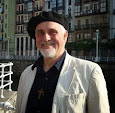
The hard part is having the discipline to pick up the camera as habitually as I (nowadays) pick up my hat - I've only become a regular hat wearer since I returned to the UK. The camera obliges me to stop and look at what's going on, and try to take it in, to contemplate, rather than hurry on. I contemplate out of doors in town or country far more than I ever do in the holy places where I am obliged to spend a fair proportion of my working life. The inner peace and quiet acquired in the latter somehow nourishes the former.
I wish I had to nerve to photograph people with the degree of attentiveness I give to surveying the general scene. But then I am reluctant to arouse people's ire by pointing a lense at them when their faces are already communicating their desire to be somewhere other than here, or they are somewhere else because they're plugged into to a mobile phone and walking without looking, adopting that strange angled gait that used to shout 'cricked neck!'.
Unless they are wrapped up in awkward public intimacy, most people don't much look at each other in the street, being busy negotiating their passage. We're not a culture that goes in much for bold stares, as happens in parts of Europe and elsewhere. It's all done with the sly glance - except for children, of course. Gazing is mostly reserved for must-have products in the shops - such a narrowing of our vision.
I have a modest sense of achievement tonight, having web published the beginnings of my photo journal of the redevelopment work in the city centre. Five pages, each with six captioned pictures to start with, charting the first stage of the Oxford House demolition. I'm going to need a fair chunk of webspace to cover the work ahead, and I'll have to go shopping for this. There are plenty of offers around, annoyingly in different currencies so it'll take me a while to agonise, as I'll be spending my own money on this. But, I can't spend too much time, given that I've almost filled my existing quota of webspace provided by my regular broadband ISP.
Taking pictures of demolishers and constructors at work may seem a bit nerdy. However, one of the tasks of a missionary pastor in the heart of the city, is to learn how to value and cherish the lives people actually live, how their creative urges are expressed and celebrated, how they manifest their own inner longings - not through their handsome well deserved pay packets, but through their daily quota of job satisfaction. It's great to hear some of the guys in the hard hats enthusing about what their doing and the equipment they are using, even when they have had little or nothing to do with half a decade of debate about what changes to the city centre there should be and how these should work to the benefit of all citizens.
Another aspect of the photographic record is that it reminds people of the journey the city is taking. As someone grappling by vocation with the question T S Eliot put into Christ's mouth: 'What is the meaning of this city?' The angles and perspectives I discover myself selecting, the photo captions that emerge as I prepare a fresh page unconsciously reveal something of this engagement. Also, I write in order that I may understand what is going on. I write also in an effort to put myself in others' shoes, from time to time. It's doing what you love and loving what you do, as a witness to really important things about life, the universe, God, destiny, everything that challenges the banal and the trivial aspects of our existence.
The hard part is having the discipline to pick up the camera as habitually as I (nowadays) pick up my hat - I've only become a regular hat wearer since I returned to the UK. The camera obliges me to stop and look at what's going on, and try to take it in, to contemplate, rather than hurry on. I contemplate out of doors in town or country far more than I ever do in the holy places where I am obliged to spend a fair proportion of my working life. The inner peace and quiet acquired in the latter somehow nourishes the former.
I wish I had to nerve to photograph people with the degree of attentiveness I give to surveying the general scene. But then I am reluctant to arouse people's ire by pointing a lense at them when their faces are already communicating their desire to be somewhere other than here, or they are somewhere else because they're plugged into to a mobile phone and walking without looking, adopting that strange angled gait that used to shout 'cricked neck!'.
Unless they are wrapped up in awkward public intimacy, most people don't much look at each other in the street, being busy negotiating their passage. We're not a culture that goes in much for bold stares, as happens in parts of Europe and elsewhere. It's all done with the sly glance - except for children, of course. Gazing is mostly reserved for must-have products in the shops - such a narrowing of our vision.
Subscribe to:
Posts (Atom)