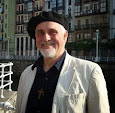
It's been a busy day, with three services and a church council this evening, with an afternoon to get reports ready for it. This isn't difficult. It's just that there's lots to remember to mention, and projects being worked upon that it's vital to keep people well informed about and involved in thinking through. The great thing is that our church council members are willing to think things through and not just accept everything handed out to them by the leadership. That's how it always should be.
Top of the list is geothermal heating for the church. It's such a complex project to undertake, from a basis of no prior experience, but with desire to do the right thing and, for once, resources with which to do it from the sale of St James'. Understandably, some were apprehensive, tempted to defer the decision if not the project, maybe let someone else take the lead, because we don't have the confidence or the expertise.
In a way I'm less than bothered about sticking our necks out and taking the risk. There is greater risk from doing nothing, dragging our feet until there is a real crisis, because the future of such a great building is no longer sustainable, economically or ecologically. It doesn't have to be like that.
Since the 'Carbon Lite' workshop on Tuesday, I am convinced it would be irresponsible not to be pro-active, to take risks aiming at a right solution, on the way towards realising the urgent need to become a zero carbon footprint institution. I don't think it will be too long before the City is challenging every organisation, voluntary and statutory, to consider its future if it can't meet the requirement of a 9% annual reduction in carbon footprint from now on.
Tonight, I feel most grateful that we have agreed to commission an expensive full feasibility study for the installation of ground source geothermal heating for the church. It's a step into unknown territory for us all. Doing this is an act of witness to the seriousness with which we take our place as an organisation serving the public, which happens to be driven by faith in God and love for people. We want a future for our descendents to enjoy. We want our church to be part of that. Our city is truly driven by its development ambitions, as can be seen it the current city centre regeneration project.
If part of our Gospel mission is to 'seek the welfare of the city' as Jeremiah once stated, we must understand and act upon matters which start out by being of more concern to the city than perhaps to ourselves. Despite the nervousness which recession breeds, we have faith in the future - not based on our ability to achieve, but in what we believe about God's good will towards us and our descendents.
For the three weeks of Lent so far, our Sung Eucharist attendance has been nearly sixty children and adults. It's noticed, commented upon, and hugely appreciated. Katie (3), one of our home grown children who has been in church since before she was baptized, comes up to the communion rail for a blessing during the Eucharist. She is prone to run off afterwards, generally in high spirits. "Don't run, after you've had you blessing." says Mum to Katie before the service. So when I've finished with her at the rail, she steps down, then skips serenely down the length of the chancel. She's one of many excellent reasons for ensuring we make the future of the church a sustainable one.
Top of the list is geothermal heating for the church. It's such a complex project to undertake, from a basis of no prior experience, but with desire to do the right thing and, for once, resources with which to do it from the sale of St James'. Understandably, some were apprehensive, tempted to defer the decision if not the project, maybe let someone else take the lead, because we don't have the confidence or the expertise.
In a way I'm less than bothered about sticking our necks out and taking the risk. There is greater risk from doing nothing, dragging our feet until there is a real crisis, because the future of such a great building is no longer sustainable, economically or ecologically. It doesn't have to be like that.
Since the 'Carbon Lite' workshop on Tuesday, I am convinced it would be irresponsible not to be pro-active, to take risks aiming at a right solution, on the way towards realising the urgent need to become a zero carbon footprint institution. I don't think it will be too long before the City is challenging every organisation, voluntary and statutory, to consider its future if it can't meet the requirement of a 9% annual reduction in carbon footprint from now on.
Tonight, I feel most grateful that we have agreed to commission an expensive full feasibility study for the installation of ground source geothermal heating for the church. It's a step into unknown territory for us all. Doing this is an act of witness to the seriousness with which we take our place as an organisation serving the public, which happens to be driven by faith in God and love for people. We want a future for our descendents to enjoy. We want our church to be part of that. Our city is truly driven by its development ambitions, as can be seen it the current city centre regeneration project.
If part of our Gospel mission is to 'seek the welfare of the city' as Jeremiah once stated, we must understand and act upon matters which start out by being of more concern to the city than perhaps to ourselves. Despite the nervousness which recession breeds, we have faith in the future - not based on our ability to achieve, but in what we believe about God's good will towards us and our descendents.
For the three weeks of Lent so far, our Sung Eucharist attendance has been nearly sixty children and adults. It's noticed, commented upon, and hugely appreciated. Katie (3), one of our home grown children who has been in church since before she was baptized, comes up to the communion rail for a blessing during the Eucharist. She is prone to run off afterwards, generally in high spirits. "Don't run, after you've had you blessing." says Mum to Katie before the service. So when I've finished with her at the rail, she steps down, then skips serenely down the length of the chancel. She's one of many excellent reasons for ensuring we make the future of the church a sustainable one.