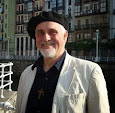
Saturday, October 22, 2005

Paper

The technological revolution that never happened
Twenty years ago we were promised that the future would bring us a ‘paperless office’. Not so, we are using more paper than ever before, and not even the smug virtue of regular re-cycling practice can conceal the added expenditure of energy in production. Computers can be useful tools, although they absorb huge amounts of time, as well as having a huge energy footprint, in the making. I confess to my great shame, they are still my favourite toy, as well as work-tool – and I don’t even use them to play games! Just grappling how they work, diagnosing and solving problems when they go wrong is an intriguing but often useless diversion. I’m self-taught. As a result I don’t always find it easy to explain to my wife how to get the thing to perform the way she wishes. My approach is internalised, intuitive, and the way I use words in an unstructured way to describe highly structured routines would put a strain on the best of marriages. But back to paper.
The diocesan and provincial offices of the Church in
Wales produce a fair amount of official paper each month. Not nearly as bad as a Local Education Authority foists on to school governors. Enough reading material for a full time job, twice over, if you take governance seriously. Well, actually the weight of documentation and the sense of helplessness it generates leaves one taking it all less than seriously. It’s become a joke. A resource consuming, environmentally compromising joke. Resources are consumed on running teachers rather than on teaching. No, the Church in Wales is not quite so bad. It does publish everything on the Web, and parishes wanting to add publicity flyers to the diocesan mail shot, are now encouraged to print them as pdf files for Web publication, thereby saving paper and postage. Nevertheless, there are some worrying signs.

Bi-lingualism, dogma, politics
We are a bi-lingual church, and our liturgical books are produced in Welsh and English (on opposite pages, there are English only versions in addition, sensibly, since 70% of Welsh people are English only speakers. Some who don’t know or use much Welsh are proud and happy to have bi-lingual service books, but it’s a minority. The Governing Body of the Church in
Wales (its synodical form of Government) and committees and agencies answerable to it, publicise reports in Welsh and English. These are circulated without regard for people’s language preferences. A small document is published with texts back to back. No problem. Longer ones are published separately. xtra paper, extra postage. It is justified? A majority of mailing recipients will automatically discard Welsh documents they didn’t need which have added considerably to production costs. Nobody seems to care that we are in a financial, and environmental crisis.

Today I received six expensively desktop-published double-sided colour posters announcing a meeting in Mid Wales next March with a massive three decker title:

‘On earth as in heaven’
God’s creation and the environment
– Belief to action -

It’s an all day church jamboree on eco-issues. There’s a gratifying rise of interest and commitment within the Church in Wales on these matters, but still a lack of joined up thinking. The posters were not bi-lingual, they were identically produced in English and Welsh – three of each. I can use three English posters – in fact I can use four. I’d put up one in Welsh to exercise the principle, but I didn’t need three in Welsh, but there was no choice. How many Welsh language colour posters will be binned, and at what additional cost in terms of expense and the un-necessary consumption of coloured ink and paper? The message of the poster could easily have been edited below half length and bi-lingualised. Did anyone think? Every government communication here in Wales is issued in Welsh and English as a result of hard won political battles thirty years ago. Now the fruit of that important debate clogs up bins and consumes resources. We have technology that would easily allow people to exercise the choice of whether they wish to receive bi-lingual government mailings or not. Does anyone care?
In the same mail shot was a brief statement in black and white from the World Mission Committee to the effect that to save resources they would not be issuing the bi-lingual St Andrewstide prayer material in print, but that it could be found in pdf files on the Church in
Wales website. Just a whiff of being ‘more ecological than thou’ in the cloisters of power? Professor Hollenweger with whom I studied in Birmingham in the late 1980’s boiled down the essential purpose of Christian mission as being ‘to get people to think’ Nice to know that there are still people around in the church making that happen. I'd love to be one of them.

Tuesday, October 18, 2005

Something's not quite right here ....

Bureaucratic begging beef
Tiredness catching up on me, as it often does in the autumn, I've gone down quite suddenly with a dose of bronchitis this past two days. So, I've stayed home as much as I could, and rested fitfully. When I'm unable to settle there are always so many administrative tasks to be done that nobody wants to do but must be done. I tend to avoid doing things like this (along with tidying my study) until I've got down time, and nothing to distract me.
The worst of these jobs are applications, either for Faculties (the Church in Wales' equivalent of obtaining planning permission - a 15 page document), or for grants, either from the Lottery Fund or from other charitable bodies interested either in the church's work of mission or at least in preserving its fabric. Every agency written to for an application form sends by return not only its form, but a list of a dozen or more other charities one can apply to. They think they are trying to be helpful, but their message is - don't expect success first time, you've gotta compete for the pile of cash you need. It's the mark of the beast written right across our modern culture, and the institutions of the church oblige themselves to go along with this in order to preserve their past heritage. In doing so, it seems to me, we are forfeiting our future.
All these grant making bodies have different criteria, different kinds of forms to fill in, and information to be supplied. There is no single form that can be completed once and run past all, so the work is multiplied many times over. Competition for grant aid is huge, as churches once raised and supported by public subscription are now rotting away, due to their desertion by the general public.
To be fair, the public are very generous with charitable giving and give away millions whenever there' s major disaster in the world that's marketed by aid agencies to get attention and cash. Better really that money is freely sent to millions of poor unfortunates, rather than squandered on buildings which, however beatuful and inspiring in their day, no longer commend themselves for general moral and spiritual investment. Let's be honest, there are far too many of them, both for the need, and for that kind of expenditure on bricks and mortar not be regarded as obscene. But, the same buildings that are liabilities when in need of repair are also potentially assets if they can be re-commissioned for community service. That's what we've been attempting to do with three of our four churches. The fourth is modern, small and sustainable by its members with relative ease. The three are financial nightmares to run, and I often ask, why am I wearing myself out, performing, in effect, as a licensed beggar on behalf of churches incapable of sustaining all the glorious trophies of their past?
Many clergy like me are desk-bound by bureaucratic demands, simply unable to give adequate time to pastoral work. It's so bad, that the faithful nowadays expect little personal attention from their pastors. Clergy don't know and aren't known by their fellows like they used to be. It surprises me that when we are identified, people are still prepared to place their trust in us, confide in us. Do all those in need of any kind care about those forms and procedures which seem to be the lifeblood of so many in the world of work today?


Tragedy - in absentia

This morning, feeling poorly still, I went into St John's by car instead of bike and offered Eucharist for four 'regulars' (all over 70), in an unusually low and quiet voice for me, because of bronchial inflammation. Nobody seemed to notice, and all departed without greeting me, (familiarity foregoes formality) each going about their business - going up to the tea-room for a cuppa, or to buy their cards (Cards for Good Causes is now open for business), or going to the market opposite. I stopped long enough to apologise to Philip the organist for having to miss the lunchtime organ concert, then headed home and went straight to bed. After a few more hours sleep I felt I was beginning to turn a corner with the infection, and got up and began to potter around the unfinished tasks in my study. Out of habit (I'm news-addicted), I went to the BBC news website, and did something I rarely do, visiting first the Wales news page - I view international news first, then UK and provincial news after.
There on the Wales front page was a picture of St John's church tower, and Church Street below it wrapped in police cordon tape. A murder had taken place just after noon in the Poundstretcher shop not twenty paces from the church porch. I agonised about going down straight away, just to be there, to be ready to listen to anyone who might be there and be affected by this tragedy, not least our city centre constabulary. But my wife insisted there was nothing I could be expected to do after the event - life moves on quickly. It was just sod's law that I wasn't there where I usually hang out when the church tea room's open, 'being available' to meet people in and around the church, on a day when it might have been useful to be there, when there might have been someone needing to be prayed with, or for. Life goes on whether I'm there or not. So why do I feel bad?

Policing lament
The locality was crawling with police apparently. Only when they are very unbusy do the cops feel able to pass the time of day with others concerned, like themselves, for the health, peace and safety of the community.
Sadly nowadays, the Police don't seem keen to be on the receiving end of interest from pastors on the ground. They'd rather employ professional psychologists. Offers of support are politely declined with the alibi of 'having a police chaplain' - somewhere over the rainbow - no doubt.
Two weeks ago there was a national Police Federation gathering in St David's Hall with 2,000 coppers present. The first I heard about it officially was from a Sunday eight o'clock news item about a service being held in St David's Hall to commemorate police personnel killed on duty during the year. Unofficially, Archbishop Barry told me ten days earlier that he'd just received an invitation to attend, which turned out to be an invitation to preach he hadn't expected. Nobody thought to invite a city centre parish priest whose church is across the road from St David's Hall. I'd love to know which religious leaders other than the Archbishop were invited to be 'good community relations' tokens at this gathering. Not because I'd have been enthusiastically given up my Sunday afternoon with the family to attend, but because I'm interested in the 'politik' of the communications exercise accompanying an event on that scale. If there was police chaplaincy involvement, how engaged were chaplains in planning and preparation? Indeed, how rooted are any of our area constabularies among the people they serve these days?
I've heard there's a 'patriotic' move afoot by the Welsh Assembly to integrate all local constabularies into an all Wales Police force. Policing, like Army regiments, moves relentlessly towards mergers which weaken local loyalties, ignore history and cultural difference. Do we need this, really?
A couple of centuries ago the local Law and Order person, the Constable, was elected by the same annual Parish meeting that elected Church Wardens. There was local accountability for policing. It's now become so complex, technical and specialised, that being rooted in a locality, if it happens at all, is a management policy decision made by one section of a large complex hierarchy. It not a way of life. All too often police seem to act like professional strangers - more like soldiery than constabulary, because for politico-economic reasons they are forced to be part of bigger structures, whose scale turns humans to mere cogs in a machine. Policing, I've been told, is becoming more an employment option people make for a few years, rather than a vocation for life - it looks good on the CV, like being in the Army. Do we have to go this route? Is opportunistic commitment to our beneift? Is it inevitable that it continues like this?
If this new value-free cultural climate, affects 'vocational' professions, how will it impact on priesthood? I've already encountered speculations about clergy spending periods of their work lives in full-time paid ministry, then opting to become self-supporting (and vice versa), but in this free job market world, can we expect to see parsons switch from being Vicars to brothel keepers, game-show hosts, or papparazi, rather than the usual social workers, teachers or care assistants? The daftness of the suggestion exposes the daftness of value-free ideology. All 'vocational roles need affirming, celebrating and encouraging as lifelong commitments as paths to fulfiment worth sticking to. But in order to achieve this, there has to be some substantial challenge to the idolatry of the economic market-led world-view which seems to deliver twice the number of curses for every glamorous blessing it bestows. What kind of world do we want? Are we prepared to live self-sacrificially to achieve it? That is the question.

Sunday, October 16, 2005

Words and their recipients

The regenerating power of writing
It's a month since I started making an effort to put down my thoughts about work and life in this blog. It's quite an effort to do it every day, and I haven't succeeded, then when the time comes, I churn out, or discharge a huge long narrative, not at finely honed as it might be if I constructed it piece by piece. That apart, it's reminded me of just how much I enjoy having the freedom to work with words, and that it's part of how I earn my living. This has stimulated me to revisit the poetry I've been writing occasionally over the past 42 years, and now I've put some of these into a separate blog (see sidebar). Even crafting a few hundred words each month for The Bell, our Parish Magazine (web published in pdf format on our Parish website), is a source of great pleasure. I've put some sermons on the Parish site as well, at the request of (very) few friends, although editing for wide consumption what was written in the heart of the moment for a particular audience can be demanding. Sometimes I'm too tired, so these may get published, typos and all. I've started to make the effort to publish this last couple of years - yes, because the opportunity is there, but also because iIt's part of my taskas a priest and preacher to get people to look at a picture which is bigger than their own lives and concerns, or those of our church congregation, and to think about the meaning and purpose of existence.

On the receiving end
Perhaps no more than fifty people ever read what I write. If ten were to think about what I said and respond in some way, maybe it would make a small difference somewhere. I rarely get any comment about my articles, any more than I do about the hundred or so sermons I preach every year, but then I don't expect to. The people I serve are thoughtful. Occasionally what I've said does get returned to me in a comment or insight, but for the most part, people keep their thoughts to themselves - there is no culture of discussion and dialogue in their religious tradition, only of listening and reflection. At one time I ran a European discussion forum about Mission by and with expatriate communities. On a fraction of the subscribers to the forum took part. However in face to face meetings, several reassured me that they read all the posts with interest, but without feeling the need to join in. Everybody's different.

Congregations and temperament

There are church communities whose timetables are full of bible studies and discussions. This in itself is no guarantee that they will engage thought to produce appropriate response, and certainly doesn't mean they are superior churches to those where people habitually listen and conduct their own interior dialogue on matters of faith close to their hearts. I've come to the conclusion that congregations tend to be typically either extravert or introvert. This may change over seasons and years, depending on the influence of leadership and key members, but the fruitfulness of either type's engagement with life is not dependent on temperament, but whether people who hear the Word strive to put it into action as best they can.

Thursday, October 13, 2005

Crises and Opportunities

Autumn and a birthday celebration
How quickly the week goes by. Afternoon seems to turn very quickly now into evening, yet there's another two weeks before the clocks go back. Days of warm sunshine, days of torrential rain, and the quiet chill of autumn air, out of the sun. Many trees are still quite green, but others turning orange or pale gold all over, so that avenues, and hillsides on the edges of town are a wondrous patchwork of warm colours.
A week after the actual birthday Clare had a party last Saturday, organised by the kids, so she didn't really know who would be coming. Several lots of friends of long standing showed up, some we hadn't seen for a good while. Baby Rhiannon was tottering around in a red velvet dress and new shoes. The Rectory was busy from three till nearly midnight. A happy but tiring day, especially with a busy Sunday to follow.

Buildings in crisis
More worries over St James' this week, the church's gas boiler has sub standard ventilation and will cost £1,400 to get repaired to the standard required for safety certification. On top of this there's the sum of £300 which is the cost of the tests and certification of the church hall gas appliances. That's more than we have available to spend, yet it must be done. I shared the problem with Pastor Rae Galloway, whose 100 strong Pentecostal congregation uses the church Sunday and Monday evenings. After a few days, I received a message to say that they would be willing to give us an advance on the contribution they make towards the cost of their usage of the order of £1,000 to help us out. That means nothing more from them until next Easter, and no additional money coming in, but it does mean we can commission the work and avoid having to shut down. A non-certificated boiler would compromise our insruarge covereage, and that's not a good idea for any public building, let alone a church. Our ageing buildings with their huge repair costs are a real liability, which we need to turn into a social asset once more, having effectively lost the plot of how to serve the community, witness and proclaim to the faith that gives life meaning.

Tail wags dog yet again, or woe unto you lawyers
More nasty surprises too with an email from the property department of the Representative Body (RB) of the Church in Wales - the trustee organisation for all our buildings and land - concerning St Teilo's Church. This has been successfully adapted for use as a music rehearsal and concerts venue. Our biggest client is the Royal Welsh College of Music and Drama, who use the place at least five days a week during term time. The income from the College has enabled the church to do renovation work, and tackle all sorts of expensive problems created by builders and a rogue architect in the early days of the church's transformation, and to upgrade the disabled toilets to the latest set of standards demanded by public legislation. During the first three years of the project, 2001-2004, the RB granted a user licence, and during that period failed to negotiate a proper lease. I'm not even sure if anything proper was ever signed, but a gentleman's agreement between the College, and St Teilo Arts Trust, (registered as a charity and a company), set up by the Church Council to act on its behalf an agent for the development work, ensured that rent was paid and work on the church got done.
Everybody agreed that a proper lease was needed, and this time last year, I met with College representatives, and RB appointed surveyors to agree terms for rental. RB and College solicitors haggled for a year over minutae, and were so inefficient that we had two major crises of communication during the year when the RB started making threats lock the College out of the Church if it didn't comply with its demands, and the Parish formally refusing to take this action, tantamount to killing the goose that lays the golden egg.
Monday last, I woke up to the third crisis, with the RB issuing an injunction against the College, obliging it to recover the three years previously paid up rent from St Teilo's Arts Trust (all spent on building works and running costs already), simply because, in the view of its officers the RB should insist on all the rental going through its books before being passed to the parish. As no agreement had reached the stage of signature this seemed to me rather a quixotic position to adopt. As one of the four Church Trustees personally liable for this rent backlog (£20,000), I was not amused. After two tense and panic stricken days of email exchanges between worried Trustees, and between the RB and myself, the threat was withdrawn, on the promise that from the date of lease signing, rent would be transferred in compliance with their demands.
In fact I still don't know if the lease (which should have run from this time last year) has yet been signed. The RB have a habit of not communicating adequately (until there's a crisis) to the very people its officers are meant to be working on behalf of and serving. I often hear complaints from colleagues about the inadquate way in which this central administrative body of the Church in Wales works slowly and inefficiently, in ways that create problems for those they are meant to serve. They run as if they belong to another century, despite their computers and semblances of modern office procedure. The administrative model enshrined in the Church in Wales consistution is one that was written in mid-nineteenth century for the Church of Ireland when it was disestablished, and was considered good enough for the Church in Wales when it disastablished more than half a century later. Will it be possible to reform it before it all falls apart because of the drift away from the churches of so many people? It'll cause a lot more headaches before anything much happens

Churches city centenary celebration
The City Centre Churches together group decided it would observe the centenary of Cardiff in its own way. Not with a giant banquet for the Mayor and other officials - we are too poor and weak a body to lay on a big civic function nowadays. It's ironic that six weeks ago the Muslim communities of Cardiff were able to take the City Hall and fill it with 500 people for a public inter-faith event to which politicians and others in public life were invited, also an open invitation was made to the public in the press. Muslims are strong enough in committed numbers and wealth to be able to do something like that. Churches can no longer afford to. Anyway, forty of us came together at St Peter's RC Church in Roath for a short ecumenical service, ably led by Fr Peter Collins administrator of St David's Cathedral, followed by a supper together at Spiro's, the restaurant in thei next-door church hall, renowned for its excellent traditional meals. No speches, no guests of honour, no publicity, just a low key meeting of friends and associates. The glory days are well past, but, the few of us there are left in Christian witness, at least we have each other, and we feel we still belong and are part of this city.

Missionary Investment in Tourism
After our recent meeting with the tourism people at UWIC,
Ian Thomas, St John's Church tourism officer came to me with a new promotional idea. Cardiff Initiative, the city's marketing arm puts out an annual brochure which gets circulated around the world, and given out at tourism fayres internationally, promiting visits to Cardiff. A sixth of an inside page advertisment, with a few words about visiting St John's, a picture and contact details would cost nearly £600, but would make the church known globally, and potentially increase our visitor numbers greatly. Was it worth doing? I thought yes. For not only would it make us known and atrractive to people far away, it would also send a message out close to home, that we take ourselves seriously as a place that welcomes visitors to Cardiff, as a place that has much to offer, historical cultural, artistic, spiritual. No other church advertises therein, not even the Cathedral. We complain that Cardiff ignores the contribution made by its churches, and takes them for granted. But in this economically driven society, the church now has to 'buy into' the business of making itself know. The church is no longer an institution that advertises itself by its existence. People have to be given a reason, an incentive to discover our rich treasures. This much I realise. We are fortunate in that the Tea Room is so popular a place to visit, and that its revenue has been able to afford a publicity budget for the first time.

Cards for Good Causes here again
St John's hosts a charity card shop from mid October until Christmas, and this week the supervisors have been setting up in the St John Priory chapel and bringing in stock. This week too there have been more enquiries about organising charity concerts in the run-up to Christmas, on top of the usual Carol services. St John Ambulance is returing for a second time, the Welsh Baroque Ensemble (fundraising for Rwanda street kids), are coming back for the third time. For the first time the Lesbian and Gay Christian Movements Carol concert is moving over from the Quaker Meeting House in Charles Street (used to be the Victorian Vicarage), as numbers have outstripped the size of the venue. Also for the first time a student group - many medics - are wanting to do a fund-raiser for Medcins sans Frontieres. It all mekes sense of the 'season of goodwill'.

Tuesday, October 04, 2005

Michaelmas Muddles

A festive first
An extra Eucharist for me to celebrate at St Michael's Church on the morning of Michaelmas day (29th Sept), because Jenny, my colleague had been invited to celebrate at one of the two local church high schools in Cardiff. This was a small ground-breaking event. She's the first female priest to do this ever ! And it's ten years or more since women were first ordained priest in the Church in Wales. The Archbishop had to start making demands that quiet exclusion of women priests from ministering in schools ceases. The inertia against inclusion is strong because the traditional 'catholic' presence among clergy and congregations in the region is influential - there are many good and holy people who cannot come to terms with this change in the church. Nobody wants to give offence or take it, but the division is there, and we have to learn to live with these differences and not avoid them, and that means living with painful divergence, without resentment or recrimination. A test for all of us. I was very pleased Jenny had been invited, as she has two sons in the school, and is well known as a parental participant in the social environment of the school. I just keep hoping that the penny will drop eventually, that people will realise that the catholic tradition is enhanced and strengthened by being more inclusive, and by recognising God's call to women to develop the priestly ministry in fresh ways. Some say 'impossible'. I say with God nothing is impossible.

Tenby Trip
Saturday, I had to drive to the lovely seaside town on Tenby in Pembrokeshire - 200 miles round trip, to take part in a large gathering of the Order of St John Ambulance. Tenby Parish Church is, like St John's Cardiff, a large, ancient and beautiful building. The Vicar greeted me warmly - we had met a year ago when I christened the son of a couple I'd married in Monaco in another of his ancient churches, birthplace of St Illtyd. There must have been more than 300 people at the service - marked by its solemn military-religious ceremonial, investitures and promotions of members and co-workers. Many find such occasions very meaningful. I wonder what outsiders make of such goings on. Afterwards, I decided I'd take time to wander around the town and re-discover the place, last properly visited when the children were small 30 years ago. The rain came and the wind blew, however, the moment we stepped out of church, so I drove straight home disappointed.

Death shakes routine

Working in a parish in the heart of the city, without a large domestic population means fewer than average numbers of baptisms, weddings and funerals. Only three weddings and two baptisms so far this year at St John's, and only a quarter of the number of funerals my colleagues have in neighbouring parishes. It means I have extra time to spend on church ministry to visitors and city centre workers, also for developing church activities in relation to the creative arts, all of which are important in serving the life of the city centre. Over this past month, after a break of six months from funerals, I've had one a week, and then this week two funerals to prepare for. The time out needed for this in turn puts pressure on the rest of the working week and makes life uncomfortably busy. As a result of this I didn't get chance to check details of Sunday services in advance with the organist and others, so we ended up Sunday morning with me expecting to celebrate the Feast of St Michael and All Angels, and everyone else expecting to celebrate Harvest, which I was expecting to celebrate next week. I had to think on my feet in adapting what I had to say, and somehow it all came out right. If only I had a secretary to organise me and keep me straight on details!

A piece of coal at harvest
Our handful of kids turned up at the Sung Eucharist with their offerings of vegetables (fresh and canned), and there was a small display at the foot of the cross by the chancel arch with grapes, bread, salt and water, and a piece of coal, which reflects the past history of our region in which the harvest of coal from underground put bread into the mouths of hundreds of thousands of people. Almost no coal goes out of South Wales nowadays, but people have long memories. Now whilst there's an element of ancient habit in producing a piece of coal as part of the Harvest offering, when it no longer seems relevant, perhaps there's also an element of foresight. Since Maggie Thatcher closed the pits down because they were un-economic in the face of competition from cheap Chinese coal, the world has changed. China's industrial expansion is leading to greatly increased home energy consumption. With less for export coal prices are rising on world markets. South Wales is sitting on huge high quality reserves of coal, and maybe in a few decades it'll be profitable once more to extract it. Hopefully, second time around, advances in technology will severely limit the environmental impact of the mining industry of a landscape still in recovery from the last coal boom.

A Monday of meetings
It seems I haven't had a proper day off for the past three weeks, so no wonder the past weekend left me feeling exhausted. Monday is often quiet enough for a lie-in and some time to myself, but today I had three meetings.
One with the Royal British Legion Chairman to plan the Remembrance Garden blessing and inaguration ceremony at St John's - this year we'll be having the eisteddfod prize-winning RAF St Athan voluntary band accompanying the service, plus a pipe band - we are keen to get it right and honour all our war veterans properly, particularly as the world situation keeps on producing more war veterans, not to mention victims.
Then a metting with the chief officers of the Order of St John to discuss the future of their grand ceremonial occasions. For decades almost all of these were held at St John's, but in recent years these events have been distributed around the regions of Wales, to encourage local members and publicity exposure. St John's folks are quite sad to lose these events - several people are members of the Order of St John - but a bowing to he inevitable. The Order is going for more publicity to recuit and retain members, and this means grander events with more invited guests from among public officials. These are difficult to stage in a church with no auxiliary buildings like ours, in the middle of a parking restricted zone, so there is no argument for retaining things the way they used to be. However, it looks as if we'll get the annual Christmas Carol service regularly instead.
The thirs meeting of the day was with three staff of the Marketing, Tourism and Hospitality department of UWIC, Cardiff's second University, to discuss our attempts to make St John's more visitor friendly and how to promite the church as a place of tourism. From this useful meeting we hope to get some students doing project work that will enable us to get a better picture of what other people see as our potential, and then to know if that accords with our vision. I could have done without such a tough working day, straight after the weekend, but all in all it was quite refreshing.

Tuesday, September 20, 2005

Auspicious times

Thirty five years ago yesterday, I was ordained priest by Archbishop Glyn Simon in Llandaff Cathedral. It remains in my memory as a moment of awesome holiness, despite my deep lack of confidence, and my strong desire to challenge the institutional church and its thinking, as a young 'moderniser'. In those days, wanted to be a worker priest in secular employment. I never made it. Twenty one years ago I trained as a teacher, but didn't fancy schooling (too regimented), so ended up in development education, working with adults, and went back to full time pastoring after seven years of that.

I always fancied getting a steady job and being a priest in my spare time, having boundaries between work and vocation. As it happens, the world of work has been stood on its head. People work less and less in the same thing for a whole career, employment has become a market commodity to be traded, and people retrain several times in a lifetime. And the strange thing is, I've just realised, that pattern is not too dissimilar from being a career parson, with the exception that I have been 'employed' by the CofE, the Church in Wales, and USPG, a church based mission agency, all of which were quite similar in their values and way of organising themselves. I'm now in my eighth job in 35 years of ministry.

In each one I've had to re-learn, re-train myself to requirements of new circumstance, as well as draw on my previous experience and expertise. The world of work has become more like the world of my working it, it seems. For me, it's been adaptation all the way. Never boring, sometimes anxiety making, and I've been luckier than many. Never made redundant, forced out of just one job. Resigned to move on to new work from all the others. I've never been without work or income. And that's a blessing in an age like ours. Yes, it's a privilege in many ways. But with so many people abandoning the church, and no longer seeming to need what it offers, it's easy to feel just a little forsaken from time to time, even though there always seems plenty to do, and not really enough time for the kind of leisurely life of prayer that makes for a good listening caring pastor.

Still feeling inadequate to the task after all these years!

And on this auspicious day? One funeral, in St Teilo's church of a man who died suddenly at 64 of undetected heart disease. A huge crowd there, work and pub mates, extended family. Apparently, he had been a Matt Munro fan, and played a CD of his music whenever his wife was out (she's a Queen fan). Requested to be played during the service was one of his favourites 'Softly as I leave you'. A quiet man, who quietly slipped away in the bathroom early on September 11th. An eerie legacy. All the family howled. The pub extraverts were dumb-struck.
In Cathays cemetery, overlooking the Rhymney Valley railway line cutting, at the grave-side there was a long silence after the casting of earth and final blessing, eventually broken by the widow, who came up to me and asked "What do we do now?" Fighting hard not to read huge chunks of metaphysical significance into the question, I told her "You can go home now, and come back later when the grave's filled in." She'd forgotten what burial custom was. So many deaths end in smoothly managed cremations these days. She had probably never been chief mourner before either.

My chauffeur to and fro was a cheery young man in his twenties, new to the job, from the Heads of the Valleys, now renting a room in the half-empty St Michael's Theological College, to avoid a hundred mile commute each day. He told me he had trained as a teacher, but that it wasn't for him - he already had set his heart on a place in this caring profession. It's got to be a vocation to deal with people's grief in an era when death itself is quarantined away from ordinary life until the time comes for it to force its way into normal routine. Fear, shock predominate. People are bewildered, ignorant and vulnerable. Funeral arranging is a task involving great trust today.

The day ended with an interview with a middle aged couple wanting to get married at St James next year - both with an assortment of broken liaisons and offspring behind them, but both still wanting to make a go of a permanent stable relationship with real commitment to it. People do learn sometimes from their experience of failure in relationships, how to do better next time.
The church doesn't want to compromise on the ideal of lifelong marriage to one partner, but it's so important to encourage everyone who can to make permanent lasting relationships, and if they fail, not to give up trying to get it right. God doesn't divorce us because we aren't successful as disciples. We keep trying because his forgiveness is the last word.

Sunday, September 18, 2005

All kinds of Services, never a dull moment

Cardiff buses, so the saying goes while waiting on the street, always come in twos, when you've been waiting far too long. The same goes for weddings it seems. This weekend is the second in the past couple of years when I've had two weddings on the same day. This was unremarkable 15 years ago, in Halesowen Parish, when four or five weddings was the norm during the marrying season. But now we have so few - three altogether at St John's during 2005 with two on the same Saturday, then that's the lot in a parish with three other churches!
The first was of an older couple, with some nicely chosen music sung by a local choral group 'Oriana', and quite a small congregation. The second was of a couple of London based yuppies with family in Cardiff. There were about 250 toffed up guests - three coach loads, being taken to a castle in the Vale for a romantic reception afterwards. They sang with enthusiasm, which was unusual. The bridge and groom talked throughout the ceremony except when making their vows, and when a friend of theirs played pieces from the first Bach suite for unaccompanied 'cello. That single musical voice was clearly audible in every corner of the church - a beautifully human tone to it - quite spellbinding. More solo 'cello next Friday when we have a full length recital by a 'Cellist from Switzerland, plying baroque music on a period instrument - one Ludwig Frankmar, from Basel.
After the weddings, we had the AGM of the Friends of St John's, bringing together thirty odd well wishers and supporters of the church for Evensong and a meeting. Afterwards, four members of the congregation between them gave expository talks on aspects of the stained glass, church silver, sculptured reredos (by W Goscombe John), and 'Willis' organ. It was an display of expertise which impressed and encouraged the gathering to realise that the church's artistic and cultural heritage is cherished and handed on by many pairs of keen hands. Which is more than I can say for the other churches. There's lots of work to do just encouraging members of different congregations (small as they are) to take an interest in what belongs to them and not just maintaining it or hiding it all away.
In addition to the three Sunday services, we had another 'extra', to welcome members of the United Services Mess to worship. The Mess is a unique Cardiff institution. It's a club for people who are either members or ex-members of the armed services, which has a bars and serves meals and does military banquets with great style and efficiency. An office I inherited from my predecessor is that of Mess Chaplain - it goes alongside being Branch Chaplain of the Vale of Glamorgan branch of the British Legion. Every autumn members come to St John's for a service of their own and then have lunch together afterwards. Despite being up late composing two sermons, one for the Parish Eucharist and one for the Mess members, for once I found I had enough to say to keep myself energised for a long morning, followed by socialising. I slept for most of the afternoon when I got back after lunch.
As we were about to go into the Parish Eucharist at 09h30, a very tall bearded young man, casually attired, turned up and declared that he has never been to church before on a Sunday morning, and would it be OK if he were to join us. He duly entered, and opted to sit, not in the pews with the rest of the congregation, but sprawled on a chair in the north aisle. He followed the service, sometimes with his own quiet but audible comments, and seemed to taking notes on a pad (and sometimes on a service book). He seemed to disappear a the end, rather than join us for a cup of tea, but when the Mess congregation arrived, he reappeared, and a caught glimpses of him doing yoga during the service, which must have been a bit puzzling for those within sign of him. He made favourable comments about the sermon, during the service, as before, then disappeared at the end without saying a word. What with him and our 'Oriental enigma', it's never a dull moment during services. As for our Chinese lad, he's made himself scarce recently, since Alex, the restauranteur from opposite, spoke to him in Chinese, and attempted to follow him, to find out more about him.

Saturday, September 17, 2005

On my doorstep - a national conference

No sooner than I had arrived back in Cardiff, three years ago, I was invited to join a small team of city centre colleagues aiming to organise a gathering of people working in city centre churches from all over Britain, to compare notes, and share ideas about the way forward for the mission of the church at the heart of our rapidly changing cities. The initiative was taken by Prof Paul Ballard, now retired from the chair of Practical Theology in Cardiff, and Dr Noel Davies, former secretary of CYTUN, (the Welsh ecumenical umbrella oganisation), now lecturer in Trinity College Carmarthen, both of whom I have known for a very long time. Paul initiaited me into a socio-anthropological way of looking at the world, as a prelude to thinking theologically about it, when I was a newly ordained Curate 35 years ago.

A sense of occasion
The conference was scheduled for autumn 2005 during Cardiff's centenary year, in the hope that it would help attract attention to the event, and maybe give a prod to Cardiff churches to do some thinking about mission. With an 18 month lead-in time for conference publicity, we had no real idea of how many we would attract. Fifty was the break-even number. We got over eighty. The Lord Mayor threw us a party to open the event in the conference venue itself, Aberdare Hall, just 300 yards from my house. This meant I could sleep in my own bed and didn't have to travel. The disadvantage was that there could be no clean break from work. I had to juggle the conference with other tasks which simply would not go away.
The 'Drawing the church plate' event at St John's not to mention the Conservation exhibition went on during Monday and Tuesday, required me to do some caretaking. St James' needed its gas appliances inspecting. Another caretaking visit required there. Also there was a Eucharist and a funeral on Wednesday and a Eucharist on Thursday to find time for during conference sessions. I was assigned two conference tasks - one was to lead the three night prayer sessions, which I found a most refreshing thing to do, even if the preparations kept me up burning minight oil the night before. It seems they were appreciated, and it gave me the illusion of being more involved than a really was, given my absences.
Talking of absences, I had to send my apologies to the City Centre Conservation Group meeting, and to Cardiff Deanery conference, meeting to discuss how to cope with a future with 50% of the current staffing. I sent a paper I'd written with some ideas about a response to the crisis, as a contribution to the debate, as I couldn't be there myself. I felt it was necessary to do so, although I have little confidence that any new ideas would be entertained. Churches in East Cardiff seem unable to cope with the massive shrinkage in church membership and support. It's a chronic problem of denial of reality.

On being disregarded
My other task was to arrange a visit to St John's to speak about its role in the city, and to visit the office shared by the City Centre Management team with the development team of the St David's second phase shopping centre, soon to radically transform the heart of the city centre.
The idea was to give participants a picture of how the city is run, day to day, and to invite the developers to speak about their project and how the management of change was being handled.
In the event, the City Centre Manager, Paul Wiliams spoke to the two dozen conferencers who came with me about Cardiff as a major retailing venue and about the new development. The operations manager Stephen Barrett also spoke about day to day running of the city, but there was nobody representing Land Securities - the developers - despite the fact that they had been informed of the Conference (their liaison officer Simon Armstrong, said in writing that he would attend, but didn't). They had also been asked to co-host this visit and respond to the questions arising. No apology or explanation was offered, either before or after. Worse than that. Simon Armstrong, and Paul Mannings, (liaison between the city and the developers) were highly visible the other side of a glass partition in the building talking around a conference table with several other people. I was very tempted to go and make an embarrasing scene, by asking them what stopped them from having the courtesy to at least apologise for not taking part in welcoming an important group visit, of which they had received at least a year's notice.
The heavyweight players, the City and the developers, are so big, so important in their own eyes, they seem to have no need to treat smaller entities with value or respect unless it suits their own needs in the exercise of power. Whether their intention is benign or ruthless, the ultimate effect of this arrogance is contempt for the lowly. Any management system, whether elected municipal or corporate investor directed behaving like this is its own worst enemy, losing trust and support which would be so easy to win.
Paul and Stephen work on the ground in the city, and do a tremendous job. They are very considerate of the needs of the churches - small though our public profile is. I was thankful that they were there, and welcoming, ever ready to put anyone in the picture who wants to know.
It was interesting during the conference to hear others articulating their problems with getting themselves acknowledged by powers that be (municipal or business), who consider churches to have no power to be reckoned with, nothing important to contribute to the shaping of society and its future. Yet, as soon as the corporate will or imagination fails, the churches get rediscovered as contributors of creative ideas and motivation. It's amazing how so much power makes the most sensible of people uitterly stupid.

A new beginning?
Anyway, to return to the conference, it was a positive event, not least because of the rich variety of participants from different denominations and across the range from conservative to radical - even to an agnostic theologian attending. At the end, the means proposed for keeping in touch and sharing ideas - easier than ever before - is a website, a mailing list, a discussion forum, a resource network in cyberspace, where people's stories can be told. Possibly, in the longer term a published book that could be a kind of text-book for students interested in the same things as us. Certainlty that's something Paul and Noel would like to see. There's still work to be done to sharpen the focus of ideas that attracted those eighty people to come to Cardiff, to create a channel of information which can be used and contributed to in the work of mission. Let's hope this proves to be a significent new beginning, for more than those who managed to be there.

Monday, September 12, 2005

Quite a weekend

Heritage Open Day
Indeed, that was quite a busy weekend. Saturday was designated a European Heritage Day, so that translated into a Heritage Open Day at St John's, with people from the Glamorgan Family History society promoting genealogical research and the church's own record archives open to view. The City Council's conservation team mounted an exhibition on the St Mary street urban conservation area, which just embraces the church - this runs every day for a week, a bit of an experiment, to solicit public views about area development. SPCK bookshop, and the University Hospital Chaplaincy did stalls, and the South Wales Artists Society displayed material from its nearly 150 years of archived records. Many rich and famous Victorians found time to be patrons and participants. The Society does a summer and a winter exhibition at St John's, and a prodigious amount of work by talented amateurs and semi-professionals goes on show and gets sold. There was a full rehearsal for the Duruflé Requiem, to be performed in church on Monday night - a nice showcase for the Organ and choir. We take our encouragement of the creative arts pretty seriously. The church tower was open for guided tours to the top. I took the last of the day with my camera, for once, and it poured down, so I got one picture only through a dirty pane of glass in a stairway lancet window. Cardiff drowned.

Family silver on show

The piece de resistance of the day, was having a small selection of our best church's plate on display for artists to draw - a 1574 paten and chalice, a 1662 plate, a flagon, cup and plate of 1820, plus Virger's wand and churchwardens' staves of office (modern pieces). These were set up in a side chapel with a security guard and an artist in residence. It's a modest commuunity arts project sponsored by funding from the City centenary celebrations. Those involved are taking great delight in the opportunity. They are repeating it on Monday and Tuesday also.
I think we have a moral and spiritual duty to encourage people to understand the church as a place where artistic creativity of all kinds is welcomed. In centuries past rich patrons funded the adornment of religious buildings. Today we don't have that knd of support, but it's no reason to be welcoming of those whose imagination is inspired by the peace and beauty of the place.
There were certainly more people passing through the church than usual for this special event, but we need to make it better known, more widely - and more accessible to the young.

Foresters en fête
Sunday services, we were our usual number, three dozen and a handful of visitors, but then we had an extra service for a convention of the Ancient Order of Foresters, a friendly society, with its own arcane rituals and vesture (a bit like the church) which provides mutual financial support, insurance and savings support for its members. There was a congregation of over three hundred, plus their own chaplain for us to welcome. Their service borrowed many familiar CofE common prayers, and most of the hymns were to Welsh tunes, befitting the occasion.
I had planned to welcome them publically, but in their eagerness to get their processional formalities right (the deputy Lord Mayor was there), they left me no space to intervene, so I shook lots of hands at the end instead. For much of the service, I stationed myself at the main entrance on the look-out for a frequent visitor to church these days, whom I needed to divert away from the building at least for the hour and a quarter celebration, lest a slight element of farce insinuate itself distractingly inot their celebration.

Oriental enigma
Over the past six weeks a silent wraith-like young man of Chinese or possibly North Vietnamese origin has been haunting the church. He speaks hardly any English, says his name is 'Ming', (we think), and comes from China. He behaves autistically, quickly becoming absorbed in some tiny detail only he is aware of, and ritually circumnavigating the church, stopping at certain points to sit or kneel with contemplative composure. When addressed, he struggles to speak the few words of English he knows, or struggles to comprehend. It's as if his attention span is not big enough to cope with more than a few sentences. He takes his shoes off, pads around barefoot, and sometimes leaves the church barefoot, returning later to pick them up. He is always clean, decently dressed and has a change of clothes. We think he says that he is staying with someone a little way out of town, and has to walk in. He visits our tearoom and the restuarant opposite, asks for tea, drinks it and walks calmly out without paying, and returns other days for a repeat performance. Like a child, at the mercy of the world and its ways. We are concerned about his mental health and personal security. The city can be an abusive environment at night, and on big match days. But he moves around, silently, unobtrusively, conveying almost no sense of presence. He can walk up to you, silent as a cat. You don't hear his approach, but he emanates no threat and means no mischief. He does like to inspect things very closely however, and touch things where normally people would restrain themselves. He goes and sits in the Bishop's chair, if allowed - during and after services, in full public view, unselfconsciously, silently for a few minutes, and then moves somewhere else to sit or pray. I wasn't sure how 0ver 300 middle aged to elderly guests would have handled the distraction, let alone the preacher, whom I had no time to brief. Ming, if that's his name made half a dozen attempts to slip past me during the service time, but retreated when noticed.
Later in the afternoon, when I had attended a service for Racial Justice Sunday at neighboring Tabernacl Baptist church, I returned to St John's to get ready for Evensong, and he was still hanging around. Alex, the Chinese speaking restauranteur of Piazza Italia opposite was there thankfully just at the right time, to address him, and obtain a surprised timid response that indicated he understood Chinese. He is so elusive that it has taken six weeks to get these two into conversation. I look forward to hearing later in the week if Alex got any further, since after their first exchange, 'Ming' fled, and then slowly re-traced his steps and hung around, as Iwas going back into church. Very cat-like behaviour. Very strange. Who is he, let alone who does he think he is?

Friday, September 09, 2005

About our 'wired' church

A new take on hi-tech

Had a call from Gordon Dalton, organising a Cardiff festival of Creative Technology – a new event sponsored by the Cardiff 2005 centenary celebration programme. (Check the website: www.mayyouliveininterestingtimes.org) This is bringing people together with a wide range of imaginative ideas of using various kinds of new technology for artisitic presentations, some of which are interactive. The call was to ask permission to project videoscreen images on to the outside of the church, as part of a city centre wide involving similar sites, and hopefully a host of adventure gamers using their mobile phone SMS service to interact with the game host. It's a text based game, with scenario borrowed from one of the classic MUD games, but 'indigenised' using the city centre streets as location. I suggested that we also had some good flat white interior surfaces for projection, and that project would be welcome to use the interior of the church also. Could be the start of something unusual in our relationship to creative arts. We already welcome many different groups of musicians and painters to use the church for shows. It's not a big crowd money making venue, but a place where creativity is to be supported and encouraged.

Marketing hindsight
This approach was made because word has got around about our church wireless access point, which has been running now for three months. It attracted quiet a bit of pulicity at the outset, from press and broadcast media. It was all quite naïve and amusing really, journos fantasising about people using laptops during sermons - a load of nonsense. The reality is that every day tourists from around the planet with 'wired' phone cams take pictures in church. Promoted well, the wireless hotspot could be of far more use to that kind of passing trade, wanting to send pictures home, than to businessmen on the hoof looking for peace, quiet and a good signal. I enjoy sitting writing with my laptop in public view at the back of the church. That way I get to chat with people entering. If must concentrate I hide out of sight behind the huge 'Father Willis organ', and work there. It's a marvellous space to work in – so big, peaceful and light-filled. The imagination can soar, and it's so easy to be reflective in this sacred space at the heart of the city's shopping district. We're so blessed.

Thursday, September 08, 2005

New term, new school

The new term begins
School restarted on Tuesday. For me, that meant a visit to both Church Aided Primary schools in the Parish, to say 'Hello' to the head teachers and catch up on the news.

This time last year, St Monica's Primary School moved to a new building, as Diocese, the County and the Welsh Assembly between them could ot come up with the necessary funds to renovate a 120 year old building. Falling enrolment numbers everywhere in Cardiff are leading to school closures to rationalise the available resources, except, it appears where Church schools are concerned. Rather than spend money on renovation, a plan was hatched to re-locate St Monica's in the surplus Infants' School building of Gladstone Primary, some 100 yards from St Michael's Church in our Parish. Gladstonians were not pleased about this and resisted the initiative, but in the end bowed ungraciously to the inevitable. The move was a great success, and now just under a hundred students, plus staff are happily beavering away in their bright new accommodation.

New school in old buildings
Part of the deal done to secure a new home for an old school was the sale of the old buildings. Ten months of waiting resulted in the purchase of the site by Cardiff's Muslim Educational Trust, for a private 'faith-based' school for Muslim children. Both Church schools have had Muslim children for many years, and are proud to be entrusted with their education. Everybody asks: 'does this mean you're going to lose your Muslim kids?' Answer - quite unlikley. The Muslim school will address educational needs of pupils from linguistic and cultural backgrounds who will benefit from not being obliged to attend another kind of school. When I worked in Geneva there were several campuses of the International School - very multicultural and liberal. But there were also private schools modelled on an English Primary school for newcomers, and Catholic schools catering for English/French bi-lingual learning. Some politicians and educationalist suspect faith based schools and private education, and would prefer a 'one size fits all' approach to learning.
It's an abstract notion of 'equality'. What works best is equal attention being given and justice done to the different kinds of educational need. It's demanding and costly, but kids are worth it.

The school sale released funds, not only to pay for St Monica's new building, but to pay for it to be re-roofed during the summer vacation. In the six weeks since the handover, the new Muslim school has also been re-roofed and re-windowed. This has attracted the usual neighbourhood racist style comment: 'Why is that being done for them, when it could not be done for us? The truth is that the Muslim school is being kick-started by funding from wealthy patrons, not the state. And so history repeats itself. A hundred and twenty years ago, Caridf's rich industrialists also did what the state would not do. They invested in constructing schools and new community facilities with money generated from coal and steel production. Our educational provision would not be so varied and excellent if it were not for such good-will and interest, yesteryear or today.
What's lovely is to witness the mutual appreciation and support being shown by the staffs of the two faith schools towards each other. I hope the educational authorities and politicians are watching closely.

Schooling the displaced
Our other Church school, Tredegarville (named after the titled industrialist who gave the land for both St James' church and school) is full to bursting again. The new intake brings numbers back up to 200. It's in an area designated for urban renewal (in other words it's a deprived area)
which soaks up newly arrived or re-located economic migrants, refugees and asylum seekers.
Child numbers can fluctuate by a couple of dozen when the cases of the latter are processed and families are moved on or expelled. It's the kids who suffer most from the insecurity, and they are lovingly and supportively dealt with by the staff. The most recent influx is of displaced Roma people from the Czech Republic. Before that was from war-torn parts of Africa - kids hiding under desks when a plane flew low or there was a loud bang. Over decades on its cramped site surrounded by tall buildings, the school has seen it all, and it thrives. Last year it had a first class inspection report, which would be the envy of some establishments in leafy suburbs. It's impossible not to feel proud of what is constantly being achieved.

Monday, September 05, 2005

What a load of rubbish!

Whenever there's a big match at Cardiff's Millennium Stadium the amount of booze and fast food consumed and the streets goes up phenomenally, so does the amount of rubbish. When Wales won the Rugby Grand Slam there was ten times the amount of normal saturday litter. Our street cleaning and waste disposal teams are brilliant and mostly the streets are clean and returned to normal again by the time the shops open next day. This doesn't apply to litter shoved through or thrown over the railings into the church yard or church porch. Too poor to afford a caretaker, church maintenance of this kind relies on the goodwill and energy of a few ageing volunteers.

You will have to go down a few steps into any traditionally constructed Parish Church dedicated to St John the Baptist – like going down into the Jordan, I guess – but a porch below street level is a magnet for litter, blown or thrown. Any morning after a match, whoever arrives first has to wade through a sea of paper and bottles, and then clear up to make it safe for others. After a Saturday match, that's my job as first in for the early Eucharist.

Doing this is a kind of ascetic exercise, resisting the temptation to curse those who have peed or spewed over the steps, tossed their bottles, cans, beer beakers, paper and styrofoam food wrappers, promotional flyers, newspapers, cigarette packets, gift wrappings and plastic bags over the fence. Empty sugar packets, cigarette buts, drinking straws and table napkins mostly get blown in. It's the record of a multitude of people's idea of a 'good time', both at their own and other people's expense. It's quite a challenge not to arrive at the altar of God full of anger and resentment at the world God loved so much that he sent his only Son to sacrifice his life for it. The exercise is also good for knocking on the head fancy ideas about the meaning of priesthood in the modern world.

When the Bishop preaches about God being present in the mess of life today, I wonder if he'd like to come and give a hand at 7.45 on a Sunday morning. And by the way, did I just toss God into that black bin bag?

It's a quiet Monday today, nobody chasing after my attention so I have a go at clearing the two smallish gardens opposite the Owain Glyndwr pub on the north side of the church, where people sit and drink at tables on warmer days. Glyndwr was a Welsh warlord of the 15th century who sacked the castle and burned St John's church in 1404. His supporters today would bury the church in a rubbish mountain, if a few conscientious volunteers didn't clear up regularly.

After an hour I have picked up another black bag full of stuff, enough items (including a pair of kid's socks and a broken up bunch of bananas) to suggest that more than a hundred people have deliberately tossed their rubbish over the fence. Often I watch people dumping within a couple of paces of a litter bin, not bothered to make the effort. So little pride in their environment is a symtom, to my mind of poor self-respect and self-discipline.

The city's cleansing department manager told me solemnly over the phone and repeated it in print, that it's city policy to prosecute people dropping litter. It's clearly unenforcable 99.9 percent of the time, so the statement is like a deadpan joke, except you can't laugh aloud for fear of giving offence. Nobody wants to examine too carefully what needs to be done to change attitudes and habits, so that people begin to care about keeping things looking good, and not just leaving it to professionals, who are stretched enough already.

There's so much individualism being expressed on our streets with aggression these days, that few are brave and confident enough to challenge persistent rubbish droppers to use the litter bins, and stop reducing the place to a slum. How is it possible to bring about a wholesale change of attitude, and re-introduce a sense of civic pride and responsibility that is universally accepted?

Sunday thoughts

Things to do on Sunday mornings, other than church
Today's routine of worship was distinguished for me by two things - normal traffic flow in and out of town was changed because of a 10 kilometre fun-run in aid of Kidney Research, in which thousands of people of all ages and types participated. This required closing off a broad avenue through the civic campus to set up a finishing post. Most of the run took place through Bute Park and the Castle grounds, and only the last quarter mile of road needed to be blocked. It wasn't difficult to get in and out, living as I do, just a mile from church, and there were diversions to accommodate shoppers and the few coming in for worship. Our numbers, therefore, were much the same as usual - nine at the early service and around thirty five for the 9.30 Sung Eucharist.

On unconditional baptism
At the latter we welcomed a family for the baptism of their nine year old child. They came to us, not from locally, but from the South East of England, where they had migrated from Cardiff. Mum had been baptised in St John's at roughly the same age. Ten days ago she shyly approached me in church, with her son in tow and asked if it might be possible to do the same for her son. It was almost as if she was expecting me to say no. She wasn't a regular church-goer. I spoke to the boy, asked him if he understood what his mother was asking on his behalf, and how he felt about it. His eyes were full of trust and openness. It wasn't a quiz. However much he understood at that moment, he was willing to go along with Mum's proposal. I explained a little more. His face lit up. In a later conversation, she told me how pleased he was and looking forward to the occasion. Mum and dad and the boy came with half a dozen members of family and godparents. Mum and Dad looked a bit awkward, uncertain. The lad was eager, alert and responsive, with bright eyes, quite at home for this momentous occasion in his young life.
The regular congregation members were wonderfully welcoming before and afterwards over our usual refreshments. For once, I didn't have to rush off and do a third service of the morning, so was able to enjoy a gentle engagement with visitors and regulars alike. I treasure days like this.
It would have been very complex and difficult to have insisted on 'proper' preparation and instruction before baptizing the child. I'm not sure what making people jump through hoops devised by clergy is really worth. Evidently a return to a church with which mum felt a personal link was an important and motivating factor for Mum, a way of re-connecting with her roots, following the family's displacement for work purposes 150 miles from home. She wanted to share an important faith experience with her son. She was brave enough to ask, despite whatever inner uncertainties she might have been bearing about achieving this aim.

I'm more and more prepared to trust the faith people have, and their ability to share it with those closest to them, and offer them what the church received to pass on freely, without imposing any conditions, insisting we know all there is to know about commitment and faith.
We don't. God is working everywhere in his world in ways we don't understand - even among all those who prefer a six mile Sunday jog for charity than attending Mass. But I have to admit that I don't really in my heart understand how this is a satisfactory substitute for living worship.
And I used to be a regular runner!

Sunday, September 04, 2005

Who am I?

A Pleased Patriarch
I guess there are lots of people with unpublished books written. I've got one out there in cyberspace somewhere. I'll have to find the URL and post it. The second chapter is entitled: Who am I? Taken persistently, the question takes a lifetime to answer, I reckon. There are lots of simplistic sound-byte answers, and snapshots of me as I like to be seen. The longer you live, the more snapshots there are, and I'm already sixty. Time flies when you're having fun - that's also the title of a song written and performed by my singer-songwriter daughter Rachel: Her elder sister Kath is also a singer-songwriter with her husband Anto: and they have a younger brother Owain who's a techno deejay, producing his own records . Their mother Clare and I have been married 39 years and we met making music as undergraduate students in Bristol. I was ordained an Anglican priest of my native land Church in Wales in 1970. Clare is a practitioner of Eurythmy, a performing and a therapeutic art of movement. So I guess music and performances of one kind or another are all the kids ever knew. The wonderful thing is how much more creative and productive they have turned out to be than either of their parents.

Working close to home at last
We lived and worked in many places, Llandaff, Caerphilly, Selly Oak, St Paul's Bristol, Chepstow, Hales Owen, Geneva Switzerland, and Monaco, before returning to Cardiff in 2001, where I was invited by the Archbishop of Wales to take charge of the Parish of Central Cardiff, embracing the city centre's business, commercial and civic heart, along with the university and studentland. I have four churches, one colleague full time, and another part-time. The city centre has the second oldest building after Cardiff Castle, the Parish Church of St John the Baptist, founded circa 1080, rebuilt in the 15th century - a splendid edifice and ocean of transquility, right next door to the covered market, in one of the busiest streets of the capital. It's a centre for civic functions and artistic activities (see:- www.cardiffcentralparish.org), hospitality and support for local people. The church tea-room was acclaimed as one of the six best places in Wales to chill out during retail therapy last winter. The food is great, but the level of kindness expressed to all by the volunteer teams who run it is even greater.

To sing a worried song
Yes, I'm a proud of all that, in many ways, but I'm also a worried man, when I witness the dysfunctional behaviour of so many people frequenting our city centre at night, on weekends, and on stadium match days. I'm painfully aware of how the churches (and not only my church) are utterly failing to reach the hearts, minds and wills of people with a wholesome personal and social vision of what it means to be a free responsible and dignified human being. There's a great spiritual vacuum out there. I remain convinced that Christian tradition and creativity still has essential and life transforming potential to renew society, and make the world a more just and safe place. But somehow Christians have got trapped inside their insitutions, and have been pushed aside by the fierce secular materialistic propaganda that characterises a consuming and competitive society. No, I'm not anti-materialism. I trained first as a scientist. I resist the idol worship that surrounds both products and people, and thinks awe and wonder are commodities to be peddled for profit.

Nowadays I experience the depressingly painful marginalisation of religion from many aspects of public life. It is problematised, stereotyped, devalued by exploitative caricature. Religion as the uncomfortable quest for truth, authenticity, cutting edge reality test in a world of illusions is kept out of the public gaze. Fundamentalists of all kinds hog headlines - they are easy to criticise and heap contempt upon, in the dismissal of religious faith by its cultured despisers.

A death ignored
When Brother Roger of Taizé was murdered three weeks ago, it made front page headlines in his native Switzerland, but hardly made an impact on broadcast or print media here in UK. I learned from a Swiss friend's email a whole day before obituaries appeared. His sixty years of constant commitment to peacemaking through prayer and personal encounter, has touched the lives of millions all over the world. Roger was a personal friend of Pope John Paul and Mother Teresa, both of whom died in their beds with the world media camped outside their doors. Here was a man equally influential whose death was a cruel shock, felt around the world - but Madonna's broken collar bone got more media coverage. For me this is a startling example of how some of the most significant public Christian witness and activity of the past half century has been ignored. This is calculated marginalisation. It's an example of how Christians are being edged out of society by those who think they know better about what's in the public interest.

From the periphery
I've only recently learned about how blogging is beginning to influence news gathering and reporting, and is now a powerful means of alternative communication and information exchange.
Which is part of the reason why I've started this blog tonight, to reach beyond the few who remain in the pews, or read the church newsletter, with whom I share thoughts about life, the universe and everything from week to week. It's not me preaching, so much as thinking aloud, stimulated by the rich and varied encounters of my daily life, conscious that though I am very much a man of the center (middle of the road, middle class, in the midle of the city), my life stance places me very much at the edge of both society, and the church. Hence (I never thought I'd get there tonight), the overall title of this blog, 'Edge of the Centre'.