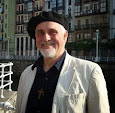
After the Eucharist, I was out and about taking photographs, when I ran into Dick Geen, whose Council remit is Community Safety. He introduced me to his new colleague Tom. "Meet my new alligator." I thought he said. Well, I've heard heard of people with a security brief being described as rottweilers, but this was a new one on me, so I just smiled and shook hands. Dick said they were both on their way up to the Market to look at a location for a new security gate - one of the features of the new order of things in the city centre to enclose dark corners of service areas and put them out of reach of those with dark intentions in mind. It was a little while before the penny dropped. Tom is in charge of designing and procuring gates to enclose dark alleys. What Dick had actually said was "alley gat-er". Nice one.
Wednesday, November 05, 2008


No longer just Guy Fawkes' day
The news of an Obama victory in the US Presidential elections dominates everything, and quite naturally causes me to reflect on what I've witnessed in my lifetime - from the days of Martin Luther King and JFK, the liberation of Mandela in South Africa, and now a black president whose campaign has unified people across that great country. Rachel and Jasmine arrived in California from Canada this afternoon, excited to reach her new home in L.A. safe and sound. And on such an auspicious day. I confess that having her in the USA has been something of a fatherly worry for me, having found myself so much at odds with American culture and values for so long. Nothing much has yet changed, except that a majority of people have chosen to invest their aspirations and energies in the possibilities of change for the better. I hope this will give me less cause to feel anxious about the place where my granddaughter is going to spend her much of her childhood.
For me the marvellous thing about Obama is that he's more than a leader who can, with his mixed race and modest social origins, bridge the cultural divide. His poetic gift of speech is able to tell America's many stories in fresh ways that both unite and inspire for the common good.
I read Alistair Mackintosh's book 'Soil and Soul' while on holidays. He's a Scottish community activist, battling for decades on environmental and land rights issues with considerable influence and success, a voice for grass roots movements, and community rooted spirituality. Take a look at his website. He's an ex wee Free Quaker, from the Hebrides who thinks with stories. He's another possessing a great gift with words. His writing shows that poetry has the ability to put inspiration back into politics, because it feeds the heart and captures the essence of what the mind needs to take on board of any argument that delivers the goods. It's not just preachers who need to be poetic. The challenge to us preachers is to keep poetry and praxis together, or we are leading people up in the air and back to nowhere.
This day in UK has long been one to remember the treason of Guy Fawkes, and his attempt to blow up the Houses of Parliament in 1605. Parliament was not the democracy in those days that it is now, but like many ancient institutions it was evolving. Who knows what such violence would have led to, had it succeeded? Half a century later there was another attempt at revolution with the abolition of the Monarchy and a Civil War which didn't change things radically enough to prevent the eventual restoration of the Monarchy. But at least collective lessons had been learned, so that Britain could then resist the attraction of a revolution, French style, and end up rejected by its own colonies as they for revolution, American style, plodding its own course through the centuries since to achieve comparable democracy by a different route.
President or Monarch? Election or inheritance? Head of State, steering the nation politically? Or representing continuity and values to which every political leader must aspire, else count themselves out of the action? Either way has its benefits and problems. In every case it depends upon the life and soul of the representative person, and how they stand up to the challenges of office.
In the case of a Presidential figure, the results are there for all to evaluate and that very fact is a pressure on the office holder's use of power. The wise Monarch sees leaders and policies come and go, but is there as an influential reminder of who we are as a nation and what we stand for. Ideals are embodied, not in political promises, however inspiring, but in a person representing tradition and culture rooted in its past, but open to the future by persuasion, without needing to resort to violence. Would Britain be quite as free and open as it is, if it had become a revolutionary republic? I doubt it.
For me the marvellous thing about Obama is that he's more than a leader who can, with his mixed race and modest social origins, bridge the cultural divide. His poetic gift of speech is able to tell America's many stories in fresh ways that both unite and inspire for the common good.
I read Alistair Mackintosh's book 'Soil and Soul' while on holidays. He's a Scottish community activist, battling for decades on environmental and land rights issues with considerable influence and success, a voice for grass roots movements, and community rooted spirituality. Take a look at his website. He's an ex wee Free Quaker, from the Hebrides who thinks with stories. He's another possessing a great gift with words. His writing shows that poetry has the ability to put inspiration back into politics, because it feeds the heart and captures the essence of what the mind needs to take on board of any argument that delivers the goods. It's not just preachers who need to be poetic. The challenge to us preachers is to keep poetry and praxis together, or we are leading people up in the air and back to nowhere.
This day in UK has long been one to remember the treason of Guy Fawkes, and his attempt to blow up the Houses of Parliament in 1605. Parliament was not the democracy in those days that it is now, but like many ancient institutions it was evolving. Who knows what such violence would have led to, had it succeeded? Half a century later there was another attempt at revolution with the abolition of the Monarchy and a Civil War which didn't change things radically enough to prevent the eventual restoration of the Monarchy. But at least collective lessons had been learned, so that Britain could then resist the attraction of a revolution, French style, and end up rejected by its own colonies as they for revolution, American style, plodding its own course through the centuries since to achieve comparable democracy by a different route.
President or Monarch? Election or inheritance? Head of State, steering the nation politically? Or representing continuity and values to which every political leader must aspire, else count themselves out of the action? Either way has its benefits and problems. In every case it depends upon the life and soul of the representative person, and how they stand up to the challenges of office.
In the case of a Presidential figure, the results are there for all to evaluate and that very fact is a pressure on the office holder's use of power. The wise Monarch sees leaders and policies come and go, but is there as an influential reminder of who we are as a nation and what we stand for. Ideals are embodied, not in political promises, however inspiring, but in a person representing tradition and culture rooted in its past, but open to the future by persuasion, without needing to resort to violence. Would Britain be quite as free and open as it is, if it had become a revolutionary republic? I doubt it.
Saturday, November 01, 2008
Beginning year seven
For the annual blessing of the Royal British Legion's Garden of Crosses today, the weather was kind to us. For me this is the seventh time I've presided over this event. It was the first public service I had to perform after my induction as Incumbent on 28th October 2002. Here in the heart of Cardiff for six years already. How time flies!
Again we had two bands accompanying the service - the St Athan RAF voluntary band and the Welsh Pipe Band. I began the ceremony with a brief re-dedication of the two war memorial plaques which we removed from redundant St James' Church and installed in the north aisle war memorial chapel earlier in the year. This concluded with the entry procession of standards, two of which crossed over into the chapel for a ceremonial salute, which alone piper played a verse of 'Amazing Grace'. Simple but effective.
'We will remember them' on this occasion meant the extra job of removing two well fixed brass plaques from St James', storing them for over a year, and then applying for a Faculty to install them, conscious that such plaques from a bygone era are no longer favoured in modern aesthetics of church décor. Still, justice to be done, particularly at a time when the litany of names of those killed in current conflicts continues to lengthen.
Despite the organisers' lament that the number of veterans from different former conflicts is diminishing, there were still nearly 200 people present, many of them young. After the planting of crosses in the churchyard, the two bands retired into church and played together, just for pleasure before packing away their instruments. It's now the third time they've done this gig together. It makes the whole event something unique to the city centre, and very special.
Again we had two bands accompanying the service - the St Athan RAF voluntary band and the Welsh Pipe Band. I began the ceremony with a brief re-dedication of the two war memorial plaques which we removed from redundant St James' Church and installed in the north aisle war memorial chapel earlier in the year. This concluded with the entry procession of standards, two of which crossed over into the chapel for a ceremonial salute, which alone piper played a verse of 'Amazing Grace'. Simple but effective.
'We will remember them' on this occasion meant the extra job of removing two well fixed brass plaques from St James', storing them for over a year, and then applying for a Faculty to install them, conscious that such plaques from a bygone era are no longer favoured in modern aesthetics of church décor. Still, justice to be done, particularly at a time when the litany of names of those killed in current conflicts continues to lengthen.
Despite the organisers' lament that the number of veterans from different former conflicts is diminishing, there were still nearly 200 people present, many of them young. After the planting of crosses in the churchyard, the two bands retired into church and played together, just for pleasure before packing away their instruments. It's now the third time they've done this gig together. It makes the whole event something unique to the city centre, and very special.
Friday, October 31, 2008
Times of refreshment
Home again and making ready to rejoin the relentless round of activities after two weeks of rural peace and quiet, a tranquil retreat in a well appointed comfortable farm holiday cottage on the edge of a wood of tall trees, just a couple of miles walk from Tresaith and Aberporth beaches.
We've eaten well, slept well, got plenty of fresh air and exercise. The sound of morning traffic tomorrow will not equal the sound of wind in the trees, although we are fortunate to do equally well for birdsong in Queen Anne Square as in deep countryside, because of the neighbouring convent garden is a real wildlife haven in the heart of the city.
The Cardiganshire coast is wonderful, well cared for, well managed. There are even prize winning beach toilets to be found, many excellent places to eat, and wildlife to enjoy. Most days we saw buzzards or red kites. Along the coast and the estuaries we saw notably oystercatchers, dunlins, Manx shearwaters, curlews, egrets, as well as the commoner species of birds. The morning we visited New Quay, as we arrived on the quaside we caught sight of a school of dolphins racing up and down the bay about five hundred metres off-shore.
My sister June had talked about war-time holidays before I was born, spent in New Quay, with backout evenings spent listening to the only radio set in the village in the bar of the Blue Bell Inn. We found the pub in the process of being done up and sold on. It was one of those mentioned on the Dylan Thomas Trail, as a place where he and Richard Burton drank together ten years later. I was so delighted, I rang my sister on the spot to tell her about both the dolphins and the pub.
We visited Llanerchaeron, a National Trust property built by Nash (of Bath terracing fame). The home farm had a large walled garden specialising in apples. One of the out-houses had a display of fifty different kinds of apples grown in Wales - thirty of them were being cultivated on the estate. The gardens had fallen into neglect, but rescued, thanks to the enthusiastic dedication of a legion of volunteers. One of them, in charge of the apple display, a retired woman in her seventies spoke with great affection and knowledge about the many kinds of apple on display, what they were good for and at which time of year.
Much lamenting is done these days about the widespread loss of many native fruit trees, and narrowness of choice available at the big supermarkets. Here in a very down to earth way an important piece of conservation work is being done by Trust workers and volunteers. The fruit trees are as important as the buildings and the landscape. They are emore than Heritage - they are food, in all its divine diversity.
One of Cardiganshire's most beautiful and numinous places is Y Mwnt, where a cliff lined bay has a large green conical hill inserted into the shore line. The area around Y Mwnt is under the protection of the National Trust. At the base of the hill is Eglwys y Grog, Holy Cross Church. A simple rural mediaeval building, whitewashed, enclosed by a stone wall, standing alone in a field, about half a mile from the nearest farm. It is open daily - regular services, a rarity. Leaving it available for people to pray in is a risk of faith by the Parish, a blessing to visitors over and above the scenery.
For the Vicar of St Mary's Cardigan, this is his fourth church, and he works on his own nowadays. Last Sunday we attended a modern Welsh language Eucharist there. I struggled with its unfamiliarity - I know the 1984 rite in Welsh off by heart. That's how I learned to get by in Welsh services. French still comes easier to me. It wasn't easy to follow the new rite, not least because some people apart from the Vicar were striving among themselves to lead recitation of the common texts. This confused and dismayed me. It made me wonder about all our public services.
How easy are they to join in? Do people always want to join in, or do they sometimes want just to be present, or just observing? How do we make it possible for them not to feel awkward? I need to keep these thoughts in focus as I get back to work in the coming week.
I got by with periodic visits to the library to check emails, five in a fortnight was enough to reduce the job facing me on return. I didn't miss surfing, and Radio Four news coverage was quite sufficient. Hardly a moment of boredom, and the simple quiet pleasure of uninterrupted companionship. That's quality time for you.
We've eaten well, slept well, got plenty of fresh air and exercise. The sound of morning traffic tomorrow will not equal the sound of wind in the trees, although we are fortunate to do equally well for birdsong in Queen Anne Square as in deep countryside, because of the neighbouring convent garden is a real wildlife haven in the heart of the city.
The Cardiganshire coast is wonderful, well cared for, well managed. There are even prize winning beach toilets to be found, many excellent places to eat, and wildlife to enjoy. Most days we saw buzzards or red kites. Along the coast and the estuaries we saw notably oystercatchers, dunlins, Manx shearwaters, curlews, egrets, as well as the commoner species of birds. The morning we visited New Quay, as we arrived on the quaside we caught sight of a school of dolphins racing up and down the bay about five hundred metres off-shore.
My sister June had talked about war-time holidays before I was born, spent in New Quay, with backout evenings spent listening to the only radio set in the village in the bar of the Blue Bell Inn. We found the pub in the process of being done up and sold on. It was one of those mentioned on the Dylan Thomas Trail, as a place where he and Richard Burton drank together ten years later. I was so delighted, I rang my sister on the spot to tell her about both the dolphins and the pub.
We visited Llanerchaeron, a National Trust property built by Nash (of Bath terracing fame). The home farm had a large walled garden specialising in apples. One of the out-houses had a display of fifty different kinds of apples grown in Wales - thirty of them were being cultivated on the estate. The gardens had fallen into neglect, but rescued, thanks to the enthusiastic dedication of a legion of volunteers. One of them, in charge of the apple display, a retired woman in her seventies spoke with great affection and knowledge about the many kinds of apple on display, what they were good for and at which time of year.
Much lamenting is done these days about the widespread loss of many native fruit trees, and narrowness of choice available at the big supermarkets. Here in a very down to earth way an important piece of conservation work is being done by Trust workers and volunteers. The fruit trees are as important as the buildings and the landscape. They are emore than Heritage - they are food, in all its divine diversity.
One of Cardiganshire's most beautiful and numinous places is Y Mwnt, where a cliff lined bay has a large green conical hill inserted into the shore line. The area around Y Mwnt is under the protection of the National Trust. At the base of the hill is Eglwys y Grog, Holy Cross Church. A simple rural mediaeval building, whitewashed, enclosed by a stone wall, standing alone in a field, about half a mile from the nearest farm. It is open daily - regular services, a rarity. Leaving it available for people to pray in is a risk of faith by the Parish, a blessing to visitors over and above the scenery.
For the Vicar of St Mary's Cardigan, this is his fourth church, and he works on his own nowadays. Last Sunday we attended a modern Welsh language Eucharist there. I struggled with its unfamiliarity - I know the 1984 rite in Welsh off by heart. That's how I learned to get by in Welsh services. French still comes easier to me. It wasn't easy to follow the new rite, not least because some people apart from the Vicar were striving among themselves to lead recitation of the common texts. This confused and dismayed me. It made me wonder about all our public services.
How easy are they to join in? Do people always want to join in, or do they sometimes want just to be present, or just observing? How do we make it possible for them not to feel awkward? I need to keep these thoughts in focus as I get back to work in the coming week.
I got by with periodic visits to the library to check emails, five in a fortnight was enough to reduce the job facing me on return. I didn't miss surfing, and Radio Four news coverage was quite sufficient. Hardly a moment of boredom, and the simple quiet pleasure of uninterrupted companionship. That's quality time for you.
Thursday, October 23, 2008
Holiday excursion?
I've come back home today. We departed in haste and I left behind my guitar. Above all I had looked forward to being able to while away an hour a day of practice in our quiet country retreat, and build upon my recent success at getting back into the habit of picking up the instrument and playing a little every day without fail. Frankly, being without it was making me miserable, so I returned to collect it.
The public library in Aberteifi/Cardigan town has proved to be a good and useful place to access email this week. The tough bit has been persuading Clare to go into this town more frequently than others, especially when there are so many other beautiful towns and villages to visit. She is patient and long suffering, to say the least. The library has eight terminals, and a tight security policy, which means I cannot send attachments. However, the lady running the open access computer class in the room opposite the library entrance was helpful and kind one day, letting me use her network with a more relaxed policy, but her class only runs two days a week, so a visit home was helpful in other ways.
Best of all, I am re-united with my guitar, and look forward to playing it when I get back later this afternoon.
The public library in Aberteifi/Cardigan town has proved to be a good and useful place to access email this week. The tough bit has been persuading Clare to go into this town more frequently than others, especially when there are so many other beautiful towns and villages to visit. She is patient and long suffering, to say the least. The library has eight terminals, and a tight security policy, which means I cannot send attachments. However, the lady running the open access computer class in the room opposite the library entrance was helpful and kind one day, letting me use her network with a more relaxed policy, but her class only runs two days a week, so a visit home was helpful in other ways.
Best of all, I am re-united with my guitar, and look forward to playing it when I get back later this afternoon.
Saturday, October 18, 2008
Connectivity quandry
A fortnight's deferred summer holiday leave starts for Clare and I today.
We've booked a cottage near the coast in Cardigan Bay. The downside is no internet link at the place where we're staying, so it will be interesting to learn to cope without easy access, especially at an interesting and busy time, when staying in touch with the situation in Cardiff would make life a lot easier to manage when I return. Progress on following up the Spiritual Capital conference now seems possible in mid-November, but now is the time for preparation - with or without me.
But really, the worst thing about holidays is the backlog of post and emails to be dealt with before normal routine can be resumed. A chance to go through the in-box every few days would make all the difference. I wonder about buying a Mobile Internet Device, that could give me access via the mobile phone network. I am assured of a decent signal in the place we'll be staying in. However, all I've read about MIDs suggest this is an expensive subscription. The only pay as you go MID option is not yet as good as it needs to be in terms of reliability and value for money. It would mean laying out £50. How much is that to pay for peace of mind? Too much, I think. I'll have a look at what the possibilities are at the nearest public library instead.
We've booked a cottage near the coast in Cardigan Bay. The downside is no internet link at the place where we're staying, so it will be interesting to learn to cope without easy access, especially at an interesting and busy time, when staying in touch with the situation in Cardiff would make life a lot easier to manage when I return. Progress on following up the Spiritual Capital conference now seems possible in mid-November, but now is the time for preparation - with or without me.
But really, the worst thing about holidays is the backlog of post and emails to be dealt with before normal routine can be resumed. A chance to go through the in-box every few days would make all the difference. I wonder about buying a Mobile Internet Device, that could give me access via the mobile phone network. I am assured of a decent signal in the place we'll be staying in. However, all I've read about MIDs suggest this is an expensive subscription. The only pay as you go MID option is not yet as good as it needs to be in terms of reliability and value for money. It would mean laying out £50. How much is that to pay for peace of mind? Too much, I think. I'll have a look at what the possibilities are at the nearest public library instead.
Friday, October 17, 2008
Return from Valencia
After a late breakfast and packing we took a bus to the station and walked to the Grand Mercat. It was already well into its day, purveying the best quality fruit, vegetables, fish and meat to the city. It is cruciform in shape with a large central glass dome with tiled walls, plus an annexe on the north side for fish and meat. The vegetable display on every stall is done skillfully, taking advantage of shapes and colours. Every stall is a visual feast. There were also preserves, chorizo and jamon on sale, but no eateries. There was just a stand up breakfast bar in the street outside selling coffee, beer, horxata di chufa, orange juice and crossants, but it wasn't part of the Market's ancient fabric or style. It was one of few of its kind I'd noticed during our stay.
Mission accomplished, we got on a bus to return to the hotel. It didn't go where we expected, so we took a taxi back, in time to check out. With an hour to kill before eating, we took a short walk to see the third Calatrava designed bridge across the dry river-bed, the Punte del Exposition. Beneath it, deep in the river bed was a Metro station, designed by him. After lunch, we returned to this station to start our journey to the airport, taking photographs as we went. Check in was slow, relaxed, yet thorough. We boarded without delay and arrived Gatwick just ahead of schedule.
The 'plane parked as far from Passport Control as one can get, giving us a full half mile journey on the moving walkways to join passport queues. Hundreds of us, and eight desks in use. No smile, no eye contact. Nor a word exchanged. A surly unpleasant experience so un-British. This security driven 'welcome' made me wonder if we hadn't been taken over by some foreign power during our absence. I was annoyed at the gaggle of dark suited young blokes (immigration police? Special Branch? hovering behind one control desk chatting, staring up and down the rows of people - looking for what? Eyeing up the girls perhaps? I'd have felt happier with a properly uniformed armed guard. Real soldiers behave better.
To cap the in-bound visitor experience, there's nothingon the railway station platform to say which direction lies the destination you seek, so no way for a stranger to work out which direction to anticipate the train. This is important, given that some divide in transit, so knowing which end to sit counts. Someone of limited mobility wants the shortest possible walk to the ticket barrier, but if disoriented and unfamiliar with the place this is difficult, and helpful people are not always easy to come by. Brits don't much like to converse (except with their mobile phones) on trains, after all. We parted company at Victoria - I continued to the coach station for a late journey back to Cardiff. Good to be on the receiving end of a 'visitor experience' for a change. Must get out more.
Mission accomplished, we got on a bus to return to the hotel. It didn't go where we expected, so we took a taxi back, in time to check out. With an hour to kill before eating, we took a short walk to see the third Calatrava designed bridge across the dry river-bed, the Punte del Exposition. Beneath it, deep in the river bed was a Metro station, designed by him. After lunch, we returned to this station to start our journey to the airport, taking photographs as we went. Check in was slow, relaxed, yet thorough. We boarded without delay and arrived Gatwick just ahead of schedule.
The 'plane parked as far from Passport Control as one can get, giving us a full half mile journey on the moving walkways to join passport queues. Hundreds of us, and eight desks in use. No smile, no eye contact. Nor a word exchanged. A surly unpleasant experience so un-British. This security driven 'welcome' made me wonder if we hadn't been taken over by some foreign power during our absence. I was annoyed at the gaggle of dark suited young blokes (immigration police? Special Branch? hovering behind one control desk chatting, staring up and down the rows of people - looking for what? Eyeing up the girls perhaps? I'd have felt happier with a properly uniformed armed guard. Real soldiers behave better.
To cap the in-bound visitor experience, there's nothingon the railway station platform to say which direction lies the destination you seek, so no way for a stranger to work out which direction to anticipate the train. This is important, given that some divide in transit, so knowing which end to sit counts. Someone of limited mobility wants the shortest possible walk to the ticket barrier, but if disoriented and unfamiliar with the place this is difficult, and helpful people are not always easy to come by. Brits don't much like to converse (except with their mobile phones) on trains, after all. We parted company at Victoria - I continued to the coach station for a late journey back to Cardiff. Good to be on the receiving end of a 'visitor experience' for a change. Must get out more.
Wednesday, October 15, 2008
Sightseeing in Valencia - with Cardiff in mind (2)
After breafast, a repeat journey to the 'Oceanographic' to take the tour. There are surface pools with aquatic mammals, and one whose sole residents seem to be a family of five pelicans, occasionally stretching their wings photogenically in concert together adjacent to a cafe-bar. The underground aquaria are well stocked, with everything from sharks to sea horses, medusa to manta rays. It was all beautifully laid out and informative as befits a prestige educational resource of the region. I was glad we arrived early, as I could imagine it getting very busy when the school and tourist buses arrived. Inside the white sphere of the aviary above ground, was also special, as the birds were used ot being close to people, as well as being colourful. The most attractive were the spoonbills, and a scarlet coloured bird with a curlew-like curved beak. Before leaving we booked for supper in the exclusive restaurant. No possibility of a spontaneous dining out experience here.
We then made a briefer visit to the Palace of Sciences - the cost of which was included with the special deal ticket we obtained. The vastness of the building can be understood if you imagine a full sized Mirage jet fighter, a Montgolfier ballon and an early bi-plane were all suspended in mid air above the upper storey at one end of the interior, and looked small from the middle distance . The first floor was dedicated to a Sci-fi comic exhibition, art, special effects, science present and future all explored for kids of all ages. Atop the second floor exhibit cases were representations of portions of the human genome, with a 5m tall DNA spiral suspended nearby. There was a replica of an earth orbiting satellite with solar panel plumage extended over the space technology section, and from an earlier age, a Foucault's pendulum replica on the first floor plaza, suspended from the roof 50m above. Wonderful to have so much space to use and sufficient floor area to build temporary exhibit halls and conference facilities under the same vast roof - a building with much spare potential to be realised. A bit like science itself.
After our long morning, we decided to skip lunch and siesta to prepare for our grand evening meal. In true Spanish style, doors don't open for meals at the Oceanographic until 9.00 pm. After a couple of hours, boredom drove me out for a walk up to the old town. Finding my way around was not as easy as I'd imagined. I'd left the best map behind and the guide book I was carrying didn't give a useful overview. There are groups of interesting ancient buildings, separated from each other by less ancient streets and tall buildings. It's easy to lose direction in the absence of landmarks - and in the absence of street signage designed to help visitors and tourists. If it was present, I failed to pick it up and use it. That's something Cardiff must be sure to get right next year.
From the station, I followed my nose up a long street with an imposing tower in the distance. This turned out to be the Ajuntamento, City Hall, a grand old style Spanish palace of administration set in a large piazza. From here I set off for the Grand Mercat, finding some older University buildings en route. Eventually I came out into a large open area with a church under building wraps at the far end, and next to it an entrance adorned by mosaics identifying it as a covered market. The open area was a vast construction site, being excavated. Mechanical diggers were down seven metres or so. A model of the work to make a new car park, on display in a nearby kiosk, showed that it was due to descend six levels, around thirty metres deep. The market was closed after business, but at least now I would be able to find my way back here to show my sister.
A custodian was on duty admitting parents with children to the church. It was catechism evening. A plaque on the wall announced it was the Royal Parish of the two St Johns, but at first I misread it, and asked which St John it meant. I asked if it was St John Baptist or St John the Apostle. I just didn't understand that the real answer was 'both', and thought my respondent said just the latter. If I'd looked carefully at the picture I later took of the east facade of the church, I'd have seen this clearly in the two statues surmounting it, with their different identifying symbols. Clear urban signage from another age when few could read plaques on walls.
Opposite the church was the Lonja de Valencia, a 15th century palatial building with a beautifully vaulted hall in Spanish gothic style, two large rooms, and an enclosed garden with orange trees. It had at one time been law courts. A modern plaque announced it to be a World Heritage Site. Not surprisingly, as it was in immaculate condition, with free guided tour. In this vicinity was also an ancient library building and a ceramic museum, but there was insufficient time to visit them. I set off back to the hotel photographing the amazing exterior of the Marquet de Colon before the sun set below the building line. After my brisk tour it was time to wake June and prepare to dine.
We made our way back to the restaurant by bus, had our names checked off the list by a steward at the gate of the Oceanographic, and were admitted to the zone of privilege. Punctual, we were among the first to arrive. Within the hour, sixty people were being served. The place was full. I found the experience of dining next to a towering wall of water (the tanks were all four metres deep) observed impassively by thousands of passing fish disconcerting, as I was eating fish. The menu was nouvelle cuisine in style - food as entertainment - good to look at and taste, small in portion size, large in cost. June was happy. I am less of a tourist than she. The buses had stopped running by the time we left, so we took a cab back to the hotel, both ready to turn in for the night.
We then made a briefer visit to the Palace of Sciences - the cost of which was included with the special deal ticket we obtained. The vastness of the building can be understood if you imagine a full sized Mirage jet fighter, a Montgolfier ballon and an early bi-plane were all suspended in mid air above the upper storey at one end of the interior, and looked small from the middle distance . The first floor was dedicated to a Sci-fi comic exhibition, art, special effects, science present and future all explored for kids of all ages. Atop the second floor exhibit cases were representations of portions of the human genome, with a 5m tall DNA spiral suspended nearby. There was a replica of an earth orbiting satellite with solar panel plumage extended over the space technology section, and from an earlier age, a Foucault's pendulum replica on the first floor plaza, suspended from the roof 50m above. Wonderful to have so much space to use and sufficient floor area to build temporary exhibit halls and conference facilities under the same vast roof - a building with much spare potential to be realised. A bit like science itself.
After our long morning, we decided to skip lunch and siesta to prepare for our grand evening meal. In true Spanish style, doors don't open for meals at the Oceanographic until 9.00 pm. After a couple of hours, boredom drove me out for a walk up to the old town. Finding my way around was not as easy as I'd imagined. I'd left the best map behind and the guide book I was carrying didn't give a useful overview. There are groups of interesting ancient buildings, separated from each other by less ancient streets and tall buildings. It's easy to lose direction in the absence of landmarks - and in the absence of street signage designed to help visitors and tourists. If it was present, I failed to pick it up and use it. That's something Cardiff must be sure to get right next year.
From the station, I followed my nose up a long street with an imposing tower in the distance. This turned out to be the Ajuntamento, City Hall, a grand old style Spanish palace of administration set in a large piazza. From here I set off for the Grand Mercat, finding some older University buildings en route. Eventually I came out into a large open area with a church under building wraps at the far end, and next to it an entrance adorned by mosaics identifying it as a covered market. The open area was a vast construction site, being excavated. Mechanical diggers were down seven metres or so. A model of the work to make a new car park, on display in a nearby kiosk, showed that it was due to descend six levels, around thirty metres deep. The market was closed after business, but at least now I would be able to find my way back here to show my sister.
A custodian was on duty admitting parents with children to the church. It was catechism evening. A plaque on the wall announced it was the Royal Parish of the two St Johns, but at first I misread it, and asked which St John it meant. I asked if it was St John Baptist or St John the Apostle. I just didn't understand that the real answer was 'both', and thought my respondent said just the latter. If I'd looked carefully at the picture I later took of the east facade of the church, I'd have seen this clearly in the two statues surmounting it, with their different identifying symbols. Clear urban signage from another age when few could read plaques on walls.
Opposite the church was the Lonja de Valencia, a 15th century palatial building with a beautifully vaulted hall in Spanish gothic style, two large rooms, and an enclosed garden with orange trees. It had at one time been law courts. A modern plaque announced it to be a World Heritage Site. Not surprisingly, as it was in immaculate condition, with free guided tour. In this vicinity was also an ancient library building and a ceramic museum, but there was insufficient time to visit them. I set off back to the hotel photographing the amazing exterior of the Marquet de Colon before the sun set below the building line. After my brisk tour it was time to wake June and prepare to dine.
We made our way back to the restaurant by bus, had our names checked off the list by a steward at the gate of the Oceanographic, and were admitted to the zone of privilege. Punctual, we were among the first to arrive. Within the hour, sixty people were being served. The place was full. I found the experience of dining next to a towering wall of water (the tanks were all four metres deep) observed impassively by thousands of passing fish disconcerting, as I was eating fish. The menu was nouvelle cuisine in style - food as entertainment - good to look at and taste, small in portion size, large in cost. June was happy. I am less of a tourist than she. The buses had stopped running by the time we left, so we took a cab back to the hotel, both ready to turn in for the night.
Tuesday, October 14, 2008
Sightseeing in Valencia - with Cardiff in mind (1)
By the time we were breakfasting, overlooking streams of traffic from the first floor dining room of the hotel, streets were dry and sweepers were out. Valencia's Grand Vias are two lane roads in each direction, with tree filled central reservations, equal in width to the four carriageways - perfect for joggers, cyclists, pedestrians. They cut across the classic city street grid. Traffic was heavy, fast moving, noisy. What was different about this picture? I asked myself, watching others work, as I breakfasted. No hedgehog vehicles, just people sweeping methodically with large brooms. No litter, just leaves and small branches after the storm.
As the day passed, I couldn't help noticing how clean it was wherever we went, and continued to puzzle over why. There were plenty of public litter bins. Each street had its ensemble of communal bottle banks and big bins for sorted rubbish from apartment dwellers. These were in areas cordoned with guard rails. Efficient, clean, but ugly. Well used, but not yet integrated decently into the city-scape. It was less chaotic and more disciplined than arrangements in Cardiff city centre. Modern waste management in both cities is in transition, responding to new city policy developments involving re-cycling, reflects commitment, but not yet investment in the re-design of street surfaces to sink waste management receptacles underground, as seen in Granda's barrio d'Albaysin.
We took the bus, but had to walk another quarter mile to visit the 'Oceanographic', a large glass walled compound containing huge aquaria representing oceans of the planet, an outdoor theatre for dolphin displays, a spherical aviary, white, 50 metres in diameter, several eateries, plus a five star exclusive restuarant with huge inhabited fish tanks as living decor. The variety in building shapes and layout suggests it looks interesting on a map, from the air, or the top of tall building of which there are plenty nearby. We decided to delay a full visit until we'd seen all the notable buildings.
Right next door walking 'up river' is a construction site containing a four lane road bridge and a clamshell shaped edifice a 100m high, still being built. The work in hand, is a spectacle on its own to my eyes. There was nothing to inform passing visitors what what being built or why. There was nothing in the literature to tell us either. Hats off to Cardiff's SD2 Partnership for their information displays on all site hoardings. The bridge is a link in the network of Grand Vias. When it's open and in use it'll be another specatacle. It has one tall column from which the roadway is suspended. This is shaped to convey the appearance of a Greek lyre, 120m high in white, against a blue sky. There wasn't a cloud in sight after those night rains, and the temperature, 24 degrees.
We walked further on above the bridge building site to the Palace of Sciences, a grand complex of buildings 250m long. Closest to the road, is the Umbracle, an avenue of palm trees enclosed for its entire length within a succession of tall fine white hoops, making it resemble a fishbone from afar. Next to it, a shallow pool 50m wide, then the Palace itself, with two theatrically wide staircases leading up 20m to a second storey balcony running the pool's length. I discovered later that this beautiful structure was the emergency exit route from the top floor. It was closed to the public, thus unavailable as a neighbourhood viewing platform. No emergency exit for anyone on wheels was apparent. Being with someone who finds steps challenging made me see things differently.
The working building is a two storey structure sitting within the elaborate glass and concrete tent shaped exterior. This creates a cool environment, without need for air conditioning. The south side has a view over the pond, the north side an array of offices, restaurants and other facilities built into it, simply laid out, making it easy to welcome large groups of visitors. It's a science museum, a colossal equivalent of the more modestly styled Techniquest down in Cardiff Bay, and the place was busy with school parties by the time we arrived. We stopped long enough for a drink and vowed to return earlier next time. A marvellous cathedral of empiricism in concept, with its soaring arches and light pouring in, airy and cool. From outside, without the title of the building as guide, you'd have a fine time guessing its purpose and function. Unlike Techniquest, where you can look in and have the building communicate its purpose to you. This Palace is an architectural wonder, yet as it fails to convey its purpose - unless you want the world to think that science is something arcane.
Last port of call in our morning's walk, the Palace of Arts and Culture, towering over another new Calatrava road bridge. This building looks like a giant fish, beached in the dry river bed. It must be 100m high. It has terraces in its flanks big enough for tall leylandia trees. The open mouth of this creature has panoramic windows spanning several floors of the interior. Its skin is made of mosaic in white glazed pottery shards, used on most external surfaces, pavements, benches. It's reminiscent of Gaudi's use of this material in Barcelona. Again, the working building hides within the iconic exterior. For once I feel I can use the much abused word 'iconic' as the building's shape actually represents something. But, what it has to do with the building's function is not evident.
Our approach to any entrance to the place was barred by security cordons placed 50m from the doors, with guards on duty. We were told there was no possibility of visiting except when there was a performance on. This was how we got the clue that the fish enclosed the city's Opera House. There were no signs or information boards near the building advertising its purpose or activities. It wasn't still a construction site. Every bus shelter carried an advertisment for the current performance - 'Parsival'. Even tourist literature was inexplicit about the function of this and other new buildings we'd seen. Not much tourist promotion effort here. What a contrast to our home grown Millennium Centre, full of people and activities all day every day, whether or not there's an opera running, lots of information, always accessible. I wonder if Calatrava thinks justice is being done to his designs? Getting great buildings to serve a city requires more careful thought and collaborative enterprise.
Having walked a mile and a half in the heat, we decided to explore more of the city by bus, and have an air conditioned sit down. We took a route which followed the river bed out into suburbs constructed since the sixties, saw modern tower blocks and shopping centres that serve them. Somewhere I picked up the stray piece of information that the department store chain 'Il Corte Ingles' has eight branches in Valencia. Most of the ones I noticed were pretty big. Then we headed back to base, hungry. We returned to the same restaurant, eating well from the menu of the day at half last night's price, before taking a siesta.
Refreshed by sleep we went out again, and took a bus down to the Port in search of another award winning building by English architect David Chipperfield. When the Swiss won the Americas Cup in 2003, they nominated Valencia to host the 2007 competition, stim ulating a regeneration project which transformed unused areas of dockland into leisure sailing facilities for the competition, to be useable afterwards. The Metro was extended to link the Port with the Airport directly. Chipperfield's building is distinguished by its long balconies at second and third floor levels, offering viewing platforms, overlooking the channel into the marina, and wide enough to accomodate exhibition booths and restaurant tables. A view out to sea would be possible from the upper levels. Certainly striking in its modernity, set amongst older 19th century port buildings, it was surprising to see signs of wear and tear in its fabric, not yet two years old - loose decking, rust streaks across white painted facades. Maybe fixable during the winter maintenance period - but so soon?
We took the bus back up town in search of the old quarter, stopping at the Estacion de Nord railway terminus,with its single arched span roof enclosing six platforms, a palatial grand entrance. The booking hall was finely decorated with mosaics using fruit and flowers as motifs, and picture panels of bucolic scenes, similar to the Marquet de Colon. This is characteristic of the region, celebrating its rich agrarian economy. Next to the station is the brick built bull-ring, a circular amphitheatre, Roman style, though probably no older than the station. A popular venue and the means to deliver the masses to it, side by side. To the eye of a stranger these two imposing edifices, contrasting with their modern neighbours, made an incongruous pair.
As darkness approached we returned to the hotel. Rather than eat out again, I went hunting for a sandwich. Wandering the streets of the local barrio, I was impressed to see just how many bars and restaurants there were in every street. It's certainly a residential and well as business district, so there are plenty of clients, twice daily. Valencia certainly gets its second wind after nine in the evening, and the morning starts later. Scores of restaurants, but only a handful of fast food joints anywhere to be seen. Finally the penny dropped. The lack of litter is explained. I don't recall seeing anyone eating or drinking on the street. These things are done socially, and the impact on the public realm is very evident.
So we want a cleaner Cardiff? We'll not succeed until we change eating habits, until we ban take-away places, street eating and give people incentives to sit down and eat socially. A real culture shift. Would that be a bad ting? What a lot of money would be saved if we did.
As the day passed, I couldn't help noticing how clean it was wherever we went, and continued to puzzle over why. There were plenty of public litter bins. Each street had its ensemble of communal bottle banks and big bins for sorted rubbish from apartment dwellers. These were in areas cordoned with guard rails. Efficient, clean, but ugly. Well used, but not yet integrated decently into the city-scape. It was less chaotic and more disciplined than arrangements in Cardiff city centre. Modern waste management in both cities is in transition, responding to new city policy developments involving re-cycling, reflects commitment, but not yet investment in the re-design of street surfaces to sink waste management receptacles underground, as seen in Granda's barrio d'Albaysin.
We took the bus, but had to walk another quarter mile to visit the 'Oceanographic', a large glass walled compound containing huge aquaria representing oceans of the planet, an outdoor theatre for dolphin displays, a spherical aviary, white, 50 metres in diameter, several eateries, plus a five star exclusive restuarant with huge inhabited fish tanks as living decor. The variety in building shapes and layout suggests it looks interesting on a map, from the air, or the top of tall building of which there are plenty nearby. We decided to delay a full visit until we'd seen all the notable buildings.
Right next door walking 'up river' is a construction site containing a four lane road bridge and a clamshell shaped edifice a 100m high, still being built. The work in hand, is a spectacle on its own to my eyes. There was nothing to inform passing visitors what what being built or why. There was nothing in the literature to tell us either. Hats off to Cardiff's SD2 Partnership for their information displays on all site hoardings. The bridge is a link in the network of Grand Vias. When it's open and in use it'll be another specatacle. It has one tall column from which the roadway is suspended. This is shaped to convey the appearance of a Greek lyre, 120m high in white, against a blue sky. There wasn't a cloud in sight after those night rains, and the temperature, 24 degrees.
We walked further on above the bridge building site to the Palace of Sciences, a grand complex of buildings 250m long. Closest to the road, is the Umbracle, an avenue of palm trees enclosed for its entire length within a succession of tall fine white hoops, making it resemble a fishbone from afar. Next to it, a shallow pool 50m wide, then the Palace itself, with two theatrically wide staircases leading up 20m to a second storey balcony running the pool's length. I discovered later that this beautiful structure was the emergency exit route from the top floor. It was closed to the public, thus unavailable as a neighbourhood viewing platform. No emergency exit for anyone on wheels was apparent. Being with someone who finds steps challenging made me see things differently.
The working building is a two storey structure sitting within the elaborate glass and concrete tent shaped exterior. This creates a cool environment, without need for air conditioning. The south side has a view over the pond, the north side an array of offices, restaurants and other facilities built into it, simply laid out, making it easy to welcome large groups of visitors. It's a science museum, a colossal equivalent of the more modestly styled Techniquest down in Cardiff Bay, and the place was busy with school parties by the time we arrived. We stopped long enough for a drink and vowed to return earlier next time. A marvellous cathedral of empiricism in concept, with its soaring arches and light pouring in, airy and cool. From outside, without the title of the building as guide, you'd have a fine time guessing its purpose and function. Unlike Techniquest, where you can look in and have the building communicate its purpose to you. This Palace is an architectural wonder, yet as it fails to convey its purpose - unless you want the world to think that science is something arcane.
Last port of call in our morning's walk, the Palace of Arts and Culture, towering over another new Calatrava road bridge. This building looks like a giant fish, beached in the dry river bed. It must be 100m high. It has terraces in its flanks big enough for tall leylandia trees. The open mouth of this creature has panoramic windows spanning several floors of the interior. Its skin is made of mosaic in white glazed pottery shards, used on most external surfaces, pavements, benches. It's reminiscent of Gaudi's use of this material in Barcelona. Again, the working building hides within the iconic exterior. For once I feel I can use the much abused word 'iconic' as the building's shape actually represents something. But, what it has to do with the building's function is not evident.
Our approach to any entrance to the place was barred by security cordons placed 50m from the doors, with guards on duty. We were told there was no possibility of visiting except when there was a performance on. This was how we got the clue that the fish enclosed the city's Opera House. There were no signs or information boards near the building advertising its purpose or activities. It wasn't still a construction site. Every bus shelter carried an advertisment for the current performance - 'Parsival'. Even tourist literature was inexplicit about the function of this and other new buildings we'd seen. Not much tourist promotion effort here. What a contrast to our home grown Millennium Centre, full of people and activities all day every day, whether or not there's an opera running, lots of information, always accessible. I wonder if Calatrava thinks justice is being done to his designs? Getting great buildings to serve a city requires more careful thought and collaborative enterprise.
Having walked a mile and a half in the heat, we decided to explore more of the city by bus, and have an air conditioned sit down. We took a route which followed the river bed out into suburbs constructed since the sixties, saw modern tower blocks and shopping centres that serve them. Somewhere I picked up the stray piece of information that the department store chain 'Il Corte Ingles' has eight branches in Valencia. Most of the ones I noticed were pretty big. Then we headed back to base, hungry. We returned to the same restaurant, eating well from the menu of the day at half last night's price, before taking a siesta.
Refreshed by sleep we went out again, and took a bus down to the Port in search of another award winning building by English architect David Chipperfield. When the Swiss won the Americas Cup in 2003, they nominated Valencia to host the 2007 competition, stim ulating a regeneration project which transformed unused areas of dockland into leisure sailing facilities for the competition, to be useable afterwards. The Metro was extended to link the Port with the Airport directly. Chipperfield's building is distinguished by its long balconies at second and third floor levels, offering viewing platforms, overlooking the channel into the marina, and wide enough to accomodate exhibition booths and restaurant tables. A view out to sea would be possible from the upper levels. Certainly striking in its modernity, set amongst older 19th century port buildings, it was surprising to see signs of wear and tear in its fabric, not yet two years old - loose decking, rust streaks across white painted facades. Maybe fixable during the winter maintenance period - but so soon?
We took the bus back up town in search of the old quarter, stopping at the Estacion de Nord railway terminus,with its single arched span roof enclosing six platforms, a palatial grand entrance. The booking hall was finely decorated with mosaics using fruit and flowers as motifs, and picture panels of bucolic scenes, similar to the Marquet de Colon. This is characteristic of the region, celebrating its rich agrarian economy. Next to the station is the brick built bull-ring, a circular amphitheatre, Roman style, though probably no older than the station. A popular venue and the means to deliver the masses to it, side by side. To the eye of a stranger these two imposing edifices, contrasting with their modern neighbours, made an incongruous pair.
As darkness approached we returned to the hotel. Rather than eat out again, I went hunting for a sandwich. Wandering the streets of the local barrio, I was impressed to see just how many bars and restaurants there were in every street. It's certainly a residential and well as business district, so there are plenty of clients, twice daily. Valencia certainly gets its second wind after nine in the evening, and the morning starts later. Scores of restaurants, but only a handful of fast food joints anywhere to be seen. Finally the penny dropped. The lack of litter is explained. I don't recall seeing anyone eating or drinking on the street. These things are done socially, and the impact on the public realm is very evident.
So we want a cleaner Cardiff? We'll not succeed until we change eating habits, until we ban take-away places, street eating and give people incentives to sit down and eat socially. A real culture shift. Would that be a bad ting? What a lot of money would be saved if we did.
Monday, October 13, 2008
VIsit to Valencia
An early start to catch the 7.30am London coach, and meet my sister June for a trip to Valencia for a couple of days architectural sightseeing. After several years of limited mobility, she feels ready to start travelling once more. Over the past fifty years she has gone far and wide, alone and with friends, looking at great buildings, and visiting art galleries, being cautious at 73 she asked me to accompany her on her 'trial run'. This involved an Easyjet flight from Gatwick, located conveniently on the train line that runs through Wandsworth where she lives.
June had heard about the work of Santiago de Calatrava, a contemporary Spanish architect with some outstanding new public buildings to his credit in Valencia, and this was the reason for our destination. The city has several good gothic buildings, old bridges and couple of covered market halls to see, but the star attractions are modern. In 1957, the Turia river, burst its banks, flooding the city disastrously. As a result, like the Taff in Cardiff a century ago, the curving course of the Turia through the city was eliminated with a canal on the city south side diverting it straight to the sea. This left a 150-200m wide empty river bed running 7km through the heart of the city, land. It is now filled with uninteresting apartment blocks, shopping centres and parks at the west end. But on the east side, the last 3km before the river bed ends in the port area, contains a science park and an arts and cultural centre with must-see new buildings.
Used to flying from Cardiff, Bristol and Luton, I'd forgotten how huge and horrible Gatwick airport is. Signposting is adequate once you're used to it, but got lost on the way through the Departure shopping mall to the Gate. My sister used the transport for those with walking difficulties. It was nearly half a mile's walk, once I'd stopped going around in circles. We arrived within minutes of each other, thankfully. The flight was full, people returning from short breaks, I presumed, having noted last Friday that Spanish visitor guide leaflets that had all been taken during the past few days. Small signs like this show which nationalities predominate in a week during the tourism season - April to October.
After a bumpy descent into Valencia we disembarked under a spectacular threatening sky at sunset. As collected our bags the heavens opened. Everyone getting on to the clean spacious Metro into town was dripping wet. Thankfully it had almost stopped when we arrived at our stop. We walked the half mile to the hotel in between showers, navigating by map as we had insufficient Spanish to identify buses. We passed the huge illuminated expanse of the covered but open Marquet de Colon, now sheltering a dozen stylish bars and boutiques on the surface, and more underneath - a pleasant refuge from the rain. After we'd checked into the hotel in the Grand Via Marques del Turia, we found a modest restaurant cum tapas bar for supper around the corner, before turning in. The rain continued in spates vehemently for much of the evening and the night.
June had heard about the work of Santiago de Calatrava, a contemporary Spanish architect with some outstanding new public buildings to his credit in Valencia, and this was the reason for our destination. The city has several good gothic buildings, old bridges and couple of covered market halls to see, but the star attractions are modern. In 1957, the Turia river, burst its banks, flooding the city disastrously. As a result, like the Taff in Cardiff a century ago, the curving course of the Turia through the city was eliminated with a canal on the city south side diverting it straight to the sea. This left a 150-200m wide empty river bed running 7km through the heart of the city, land. It is now filled with uninteresting apartment blocks, shopping centres and parks at the west end. But on the east side, the last 3km before the river bed ends in the port area, contains a science park and an arts and cultural centre with must-see new buildings.
Used to flying from Cardiff, Bristol and Luton, I'd forgotten how huge and horrible Gatwick airport is. Signposting is adequate once you're used to it, but got lost on the way through the Departure shopping mall to the Gate. My sister used the transport for those with walking difficulties. It was nearly half a mile's walk, once I'd stopped going around in circles. We arrived within minutes of each other, thankfully. The flight was full, people returning from short breaks, I presumed, having noted last Friday that Spanish visitor guide leaflets that had all been taken during the past few days. Small signs like this show which nationalities predominate in a week during the tourism season - April to October.
After a bumpy descent into Valencia we disembarked under a spectacular threatening sky at sunset. As collected our bags the heavens opened. Everyone getting on to the clean spacious Metro into town was dripping wet. Thankfully it had almost stopped when we arrived at our stop. We walked the half mile to the hotel in between showers, navigating by map as we had insufficient Spanish to identify buses. We passed the huge illuminated expanse of the covered but open Marquet de Colon, now sheltering a dozen stylish bars and boutiques on the surface, and more underneath - a pleasant refuge from the rain. After we'd checked into the hotel in the Grand Via Marques del Turia, we found a modest restaurant cum tapas bar for supper around the corner, before turning in. The rain continued in spates vehemently for much of the evening and the night.
Friday, October 10, 2008
Organ enthusiasm needed
Thomas Trotter visited St John's today and delivered another superb lunchtime organ concert to a full house. Three hundred people were in church. The event was dedicated to raise funds for the Llandaff Cathedral Organ appeal - £1.5 million is needed. The concert's retiring collection will have put over £1,200 towards that figure.
A certain amount of breast beating seems to be going on about the necessity of spending this kind of money on a prestige new-build organ. It was argued over and it took long enough to come to a conviction and get started after the lightning strike on the Cathedral assisted in the death of the existing instrument. There's a temporary digital monster organ in use there, and my enjoyment of worshipping there on big occasions has greatly diminished. Digital organs don't breathe, and temporary digital organs don't have sufficient speakers to do a decent job of simulating a well crafted synthesised sound. It's horrid. Worth the money to end the acoustic agony alone.
The Cathedral has a long string of huge congregational events around the year in addition to regular worship. It also has many concerts, although no longer an organ recital programme to speak of. A great new instrument would be an incentive to bring the best organists to Llandaff, and the 25 years worth of work by Cardiff Organ Events ensures a network of interested listeners and supporters. And what is £1.5 million, when all is said and done? A banker's bonus. (Are there any bankers in that prestigious congregation, I wonder?) £1.5 million is also a lot of work for some of the country's top traditional craftsmen, such as organ builders tend to be. Perhaps a bit less apology and a bit more enthusiasm for the Cathedral as a patron of musical arts and crafts would encourage some of the region's High Net Worth Individuals to add their support to this important voluntary enterprise. Today's event at St John's certainly showed to what a superb contribution our restored 'Willis' organ is making to the cultural life of the City and region. It's a credit to just a small number of people working very hard with such conviction to achieve success. It makes me proud.
I was pleased to learn of the election of the Archdeacon of Cardigan, Andrew John as Bishop of Bangor. Suddenly the media is quietly factual with just passing mention of previous speculation about Jeffery John being in the running and no admission that this was inappropriate and inconsiderate - those foreigners' attempts to set the agenda for a Welsh diocese failed abysmally. Bangor gets a Welsh speaker with a proven track record as a rural pastor and overseer - just what it needs, rather than endless controversy and humiliating exposure of candidates' domestic and personal lives.
A certain amount of breast beating seems to be going on about the necessity of spending this kind of money on a prestige new-build organ. It was argued over and it took long enough to come to a conviction and get started after the lightning strike on the Cathedral assisted in the death of the existing instrument. There's a temporary digital monster organ in use there, and my enjoyment of worshipping there on big occasions has greatly diminished. Digital organs don't breathe, and temporary digital organs don't have sufficient speakers to do a decent job of simulating a well crafted synthesised sound. It's horrid. Worth the money to end the acoustic agony alone.
The Cathedral has a long string of huge congregational events around the year in addition to regular worship. It also has many concerts, although no longer an organ recital programme to speak of. A great new instrument would be an incentive to bring the best organists to Llandaff, and the 25 years worth of work by Cardiff Organ Events ensures a network of interested listeners and supporters. And what is £1.5 million, when all is said and done? A banker's bonus. (Are there any bankers in that prestigious congregation, I wonder?) £1.5 million is also a lot of work for some of the country's top traditional craftsmen, such as organ builders tend to be. Perhaps a bit less apology and a bit more enthusiasm for the Cathedral as a patron of musical arts and crafts would encourage some of the region's High Net Worth Individuals to add their support to this important voluntary enterprise. Today's event at St John's certainly showed to what a superb contribution our restored 'Willis' organ is making to the cultural life of the City and region. It's a credit to just a small number of people working very hard with such conviction to achieve success. It makes me proud.
I was pleased to learn of the election of the Archdeacon of Cardigan, Andrew John as Bishop of Bangor. Suddenly the media is quietly factual with just passing mention of previous speculation about Jeffery John being in the running and no admission that this was inappropriate and inconsiderate - those foreigners' attempts to set the agenda for a Welsh diocese failed abysmally. Bangor gets a Welsh speaker with a proven track record as a rural pastor and overseer - just what it needs, rather than endless controversy and humiliating exposure of candidates' domestic and personal lives.
Wednesday, October 08, 2008
Working better together
I had to miss the Countdown 2009 Executive meeting this morning, as Fr Roy asked me to cover the School Assembly and the 'class Mass' in St Germans with two year groups. With so many things about to happen as the Faith Focus group's public relations exercise for Christmas is now starting to gain momentum, it wasn't the best of meetings to miss. However, the Assembly and Eucharist were unavoidable pleasures as well as duties. The sun shone into St Germans and lit the place with serenity. The children sang and were well behaved. The regular group of oldies who attend just loved it, and so did I. Then, it was on to St John's for the midday Eucharist.
Work has now started outside the church on digging up the roadway adjacent to the church, prior to re-paving, so it gets a bit noisy on times. Slowly, piece by piece, section by section, the new granite replaces the old composite blocks. In November, the alleyway between churchyards will be done, and also the re-paving of the path up to the south porch. We've negotiated that the Council's commissioned work team should do the churchyard path and we'll pay them. The work is long overdue and we worry constantly about the possibility someone tripping over uneven slabs. We applied for a Faculty to do this over a year ago, but because of issues unresolved about paving materials in the churchyard, our application got held up, then mislaid. Now it has to be fast-tracked, and this is causing problems for everyone involved with a fast approaching deadline.
Conscientious attention to detail and conscientious attention to a bigger picture and getting the job done are not the best of bed-fellows. With the best will in the world, everyone wants a success they can be proud of. The city has been diligent in consulting and working with us for a positive outcome, so that the church domain doesn't stand out as an embarassment in the bright new public realm. Sad to say, I don't think this is always appreciated by the rank and file on the Diocesan Advisory Committee. Both religious and secular bureaucracies are capable of the best and the worst of performances in doing their duties. The question of how they might do better is rarely welcome. Everyone likes to think they are doing their best, and resents the thought that reform might be beneficial. As much as I have seen of both over the past few years, the more certain I am that none is really fit for the purpose of managing complexities of change in the present era in a really efficient way. But who has the courage, persistence and vision to re-design and reform the ways we work?
Work has now started outside the church on digging up the roadway adjacent to the church, prior to re-paving, so it gets a bit noisy on times. Slowly, piece by piece, section by section, the new granite replaces the old composite blocks. In November, the alleyway between churchyards will be done, and also the re-paving of the path up to the south porch. We've negotiated that the Council's commissioned work team should do the churchyard path and we'll pay them. The work is long overdue and we worry constantly about the possibility someone tripping over uneven slabs. We applied for a Faculty to do this over a year ago, but because of issues unresolved about paving materials in the churchyard, our application got held up, then mislaid. Now it has to be fast-tracked, and this is causing problems for everyone involved with a fast approaching deadline.
Conscientious attention to detail and conscientious attention to a bigger picture and getting the job done are not the best of bed-fellows. With the best will in the world, everyone wants a success they can be proud of. The city has been diligent in consulting and working with us for a positive outcome, so that the church domain doesn't stand out as an embarassment in the bright new public realm. Sad to say, I don't think this is always appreciated by the rank and file on the Diocesan Advisory Committee. Both religious and secular bureaucracies are capable of the best and the worst of performances in doing their duties. The question of how they might do better is rarely welcome. Everyone likes to think they are doing their best, and resents the thought that reform might be beneficial. As much as I have seen of both over the past few years, the more certain I am that none is really fit for the purpose of managing complexities of change in the present era in a really efficient way. But who has the courage, persistence and vision to re-design and reform the ways we work?
Tuesday, October 07, 2008
Constructive encounters
At tea-time I joined a support group meeting with Ruth, the manager of the Churches Together Bookshop in City URC to find out how things are going since the shop re-opened back in July.
The shop's stock of books has increased, and the place looks as if it's getting some tlc. Ruth and Terry have been enterprising in response of a series of opportunities generated by the start of the Autumn Term, and the response to their efforts has been encouraging. We heard that they would welcome support from more volunteers - particularly to cover Saturdays, holiday and sick leave, and those occasions when the staff need to be out at special events selling books. Food for thought here. I wonder if any of our people would be interested?
After this meeting another, also at City Church, bringing together thirty volunteers from several networks of people involved in soup runs and street caring activities, together with five Council officials concerned with homelesness and housing. They were following through the initiative made by them six weeks ago, when there had been half a dozen volunteers, four staff and me. On this occasion, I had the task of welcoming everyone explaining the purpose of the event - to consider how together we could raise the standard of care to people on the streets. The rest was then facilitated superbly by Paul Hocking, Pastor of Thornhill Community Church. A meeting that began with a slight air of uncertainty unfolded with great warmth, enthusiasm and a good degree of frankness about some problem areas. We finished in decent time and set another date to meet and develop a programme of empowerment, but many people lingered and chatted in a relaxed way for ages afterwards. I felt very pleased to be able to play a small part in making something like this happen. It's been needed for some years.
The shop's stock of books has increased, and the place looks as if it's getting some tlc. Ruth and Terry have been enterprising in response of a series of opportunities generated by the start of the Autumn Term, and the response to their efforts has been encouraging. We heard that they would welcome support from more volunteers - particularly to cover Saturdays, holiday and sick leave, and those occasions when the staff need to be out at special events selling books. Food for thought here. I wonder if any of our people would be interested?
After this meeting another, also at City Church, bringing together thirty volunteers from several networks of people involved in soup runs and street caring activities, together with five Council officials concerned with homelesness and housing. They were following through the initiative made by them six weeks ago, when there had been half a dozen volunteers, four staff and me. On this occasion, I had the task of welcoming everyone explaining the purpose of the event - to consider how together we could raise the standard of care to people on the streets. The rest was then facilitated superbly by Paul Hocking, Pastor of Thornhill Community Church. A meeting that began with a slight air of uncertainty unfolded with great warmth, enthusiasm and a good degree of frankness about some problem areas. We finished in decent time and set another date to meet and develop a programme of empowerment, but many people lingered and chatted in a relaxed way for ages afterwards. I felt very pleased to be able to play a small part in making something like this happen. It's been needed for some years.
On the Faith Trail in Cardiff
I had a very useful meeting yesterday morning with John Winton, director of Churches Tourism Network Wales and Sian Parry-Jones, the Council's Tourism Development Officer, to discuss how to create a tourist trail of places of worship in and around the city centre - a 'Faith-Trail' as it's being described in the professional jargon.
Recently I put together a brief account of the two dozen known places of worship between Blackweir, at the top end of Cathays and the Harbour down the Bay, and this was our point of departure for thinking about development. The problem is always finding funding to mass produce a booklet, and publicise it. A good idea will attract funding, but how do you draw attention to it without something to show? Creating a professional website costs a couple of thousand pounds, but Google has some pretty good creative web tools available for nothing. So, after God on Mondays, and in between rain showers, I went out and took a dozen or more photographs to add to those I have already amassed on places of worship in the locality. This gave me sufficient to start work on creating a website using entirely my own materials. Between Monday evening and Tuesday afternoon, a dozen hours work all told, I had the website up and running.
You can find the Faith Trails - Cardiff website here, if you want to take a peek. It still needs work doing on it, to include geographic maps with place marks, covering each of the three trails into which it was necessary to divide the whole area. Just getting the job this far gave me lots of satisfaction. Time will tell if the idea attracts the kind of funding that will result in a proper booklet and advertising. Lots more work also needs to be done that will ensure that places of worship are open at regular times for visits - perhaps no more than a third are open on a day to day basis. The rest are open only at advertised meeting or service times. There's plenty of interesting variety, but little uniformity in these matters.
Recently I put together a brief account of the two dozen known places of worship between Blackweir, at the top end of Cathays and the Harbour down the Bay, and this was our point of departure for thinking about development. The problem is always finding funding to mass produce a booklet, and publicise it. A good idea will attract funding, but how do you draw attention to it without something to show? Creating a professional website costs a couple of thousand pounds, but Google has some pretty good creative web tools available for nothing. So, after God on Mondays, and in between rain showers, I went out and took a dozen or more photographs to add to those I have already amassed on places of worship in the locality. This gave me sufficient to start work on creating a website using entirely my own materials. Between Monday evening and Tuesday afternoon, a dozen hours work all told, I had the website up and running.
You can find the Faith Trails - Cardiff website here, if you want to take a peek. It still needs work doing on it, to include geographic maps with place marks, covering each of the three trails into which it was necessary to divide the whole area. Just getting the job this far gave me lots of satisfaction. Time will tell if the idea attracts the kind of funding that will result in a proper booklet and advertising. Lots more work also needs to be done that will ensure that places of worship are open at regular times for visits - perhaps no more than a third are open on a day to day basis. The rest are open only at advertised meeting or service times. There's plenty of interesting variety, but little uniformity in these matters.
Saturday, October 04, 2008
Taking the order seriously
This afternoon the order of St John held its Prior's Visitation and Investiture service at the church. It was the first time for Michelle, a new young administrator, to work on preparing the event, so more of a trail for her than for the rest of us. Much to my surprise, a month ago, I was asked if I would preach - there being no Prelate available, I guess. This I happily agreed to, and prepared for the occasion, an address relating the life of St Francis, whose feast day it is, to the life of work of the Order of Hospitallers down the centuries. I wrote it when first asked, and was pleased when I went back to it to print it out that it still hung together. I was pleased that it was well received. I am far from used to preaching to 200 people any longer, and was quite nervous, perched up in the pulpit. I only use it on Good Friday, when we never get more than sixty people at a time.
I found myself reflecting with Ben on the rather arcane ceremonial culture associated with the Order of St John services. It's very hierarchical in nature, but organising it involves large numbers of people in active roles. And in this sense it reflects an operational structure which draws on the very best of military practice to ensure its stability and robustness in changing circumstances, whilst making it possible to be free and flexible in handing any emergency or crisis situation. Everyone has a clear role and function, and a strong sense of shared purpose tying it all together.
One should be able to say the same about the church, and its rituals and organisation. However, there is less clarity and less of a common mind about what purpose the church serves, and what roles people are committed to. People come to believe and belong for so many disparate reasons. Finding room for each other is what we seek to do in a spirit of charity, when we're at our best. In all this it's possible that we can lose our way. Too much structure, too little structure, both pose us problems. With a diminished or confused sense of purpose, the church can all to often lose its ability to respond effectively to the spiritual need of the time.
I found myself reflecting with Ben on the rather arcane ceremonial culture associated with the Order of St John services. It's very hierarchical in nature, but organising it involves large numbers of people in active roles. And in this sense it reflects an operational structure which draws on the very best of military practice to ensure its stability and robustness in changing circumstances, whilst making it possible to be free and flexible in handing any emergency or crisis situation. Everyone has a clear role and function, and a strong sense of shared purpose tying it all together.
One should be able to say the same about the church, and its rituals and organisation. However, there is less clarity and less of a common mind about what purpose the church serves, and what roles people are committed to. People come to believe and belong for so many disparate reasons. Finding room for each other is what we seek to do in a spirit of charity, when we're at our best. In all this it's possible that we can lose our way. Too much structure, too little structure, both pose us problems. With a diminished or confused sense of purpose, the church can all to often lose its ability to respond effectively to the spiritual need of the time.
Friday, October 03, 2008
Picture show commission
Ben joined us for the Eucharist at midday. I introduced him to the Tea Room crew afterwards, and then took him on walkabout around the city. It's something I enjoy doing as telling someone new, always brings me new insights into what I'm doing.
Unusually for me, when we were returning, my mobile phone rang, and it turned out to be a man from the BBC who'd been referred to me and my redevelopment photo journalling by the City Centre Manager. He wants to use some of my photographs on the big screen on St David's Hall.
I promised to send him the website link as soon as possible. The challenge is going to be in choosing which photos to use, with nine hundred or so published over the past three years, and which of the many stories of the redevelopment my pictures are able to tell.
I thought to myself - Ben, this is a crazy way to start a placement. I hope my explanations of all I get up to in the name of mission and minisgtry make some kind of sense.
Unusually for me, when we were returning, my mobile phone rang, and it turned out to be a man from the BBC who'd been referred to me and my redevelopment photo journalling by the City Centre Manager. He wants to use some of my photographs on the big screen on St David's Hall.
I promised to send him the website link as soon as possible. The challenge is going to be in choosing which photos to use, with nine hundred or so published over the past three years, and which of the many stories of the redevelopment my pictures are able to tell.
I thought to myself - Ben, this is a crazy way to start a placement. I hope my explanations of all I get up to in the name of mission and minisgtry make some kind of sense.
Thursday, October 02, 2008
Another construction milestone reached
Today's Communication Focus Group gave me an opportunity to share the Faith Focus Group plan for December publicity with the professional communicators, from whom I am hoping to obtain some support. The meeting was brought forward an hour to enable people to attend the Saint David shopping centre extension topping out ceremony which followed. At the event I was quite surprised that there were no Council officers or Councillors present. I learned earlier that they were all going to be at another important meeting, so evidently there'd been a diary clash along the line somewhere. But it was a bit churlish for nobody to show up.
Those of us who did attend were greeted at the Hills Street site entrance by Steven Madley the SD1 MD and Paul Rix the construction company project director. We were escorted through the maze of corridors and up the back stairs to the first floor level service area on the roof, where the speeches were given before a small party with ceremonial spanner ascended a fifty foot scaffold staircase in order to reach the new roof level and ritually tighten in front of the cameras the final nut in the highest point of the structure.
We were then ushered indoors, into the large concrete cavern (44,000 sqmetres) of the first floor extension to the Town Wall South shopping mall, which has been redisgned to provide 16 retail units downstairs and a huge westwards extension to the Debenhams store on the first floor. Here, a long food queue waited to be served a late late lunch - or high tea, except there was no tea, only beer and champagne cocktails, to wash down the roast pig (or beef) and salad. We even had a cocktail skaer and bottle juggling barman to entertain us. The aroma of roasting in the chill dank air of the concrete cavern was amazing, tantalising.
Naturally I had a camera with me where we were taken out and about to see view the length and breadth of the extension, including looking across the void over Hills Street, soon to be bridged to provide an entrance to the new Grand Arcade shopping mall. It was good to take a peek through the partitions at the opposite end too, where just the other side of the plywood screen, hundreds of shoppers continued their business in the sections of the centre still open. The hustle and bustle the bright lights, and the sounds of heels on the newly laid Spanish paving a few metres away were a kind of surreal contrast to the dank echoing cavern, which is still in the process of being finished.
It was pleasing that the party included not only site workers, but also many of the retailers from the St David's centre. David Hughes Lewis the chair, Mark Knott of Queens Arcade and myself were there representing the Retail Partnership. Mark offered a few appreciative words to me about the recent edition of 'Capital Ideas', and its relevance, which was a great encouragement, as it's rare I get any new feedback.
One of the visitors, a retailer from Coventry was interested to know how a cleric came to be present at an event like this. I explained a little about my involvement as the Vicar of a church in the middle of the redevelopment area. This seemed like a new curiosity to him, not what he was expecting. I gueess most locals have got used to me being part of the scene by now. I still feel that I am very privileged to have this kind of opportunity to work in the world of working people, in contrast to being in a domestic zone.
Those of us who did attend were greeted at the Hills Street site entrance by Steven Madley the SD1 MD and Paul Rix the construction company project director. We were escorted through the maze of corridors and up the back stairs to the first floor level service area on the roof, where the speeches were given before a small party with ceremonial spanner ascended a fifty foot scaffold staircase in order to reach the new roof level and ritually tighten in front of the cameras the final nut in the highest point of the structure.
We were then ushered indoors, into the large concrete cavern (44,000 sqmetres) of the first floor extension to the Town Wall South shopping mall, which has been redisgned to provide 16 retail units downstairs and a huge westwards extension to the Debenhams store on the first floor. Here, a long food queue waited to be served a late late lunch - or high tea, except there was no tea, only beer and champagne cocktails, to wash down the roast pig (or beef) and salad. We even had a cocktail skaer and bottle juggling barman to entertain us. The aroma of roasting in the chill dank air of the concrete cavern was amazing, tantalising.
Naturally I had a camera with me where we were taken out and about to see view the length and breadth of the extension, including looking across the void over Hills Street, soon to be bridged to provide an entrance to the new Grand Arcade shopping mall. It was good to take a peek through the partitions at the opposite end too, where just the other side of the plywood screen, hundreds of shoppers continued their business in the sections of the centre still open. The hustle and bustle the bright lights, and the sounds of heels on the newly laid Spanish paving a few metres away were a kind of surreal contrast to the dank echoing cavern, which is still in the process of being finished.
It was pleasing that the party included not only site workers, but also many of the retailers from the St David's centre. David Hughes Lewis the chair, Mark Knott of Queens Arcade and myself were there representing the Retail Partnership. Mark offered a few appreciative words to me about the recent edition of 'Capital Ideas', and its relevance, which was a great encouragement, as it's rare I get any new feedback.
One of the visitors, a retailer from Coventry was interested to know how a cleric came to be present at an event like this. I explained a little about my involvement as the Vicar of a church in the middle of the redevelopment area. This seemed like a new curiosity to him, not what he was expecting. I gueess most locals have got used to me being part of the scene by now. I still feel that I am very privileged to have this kind of opportunity to work in the world of working people, in contrast to being in a domestic zone.
Wednesday, October 01, 2008
Early festive season
Another Faith Focus group meeting this afternoon, with good things to report, about next week's meeting between soup run volunteers and Council officers about improving co-operation in the interests of both clients and the rest of the citizenry. The ideas about the design of a Faith Trail for city visitors, showing off our central area places of worship is on the agenda for development, also the public relations Faith communities promotional exercise in the run up to Christmas, around the theme of 'Celebrating seasons of goodwill'.
Plaid Cymru Councillor Jaswant Singh came to the meeting for the first time, which was opportune, as he was able to give the detail to the forthcoming Sikh festival, the 300th anniversary of the transfer of authority to the Granth Sahib to be the eleventh and final guru, by the tenth Guru, Gobindh Singh. The Cardiff festivity will run from 18th-21st October, with a vigil and continuous chanting of of the Guru Granth Sahib. I'm, hoping we can capture a little of the flavour of this occasion of film for use in our PR exercise, utilising the big screen on St David's Hall. We've now been promised video equipment, and the offer of a team from the Glamorgan University journalism faculty, for this and the making of festive greeting videos to show.
I've got a lot to organise before I go on leave.
Plaid Cymru Councillor Jaswant Singh came to the meeting for the first time, which was opportune, as he was able to give the detail to the forthcoming Sikh festival, the 300th anniversary of the transfer of authority to the Granth Sahib to be the eleventh and final guru, by the tenth Guru, Gobindh Singh. The Cardiff festivity will run from 18th-21st October, with a vigil and continuous chanting of of the Guru Granth Sahib. I'm, hoping we can capture a little of the flavour of this occasion of film for use in our PR exercise, utilising the big screen on St David's Hall. We've now been promised video equipment, and the offer of a team from the Glamorgan University journalism faculty, for this and the making of festive greeting videos to show.
I've got a lot to organise before I go on leave.
Monday, September 29, 2008
Error of judgement
After God on Mondays this afternoon, I decided to pop up to the Heath Hospital before attending the school governors meeting to visit Hilda, who was admitted to hospital with a broken femur in the small hours of Sunday. It seemed a good use of the hour in between.
I didn't expect to take half an hour to make the two and a half mile journey to the Heath. I didn't anticipate finding no place to park within a mile of the place, and by the time I turned around and returned without making the visit, the traffic congestion was still so bad that missing the meeting altogether was inevitable. Even if I'd gone by 'bus to the hospital door, there wouldn't have been enought time for a brief visit and the round trip. Although the timing would make it feasible, that presumes buses aren't thrown off schedule by other traffic.
I don't use the car much in town, and generally if I do it's at off peak times. Going around by bike and taking short cuts, you don't always notice the traffic which everyone around you is patiently coping with. The University term has just begun and the influx of students and their cars makes something of an impact on peak period traffic, especially through Cathays. As the year goes on, I suspect many use a car around town less and less, because of fuel and parking costs. At the start of the autumn term, when 25-30,000 birds of passage land in town, as many of 10,000 of them new to the situation, there's a period of adjustment to endure. Queues in the supermarkets and banks, as well as on the road.
I'm just annoyed with myself that this didn't even cross my mind. I could have dozen in the staffroom for an hour, rather than fume behind the steering wheel.
I didn't expect to take half an hour to make the two and a half mile journey to the Heath. I didn't anticipate finding no place to park within a mile of the place, and by the time I turned around and returned without making the visit, the traffic congestion was still so bad that missing the meeting altogether was inevitable. Even if I'd gone by 'bus to the hospital door, there wouldn't have been enought time for a brief visit and the round trip. Although the timing would make it feasible, that presumes buses aren't thrown off schedule by other traffic.
I don't use the car much in town, and generally if I do it's at off peak times. Going around by bike and taking short cuts, you don't always notice the traffic which everyone around you is patiently coping with. The University term has just begun and the influx of students and their cars makes something of an impact on peak period traffic, especially through Cathays. As the year goes on, I suspect many use a car around town less and less, because of fuel and parking costs. At the start of the autumn term, when 25-30,000 birds of passage land in town, as many of 10,000 of them new to the situation, there's a period of adjustment to endure. Queues in the supermarkets and banks, as well as on the road.
I'm just annoyed with myself that this didn't even cross my mind. I could have dozen in the staffroom for an hour, rather than fume behind the steering wheel.
Sunday, September 28, 2008
Back to Church Sunday
Well, I exhorted the congregation a few weeks ago to take seriously this publicised opportunity to invite someone they know to come to Church with them, and I put up suitable posters in the church porches to encourage the passing trade (of which we have much). The result?
For the first time this year, nobody came to the 8.00am. All the regulars bar one had told me that they expected to be away, so I turned up, just in case. But not even a late reveller or a down and out showed up (as they sometimes do). At least it meant that I could say morning prayer quietly, and spend time rigging up and testing equipment I needed to show a short video after the Harvest Sung Eucharist.
I showed a short 'YouTube' video of children demonstrating the making of Keyhole gardens in Lesotho - my friend Valdo in Switzerland emailed me the link last week, and I was much taken with it. Not being able to take advantage of the flaw in Adobe's Flash player which makes it possible to download and save a video stream, I opted to position the wireless router on a chair by the sacristy door, so that it could connect to my laptop perched on a choir stall, with a 30ft cable from there to a video projector beaming on the north aisle sanctuary wall, kindly loaned by my friend Peter Swinbank. Everything worked perfectly 'out of the box', in reheasal and in practice, much to my astonishment.
It was good to welcome Ben Rabjohns, on his first Sunday of pastoral placement with us, especially as we were a healthy forty adults plus children at the Eucharist for a change - 20% more than usual. There were a few unfamiliar faces, passing visitors to the city as ever, but more regulars turining up at once, plus a few Evensong goers made the effort to come. So all in all the total numbers attending were the same as a normal Sunday. Vanessa organised a Harvest luncheon after the service, and showing the video filled a gap between the end of refreshments after the service and the start of lunch. The lunch was fully subscribed and people so pleased with the occasion, that a lunch during Advent has been proposed - cawl with bread and cheese to signify Advent restraint. Marvellous!
I had to slip away early from the lunch because there was another family birthday meal for Clare at home. Later on she and I went to the 'The Barber of Seville' at the Millennium Centre - another brilliant production by WNO, with an English libretto so well performed that the singing was frequently accompanied by gusts of laughter - shades of G&S! There was no Evensong at St John's, since today is also St Michael's Patronal Festival, so our evening congregation was invited to join theirs for 'Songs of Praise'. For once, I had half a Sunday off. I felt very strange about this. My Sunday is never a normal family day with ordinary leisure pursuits - for many years, four services have demanded all my attention. What it will be like to retire? How strange will that be?
For the first time this year, nobody came to the 8.00am. All the regulars bar one had told me that they expected to be away, so I turned up, just in case. But not even a late reveller or a down and out showed up (as they sometimes do). At least it meant that I could say morning prayer quietly, and spend time rigging up and testing equipment I needed to show a short video after the Harvest Sung Eucharist.
I showed a short 'YouTube' video of children demonstrating the making of Keyhole gardens in Lesotho - my friend Valdo in Switzerland emailed me the link last week, and I was much taken with it. Not being able to take advantage of the flaw in Adobe's Flash player which makes it possible to download and save a video stream, I opted to position the wireless router on a chair by the sacristy door, so that it could connect to my laptop perched on a choir stall, with a 30ft cable from there to a video projector beaming on the north aisle sanctuary wall, kindly loaned by my friend Peter Swinbank. Everything worked perfectly 'out of the box', in reheasal and in practice, much to my astonishment.
It was good to welcome Ben Rabjohns, on his first Sunday of pastoral placement with us, especially as we were a healthy forty adults plus children at the Eucharist for a change - 20% more than usual. There were a few unfamiliar faces, passing visitors to the city as ever, but more regulars turining up at once, plus a few Evensong goers made the effort to come. So all in all the total numbers attending were the same as a normal Sunday. Vanessa organised a Harvest luncheon after the service, and showing the video filled a gap between the end of refreshments after the service and the start of lunch. The lunch was fully subscribed and people so pleased with the occasion, that a lunch during Advent has been proposed - cawl with bread and cheese to signify Advent restraint. Marvellous!
I had to slip away early from the lunch because there was another family birthday meal for Clare at home. Later on she and I went to the 'The Barber of Seville' at the Millennium Centre - another brilliant production by WNO, with an English libretto so well performed that the singing was frequently accompanied by gusts of laughter - shades of G&S! There was no Evensong at St John's, since today is also St Michael's Patronal Festival, so our evening congregation was invited to join theirs for 'Songs of Praise'. For once, I had half a Sunday off. I felt very strange about this. My Sunday is never a normal family day with ordinary leisure pursuits - for many years, four services have demanded all my attention. What it will be like to retire? How strange will that be?
Subscribe to:
Posts (Atom)