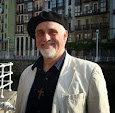
Over a lunch of sprouts, spuds and an excellent pork saucisson, local, hand made, pure ground ham, no additives of any kind, I learned about its provenance. Baulmes, village of a thousand souls has its own central heating system. There is a communal wood fuelled furnace that supplies water for domestic consumption, washing and heating. The Cure is the last house in the village that can be reached by the pipe network and pumps, and it was some time before the état de Vaud which (being an established reformed church) owns the property, decided to buy in to the service, connect up to the supply and disconnect the installed oil fired system. When it finally happened the Pastor was left with several hundred litres of mazout, for which he no longer has use. Eventually he found a purchaser, wanting to use the oil to heat his engineering workshop. A deal was struck, the oil was sold and transferred to its new home. "I think of the Pastor every time I light up the heater in my workshop." he declared. And in appreciation of the deal, Valdo and Ann Lise received a brace of these large saucisson, made apparently chez lui, by the engineer's cousin. This, plus a glass of Marc Bovet's fine Pinot Noir d'Allaman, to go with local cheese from the village fromagerie for supper. As well as being a viticulteur, Marc is also a diacre of the église reformée, serving the côte vaudoise of Lac Léman. I love these personal touches that characterise the rather understated rural parish life of the Swiss reformed church.
Wednesday, January 10, 2007
Eat the place you're in
Over a lunch of sprouts, spuds and an excellent pork saucisson, local, hand made, pure ground ham, no additives of any kind, I learned about its provenance. Baulmes, village of a thousand souls has its own central heating system. There is a communal wood fuelled furnace that supplies water for domestic consumption, washing and heating. The Cure is the last house in the village that can be reached by the pipe network and pumps, and it was some time before the état de Vaud which (being an established reformed church) owns the property, decided to buy in to the service, connect up to the supply and disconnect the installed oil fired system. When it finally happened the Pastor was left with several hundred litres of mazout, for which he no longer has use. Eventually he found a purchaser, wanting to use the oil to heat his engineering workshop. A deal was struck, the oil was sold and transferred to its new home. "I think of the Pastor every time I light up the heater in my workshop." he declared. And in appreciation of the deal, Valdo and Ann Lise received a brace of these large saucisson, made apparently chez lui, by the engineer's cousin. This, plus a glass of Marc Bovet's fine Pinot Noir d'Allaman, to go with local cheese from the village fromagerie for supper. As well as being a viticulteur, Marc is also a diacre of the église reformée, serving the côte vaudoise of Lac Léman. I love these personal touches that characterise the rather understated rural parish life of the Swiss reformed church.
Tuesday, January 09, 2007
Another mountain top experience
Last year, we ski trekked to the top on a bright cold day, minus five. This year, the cloud came to meet us at 1,350 metres and stayed with us. Temperatures about plus eight degrees. It was wet going because of the melting snow, and the wind blew through the mist when we rose above the tree line. In fact we couldn't see anything of the spectacular view, and simply followed the safe side of the dry stone wall that runs along the perimeter of the cliff, thankful that it was there, since the number of possible places to fall over the edge, if it wasn't there, is endless. With the wind, the mist, and complete absence of other walkers, it felt very desolate, until peep-peep, peep-peep, a text from Nathalie, announcing her arrival in Singapore, where the temperature is twenty-five degrees.
Somehow we missed the path that would take us back to the Ferme du Solliet, a refuge somewhere on the ridge above us below the summit, probably closed anyway. We continued around the cliff until we found a path which descended zig-zag fashion down into the Val de Travers near Noiraigue, then took forestry tracks, climbing back in a southerly direction up on to the mountain to the place where we'd left the car. We'd been walking energetically for just over four hours, when we found it, shrouded in mist. Our clothes were wetter on the inside than outside, despite the mist, I reckon we covered about fifteen kilometres.
We returned by the same route, and found that we left the cloud behind at 1,200 metres. The views south over Lake Neuchâtel, with the panorama of the Alps, fifty miles away, lit by evening sun, was breathtaking. There was cloud, but it was a lot higher than that shrounding the mountain, perhaps indicating another weather system on its way. Waning sun flecked the myriad of cloud formations with orange light, at times resembling waves in the sand on a beach, at others, some crazy abstract wallpaper. We stopped in a lakeside village to take photographs but didn't linger long, as we were both feeling a little chilly. In half an hour we were back in Baulmes enjoying hot showers and then a most welcome evening meal, starting with a most welcome bouillon, both of us aching every bit as much as we woould if we'd skiied up there.
Monday, January 08, 2007
In Nescafé land
Today it rained, and cloud was low for most of the day, making a trip up into the mountains hardly worthwhile. Valdo had to go and visit a dying man in the hospital at Orbe, (yes, he is on leave, but ...) so I went with him and explored the older parts of the town, while he did his visit. The town's château was destroyed in the fifteenth century, only ramparts plus the shells of a square and a round tower remain. The area enclosed by the ramparts has been made into a park and playground, overlooking the plain below, through which the river Orbe runs.
Close by, in the narrow street of old houses leading up to the park, is the Temple possibly it was once part of the château, as it sits on its own promontory on the inside of a defensive dyke, which has been turned into a lane right around the south side of the town. The building is of the decorated Gothic period, and some of its arches contain elaborate stone carved friezes and figurative bosses. It boasts four stained glass windows, and the remains of some mediaeval wall paintings in the chancel area.
Although the reformation in Vaud was calvinist driven, it didn't lead to the same extreme puritan iconoclasm that typified much of the British reform. The chancel was left spacious and simply furnished, really making the best of the architectural features of a fine building. Best of all, it was open so we could visit, as are many churches in this part of the world, even though popping into church for private prayer is not a feature of popular devotion.
One noteworthy modern complex of buildings sits on the plain, bearing the legend Nescafé. The huge Nestlé empire has its headquarters by Lac Léman at Vevey, half an hour away by autoroute. This is one of their factories. In fact, it's the one where coffees are blended, roasted and ground sous vide before being encapsulated for use the latest innovation in machine made fresh coffee. On a day when coffee is being roasted, if the wind is right, the tantalising aroma can be savoured over in Baulmes about five miles away - that is, if you like coffee.
From Orbe, we drove to Neuchâtel, and spent some time browsing in computer shops, then taking photos in between rain showers. Once the cloud finally lifted and the showers ceased, we headed out along the south side of the lake, and took ourselves for a walk in the forest which covers the slopes above the lakeside strip that is marshy and contains reed beds. This entire area attracts many different species of birds, indigenous and birds of passage, so it is an important nature reserve. As the sun went down, we headed back into town, to rendezvous with Ann-Lise for the journey home, pleased with ourselves for having managed some kind of exercise despite the unseasonably mild winter weather.
Sunday as a real rest-day
.
How good to have a Sunday worshipping in the pew for a change. I understand that Swiss Reformed clerics have one Sunday free each month, just like their Scandinavian Lutheran counterparts. And most only have one service a Sunday. It says a great deal about different expectations or lack of them, between UK and the rest of Europe.
I joined Valdo and Ann-Lise for the culte de dimanche in the church I can see out of the lounge window, here in Baulmes. Each Sunday of the month, the service moves around the four churches Valdo looks after. For this Epiphany Sunday, the service was a Eucharist, attended by twenty people, all relaxed and very friendly. The hymns had classic tunes familiar to me from the hymnals of Britain. We stood in a circle around the small stone altar table in the lee of the pulpit (used less and less nowadays fewer attending worship, I was told), decked with white cloth and candles.
As the designated parish councillor for reading and assisting was absent, Ann-Lise stood in, reading with beautiful clarity that allowed me to enjoy hearing the Word in French without strain. I noticed that two communion cups with wine, plus a third with grape juice, were circulated at communion time, delivered in a relaxed and expert way into the hands of each communicant by Ann-Lise, in an appropriately homely way that cheered my heart. Valdo celebrated and preached with great warmth. There's nothing of the dour solemnity one associates with calvinism or puritanism about this 'reformed' worship - it's very much of the heart as well as the mind. The Temple is large, able to hold well over 500, so we were a small group, occupying just one small section on front benches. Yes, people do sit together!
After lunch Valdo and I went for an exploratory visit to the pistes above and behind Ste Croix, a ten minute 1,000ft ascent around hairpin bends, and then another ten minutes across to the ski area along the Franco-Suisse border. The snow covering is very thin and wet. Here and there it's melted away, the temperature is five degrees. Nevertheless, we were able to find a part of the domain, slightly higher up and in the forest, where we were able to ski 3-4 km before fine rain descended, driving us back to the car. The pistes were deserted. I don't suppose anyone thought it would be possible to ski today, but the conditions weren't impossible, as it turned out, and our persistence was partly rewarded.
We returned to Baulmes, and amused ourselves after supper by trying to resolve wireless security installation problems in a modem/router set up. Far more frustrating than the weather. By midnight, I had completed reading the second of the two books I bought for a tenner at the airport, both stories of adults who triumphed in life despite the evil done to them by abusive parents. Thought provoking stuff. What shall I read next, I wonder? It's so quiet here, with few distractions. It's a delightful retreat.
Saturday, January 06, 2007
From rural Berne to rural Vaud
.
We all lunched together, and said our warm farewells before Martin took me to St Imier's Collègiale church, a simple église romande, rather large for a town of just 8,000. Before the reformation it housed a foundation of Canons Regular, and endured a couple of make-overs before being restored to present essential simplicity. I was able to take the photos I wanted to add to the ones of its exterior I took yesterday, much to my satisfaction.
We then left for the gare CFF for the 14h45 régionale to La Chaux de Fonds, en route Yverdon via the lovely lakeside town of Neuchâtel, two train changes, the second to the swish Intercity train to Geneva, stopping at Yverdon, where my dear Pastor friend Valdo Richard met me, to take us both home to Baulmes, the main village of the four which he looks after. Despite cloud covering most of the sky, the horizon was clear clear enough to see across country fifty miles to the Alps during the hour long rail journey and subsequent 20 minute car trip out into the countryside to Baulmes. It's something I've rarely seen in my recent winter trips here, when fog and low cloud have been persistent.
They live in a huge white painted mansion with characteristic green and white chevroned shutters which advertise the fact that this is the residence of the pastor paroissal. The tower part of the building large enough to contain a couple of rooms on each étage dates from the fourteenth century. The ground floor is occupied by parish rooms and an office. The three floors above that belong to the two of them. During most of the two years they have lived there the roof and walls have been renovated, so they have endured living in the midst of a building site. Fortunately the walls are nearly three feet thick, so most of the sound was shut out!
We had soup de courges, cheese and home made bread for supper. The soup put me in mind of Anne-Marie Hester, who introduced us to her German variety of this dish, a decade or more ago, when we lived in Geneva. I hope to be able to catch up with her and her husband Alec before I return home. Valdo has a culte in the morning, in the church next door to the house. I can see it from where I am writing in the lounge, floodlit on a promontory opposite the house, dramatic against the night sky.
Valdo says that the chamois which usually graze in the back garden of the house in the early morning haven't yet started to descend. There's not enough snow to hinder them grazing in the fields or forest higher up - a 500 metre cliff rises up from the top of this garden - also they were culled during the year, in oder to keep the numbers at a sustainable level in this setting. The snow has started later than ever this season, and it's also unusually mild here, as in Wales. We may not be able to ski this week, but there are many wonderful places to walk and visit, when Valdo's leave starts on Monday. Tomorrow we shall be able to share the Eucharist together, the first time, I think, since he came to my induction service five years ago in Monaco, although many times since we have communed with God together in remote places to which we have skied, in the beautiful vastnesses of wild nature in the Jura.
Friday, January 05, 2007
Church crawling
It rained yesterday, and so skiing was out of the question. After a leisurely lunch, Martin took me on a tour of the villages, churches and organs of the Vallon de Saint Imier, which was interesting, despite the rain. The church at Courtelary, where Laura is organist, is as old in its origins as the Colègiale in St Imier, dating back to the eleventh century. It's particularly interesting to me as, unlike the other churches of the Vallon, which have either wooden or stone altar tables, it has an octagonal infant baptismal font in the prime position. Admittedly it is covered over by a board with a white embroidered cloth, so that it can double up as an altar, but it also sports a paschal candle.
I've also seen a font where one would expect the altar to be, in churches of Eastern Switzerland, also hybrid stone altar tables with a bird-bath type hollow in the middle to contain baptismal water when needed, in the Canton de Vaud, although stone altar tables dating from the early eighteenth century are fairly common. These église reformée buildings are generally simple in design, with prominent pulpits and lots of seating - they often have wooden galleries - Courtelary is an excpetion with a stone gallery built in the 1930s, matching the ancient style of the rest of the building. The sanctuary areas of these churches, pre- or post- reformation is generally quite large, spacious and uncluttered, despite the dominance of the pulpit. Few have stained glass, mostly the windows are plain, making it possible to see out, although it's not unusual for windows to be slightly opaque, to raise the distraction threshold for listeners within!
In the evening, Eva Jos, the pastor of the German speaking reformed diaspora in the Vallon came to supper. She once studied in Sheffield and speaks English well, in addition to French German and Italian, so once again conversation floated between languages, occasionally with amusing consequences. We finished the evening with a glass of wine listening to some amazing oboe and organ duets by a contemporary Swiss composer called Hummel, recorded by Martin on the St Imier organ. He's hoping to find a publisher for these, as they've not been recorded before. It's good to hear modern music that is not so outlandish as to be unintelligible, but which stretches one's musical perceptions in new ways, and evokes the numinous, as I believe all good music really should.
Laura and I got up early enough to go out and ski this morning. Conditions were still good in spite of the rain, but we had less time since both Laura and Martin had funerals early in the afternoon. We were back back noon, and I was able to surrender my skis and pay my dues at the hire shop, before sitting down to a pasta lunch. Tomorrow, I take my leave and go west to Baulmes, to spend the week with Valdo Richard, my ski buddy for the past eleven years or so. What piste conditions are like on the 'balcon des alpes' remains to be seen.
Wednesday, January 03, 2007
First ski outing 2007
Martin and I talked late into the night - music, philosophy, where the decline of the church leaves both musicians and clergy. It was a good way to unwind, and get our working lives in some sort of perspective. I was awakened at 8h30 by the sounds of three teenagers jumping into action. Martin and Laura's daughter Camilla had two of her school mates from the Lycée Internationale at Ferney Voltaire outside Geneva for some skiing. By the time I descended for breakfast, they'd already set off to hire skis and spend the morning skating at the patinoire in the village.
I spent several frustrating hours trying to top up my mobile phone through the Orange website, which wouldn't register my debit card details. I switched to trying the register the card by phone and even this took two attempts to get right. The operatives at the Indian call centre were very good humoured about it. First time around I was told to report the non registration problem to their help line, when I attempted to call, my call was rejected according to the texts I received, because I only had 8p credit on my account and the helpline call cost 60p! For once, instead of getting angry, I just laughed helpessly, and made another attempt to top up, which was successful. Thank goodness I'm on holiday, and there's no urgent call I need to make.
At a more leisurely hour, took me down to the hire store to hire cross country skis, and after a spot of lunch, we drove up into the mountains south of St Imier to Les Savagnières for a 10km trek, the first of the season for both of us. It's always a special moment, donning skis for the first time in a season and wondering if your body will remember how to move and stay in control. Once a gentle start is made, relaxation comes and enjoyment begins, surveying the scene, resembling a black and white picture, especially when, like today, the sky is mostly white with grey streaks. With everything snow covered, all is utterly silent, apart from the very occasional solitary bird calling. Meditation on the move comes easy, but so does fatigue when you've not hard much regular exercise for six months.
The snow conditons were quite good, as the piste engine had been out and flattened a course through the forests during the morning. Here and there the surface created wasn't really firm enough, after a first pass by the piste engine. I suspect the ground had not been cooled below freezing by autumnal and winter frosts as usual. The packed down snow at ground level would melt and chill the ground to freezing, leaving a void with packed snow above. Here and there on the piste, firm snow would give way, and create 10cm ruts when skis passed over it. After a dozen or so skiers, the surface was roughed up, unstable and difficult to ski. This made the steeper slopes in the last downhill stretch very tricky to negotiate, so I played safe took off my skis, and walked down them. In a few days, when they've been re-flattened several times, these gradients will be more manageable. Nevertheless, a good first outing, followed by a splendid meal, with three tired teenagers, and conversations going across the table in Italian, French and English, all of which are naturally and regularly used in this household. And so to be, tired but very contented.
Tuesday, January 02, 2007
Away from it all
After lunch yesterday, I made my way to Bristol Airport by car, parking in the pouring rain as near to the terminal entrance as I could get, to make it easy for Clare and the rest to find when they return fromSpain on Thursday. I was early checking in, so had a nice relaxing time waiting, aware that despite the bad weather, flights were leaving on time. The evening flight arrived in Geneva ten minutes early, which gave me plenty of time to find the double-decker commuter train to Lausanne, and then onward to Neuchâtel on the Swiss high speed train, modelled on the Italian Pendolino. Both were almost empty, as it was New Year's Day.
On arrival, I met up with Laura for the drive up to St Imier, in the Jura Bernois. As we drove, the torrential rain gave way to sleet, then heavy snow, much to our delight - the first big 'dump' of the season by the looks of it. What a welcome! Laura was church secretary when I worked in Geneva, Martin her husband is organist of the Parish of St Imier, with a huge former monastic church building, parts of which are a thousand year old, Laura too is an organist and singer.
They have a typical Swiss four storey town house, plain and square on the outside, with lovely wood floors and simple interior decor. I'm occupying a top floor bedroom with a view west up the wide forested valley. St Imier is a precision engineering town, renowned for watchmaking. Swiss watch company Longines manufacture here, but this is the last such business here. Many more have moved on or closed down, so it's a quiet town, even when it's not Bank Holiday. It's snowed on and off throughout the day, so we've passed the time catching up, eating, and getting rid of nasty popup ads from this laptop on which I write.
It's just so good to be back in Switzerland, and in the depths of the Jura. It's the sort of placeI daydream about when Cardiff is giving me a hard time.
Monday, January 01, 2007
New Year's gift
As Clare is in Spain for a few days with daughter, granddaughter and son-in-law, New Year's Eve, like the rest of the weekend I've spent enjoying a little silence and solitude, when I've not had to go out and work. As a chilly wet Cardiff hit midnight and the fireworks started over in Bute Park, I was chatting with my cousin Ivor, an architect in Cambridge, reflecting together on the passing of Auntie Celandine, and other family members. There was nothing to keep me up after this, so after a few gulps of dank night air and alcohol-free, I went to bed, the more distant sounds of firework explosions punctuating my drowsiness.
This morning, on my way through the Civic Centre, a handful of workers were out dismantling the 'Calennig' stage from last night's festivities. Streets had already been swept clean, and were almost empty of people. I don't suppose a huge number of people were out partying last night, but don't really know, as I didn't bother to leave the house again after returning from New Year's Eve-ning Prayer with my two churchwardens. The shops had not yet begun to open. If the sun hadn't poked through the clouds it might just have looked a bit more desolate in the city centre.
As I anticipated, nobody showed up for the 10h00 Eucharist. The few regulars being away overnight meant it was only likley that casual passers by would drop in, maybe hotel guests who'd noticed the advertised service. For me, it was important to be there, to wait, to make the invitation. I said the Angelus, read aloud the Liturgy of the Word, for the Naming of Jesus. Then just as I was finishing, in came a solitary Indian man whom I've got to know over the past few months. In his mid thirties, he's a contract computer programmer working here, as are several other Indian Christians we've had in church this past few years. But J. is a Hindu, hungry and thirsty to learn and know more about God and puzzled by many things he is finding out.
We've had several deep, interesting conversations - some face to face at home or in church, others on the phone. He does internet bible courses, and watches every bible video he can get his hands on, but needs dialogue to expand and interpret the information he takes in. He is growing in devotion to Jesus, but also trying to work out how all this fits in with his Hindu culture.
He'd come to Midnight Mass on Christmas Eve, and presented himself at the communion rail. As I recognised him, I gave him a blessing. Next day he rang me, puzzled. The last time he'd been in church he's been given communion, as the distributors didn't know any different. Then I explained that communion was what bound together the baptized in relation to Jesus, and he seemed to understand, and said he will be happy to accept a blessing on another occasion.
Because the information he receives is mediated by websites and not by human contact with a community, his prodgious amount of data is not well interpreted. Also, he comes across confusingly different Christian interpetations too, and hasn't yet acquired the skill of discerning wholesome truth from rubbish. He put me on the spot by asking about this. "How do I know the difference between the good things out there and the evil?" He asked. All I could think to say - trying to think in geek-speak to a programmer - was, "You need a simple rule with which to filter and process the data you have. So admit and follow only what you perceive to be loving, truthful, compassionate, liberating and inclusive. This is what Jesus did and taught." Did I say that? Is this what I do?
I believe he's considering baptism, because of his growing devotion to Jesus, though there are bound to be problems for him, given that conversion is too often associated with de-racination, turning one's back on family and culture. I expressed to him my view that all world religions possess great spiritual truths and offer a path towards God, and that no matter what Christianity had made of him, Jesus lived and taught God's embrace of all people without discrimination or exclusion. Jesus took as his foundation the best of Judaic teaching, so it must be possible to draw out the best and highest Hindu spiritual teachings, and discover that these converge with the way of Jesus and are embraced by Him. I told him that I believed it was possible to baptize (understood as interrogated by, and immersed in the love of Christ) any culture that had high spiritual values, to be a disciple of Jesus with Hindu roots, but that this is a difficult narrow path. Even an Indian Christian community has its own culture, which may or may not be suspect in Hindu eyes. It's a question of finding the right place in which to express one's discipleship. I also told him of Bede Griffiths and Henri Le Saux and others who had plumbed the depths of Indian spirituality as part of their Christian monastic journeys, so he has gone off to look up their books on the internet.
In the end, I'm convinced that the key to the convergence of great religious traditions lies in their spiritualities and their prayer life. Monks are quite good at exploring this, largley because their way of life has stripped them of over-dependency on any particular culture, but focusses them on fellowship and prayer, in what Herbert Slade called 'Contemplative Intimacy'. I just don't think we're nearly as good at this as we need to be. The ways in which we are used to pray are too culture bound, and engaging with them may not free people and open them up to a deeper experience, but rather leave them feeling confused and alienated. We've a lot of work to do in this area, especially at St John's, as a place of welcome and prayer at the heart of the city.
Nice start to the New Year. Now, off to Switzerland for a complete rest and change from the world of work.
Sunday, December 31, 2006
With a whimper
I've no found this process easy because didn't agree with the proposal on principle, since a) the Team Benefice had worked well, been accepted and made progress; b) the fragmentation of pastoral areas at a time when numbers of pastors are sharply declining (by as much as 50% over a ten year period), could lead to further weakening as each Parish has to stand on its own feet, unable to rely on its neighbour for support. Thus the weakest could go to the wall, denying the principal of solidarity - all for one and one for all. My advocacy for more teamwork not less, fell on deaf ears in deliberations about the future by the Parishes of our Area Deanery, and in deliberations on the future by Central Cardiff parishioners. Sadly the body of the church seems to want to go in one direction and me in another. What am I doing here?
In early discussion, I took a back seat and insisted the decision to accept the plan must be taken by the lay leaders of the Benefice, as they would, in every way, be the ones paying the price for it. After the vote was taken, some declared they thought I was in favour of the proposal, as it seemed to be a means of releasing me from some of the administrative burden of running four churches, so they voted for it. What I've insisted that the Benefice needed to do even better, and put less strain on its ministers was proper secretarial support, nothing more.
Sadly, excess bureaucracy and form filling which the Church in Wales imposes on its clergy, has re-shaped Ministers of the Gospel into Administrators of the Church, to the detriment of pastoral care. Everyone sees it and complains about it, but nobody does anything practical to put things right. People have learned to expect that clergy will run things by default. That the clergy have to delegate is obvious to them, and some are willing to help, but clergy end up with the tasks nobody wants. They either have to be brave enough to do nothing and risk the wrath of parishioners and hierarchy, or spend too much time pleading or bullying others to do take on new things. When there are lots of keen helpful people on hand this is hardly a problem. The Vicar can be like a referee moderating between willing enthusiasts - it was a bit like that when I was Chaplain in Geneva - but here in Cardiff, where we don't have enough people with time, skills and energy to get everything done that needs doing, it gets harder and harder to persuade people to do things you yourself don't much believe are essential to Gospel mission.
I did succeed in seeing through the building of office accommodation, two years ago, but not in getting it staffed. It all goes to show how much notice has been taken of all that I had written about and preached in the past four years. It's been quite a humbling lesson actually. But then it is hard to enthuse people about sharing in the running of an institution whose ways they they tolerate for the love of God, and haven't the surplus energy to shake up and transform. Sadly all our church leaders, good caring men, are there because they are kind successful administrators. They may want reforms themselves but nothing too radical, and only in an orderly way, for fear of chaos, dissention and anarchy prevailing. All too often another enquiry form to be filled in arrives through the post with an apology for adding to the burdens of clergy and church officers. It shows something is felt not to be right, to my mind. 'Excuse me while I hit you again.' It says, a rather strange sub-text for the church, but not uncommon.
Admittedly there was a degree of hesitancy in the Parish decision making process, when people couldn't be totally sure of the outcome. However, trust in the Bishop's leadership was rightly accepted, and whatever my views, it was not my place to stand in the way, and once it was all agreed, it has been my task to make the formation of the new Parishes as clean and healthy as possible, with no unfinished business or trailing resentments. The tidy-up process has been fiddly - not only websites, but overlapping financial arrangements, changing all the publicity to indicate the change to the general public, (always a messy process), re-generating separate membership lists, and dividing up the child protection monitoring dossier. Only today did the last of these hand-over tasks get done.
Getting cover for the various services I physically couldn't do proved to be difficult and initially time consuming. Separating out various administrative threads of the two churches in each entity, so that each can have a fresh start, without unfinished business bogging it down, has taken much longer and more work than I expected. Finally, we reach the threshold of the new start. Nobody has had any enthusiasm to mark the passage, so there have been no rites or celebrations. Only two people asked if we were going to do anything, and didn't volunteer to make arrangements, so that's that. Well, not quite. The locum priest organised to help out at St Mikes today, went down with bronchitis at the last moment, and I couldn't arrange a substitute. Chris is on leave and out of the country, so the best I could organise was to consecrate enough bread and wine for communicants at the Saint Michael's service, and take it around there, in between early and main services, and leave two lay ministers to conduct worship and give Communion, with little preparation. It's the first time it's happened during my time in the Parish. They were good about being sprung upon, and took it with good humour.
There's a certain irony for me in seeing out the last Sunday in the Parish, as the only priest left. When I came four years ago, there were three colleagues in post, struggling to get on with each other, and I had to persuade them into becoming a proper team. Then, one by one, they moved on and weren't replaced - a sign of impoverished times. Meanwhile Team work among clergy fell totally out of fashion, leaving me alone in more senses than one.
No time for regrets though. Now it's possible to think hard about where we go from here.
Having thought of everybody and blessed them, as she always did, my dear Godmother died peacefully yesterday, cherished, with her daughter beside her, a few hours after Saddam was judicially killed, exuding contempt and sarcasm. A world of difference we could all do without. So much work to do to ensure God's good-will prevails, so little time to do it in.
Happy New Year, dear readers, wherever you are!
Saturday, December 30, 2006
Saddam - gone too soon
I'm sorry the Iraqis chose to kill Saddam Hussein so quickly and so publicly. As one news commentator pointed out, the sight of his hooded executioners putting the rope around his neck and his refusal to wear a hood, gave him, the remorseless tyrant, more dignity than his judicial murderers. Yeah, sure, they wore them to preserve their anonymity for fear of reprisal. But, the image sent out to the world is one that can be exploited ruthlessly to keep alive his evil enterprise - rule by wicked tyranny - as a model of leadership in the Arab world. It's the last thing that was needed.
A dictator's death satisfies vengeful instincts for some. For others it is a carte blanche to fly in the face of truth and regard him as someone not only terrible, but unique and special. Look at the way Hitler and Stalin are still revered and admired long after their demise, by some who worship the god of supremacy by violence.
This death sentence aborts the process whereby the representatives of hundreds of thousands of his victims have their day in court, no doubt saving mankind a much cash in lawyers fees.
The doing of justice is necessary to healing and reconciliation. One more life taken in punishment for the hundreds of thousands of lives lost before during and after his downfall and capture merely adds to the failure of anyone anywhere seeking to resolve human problems by force. Retaliation, revenge, served so coldly and logically reveals the spiritual bankruptcy of so many in our age, and of most of our institutions and structures.
I would have preferred to see Saddam kept alive, prevented from suicide, to hear out every just accusation the Iraqi people need to lay before him. And then imprisoned for the rest of his days to contemplate the record of his deeds, whether he shows remorse or not. To spend the rest of his life enclosed in obscurity and silence would really send a message to those with vicious egos, determined to emulate his deeds.
But, the 'winners' all had their day. And nobody will live happily ever after, as a result.
Friday, December 29, 2006
Web update time
Before I go on leave, one of the bits of unfinished business needing to be done is a make-over for the Parish website. I started work on giving it a new look back in October, and bought a new domain name to go with the new Parish. www.cardiffstjohncityparish.org.uk. As the existing domain name www.cardiffcentralparish.org, is registered with all sorts of organisations, and search engines, I'll keep that running for a year or so, to point to the same pages, as before, also to the websites of the two Cathays Parish Churches which I'm losing.
It's hard as an amateur, to realise just how complex a task a web-site a makeover can be, especially when the site in question has evolved organically, and has been augmented piecemeal. In a way, we're still learning what sort of information and news is useful to have on a Parish website. Planning the essentials, nearly four and a half years ago was no great task at the time. But now the website is more than twice its orginal size. First, there's the task of making sure every one of over a dozen web-pages no longer refers to the way the Parish past was constituted or run, but to the new order. Then there's the discovery, on detailed examination of how photos need updating, pages need pruning, data correcting or updating. Some pages look awful and don't display correctly once modified. It takes ages to ensure it looks and works right. It was just as well to have Holy Innocents Day free to do this, well not free, just the morning Eucharist, for which four turned up, as usual. Even so it was one o'clock in the morning by the time I felt satisfied enough with as much as I'd managed to do to creep into bed.
It was gratifying to get most of it done and see it working, even though there are a more pages needing to be modified to give the site a unified look, and there are also some new pages needed as well. As I worked on it, I realised a new draft Parish Mission Action Plan was needed for discussion and adoption, at the Extraordinary General Meeting to elect church officers, required by the Parish split. The Parish MAP is a policy document currently favoured by the diocesan hierarchy, as a way of getting congregations to think about what they do and what they can do to further the cause of the church's mission in their situation.
Until now we've had a strategic Plan at the level of the Team Ministry and Parish, and each church had its own plan, relating to its needs and circumstances. The St John's Plan was bound to be substantial and different because of it's not a domestic residential community church, but a mission congregation serving the city centre. The closing of St James and the start of another mission congregation in Tredegarville school, within the embrace of St John's Parish means that the Plan needs some modification to reflect changed circumstances, a different economy, and agenda of issues to keep a close eye on. My couple of hours spent on drafting will do no more than start a discussion process that can lead to putting flesh on bare bones as the year goes on. It was worth doing, and posting on the new website, as an indicator of changes happening right now.
I greatly enjoy such variation in activity. Well, to be honest, I don't much enjoy using web publish tools, and have no competence in writing html code. I taught myself to use MS Front Page while preparing the first ever Monaco Anglican church website, when I worked there in 2001, and switched to Dreamweaver on return to the UK, just recycling a few of the template ideas I'd found to work, rather than go through the effort of re-learning things properly from scratch. When I can't get things to work as they should, I get very annoyed with my own laziness. Productivity doesn't come easy in this area.
However, preparing briefing and policy documents, writing articles for publication, I find comes to me very easily, and I enjoy both the freedom and the resulting sense of productivity. Perhaps this may serve to explain the length of most of my blog postings. I find this kind of writing comes easily, and it doesn't take me a huge amount of time. A few readers have remarked that they don't know how I find the time to write so much. It's simple. I don't watch TV! I need space in which to think, and writing is only another form of conversation. Irregular periods of posting indicate that sometimes there's no space or time even to think. I feel a lot better when I have time to write, and I'd love to do lots more. If you have a commision in mind, don't hesitate. Try me!
Contemplative Monk Thomas Merton was one of my early inspirations. One of his essays was called 'The vow of conversation', playing with the words 'vow of conversion', the fourth Benedictine commitment after poverty, chastity and obedience. Conversion, is here understood as a commitment to keep on deepening one's faith and commitment to giving one's entire life to God. Merton had been obliged to spend his monastic life reflecting and writing upon concerns of the Gospel in the modern world. It led him into dialogue with leading thinkers of his day. He longed for hermitage life, and when he finally attained it, he found he was often welcoming visitors, eager to continue in person with him ideas and debate exchanged in letters. His entire adult life was a conversation between himself as a man rooted in eternal catholic truths and the changing world of modernity. I don't have the privilege of dialogue with contemporary thinkers that he did. When I have time, I listen to conversations of others occurring in cyberspace, and wonder what God is up to in all this. Trying to work out what I think, in relation to my life experience and whatever else is going on out there, is an important part of what blogging is about for me. Hopefully it stops me getting too bogged down in the particularities of my job, especially as I don't travel physically nearly as much as I'd like to, these days.
Thursday, December 28, 2006
Out and about
On St John's Day, nobody turned up for the 10h00 Eucharist, so I said Matins, then took communion to a ninety one year old woman, recently housebound and deeply devout. It was a consoling pleasure, for me as much as her. Then, with no other fixed points in my day, I decided to drive up to Slough to see Auntie Celandine, my Godmother in hospital outside Slough, still alive but in and out of consciousness. Her daughter texted me to say that she'd been asleep since Christmas Day, but that didn't matter.
When I arrived she was half awake and speaking the same sentence over and over again, in a firm and clear voice. I greeted her and her responses, including what she said, made it clear that she knew I was there. I read all her favourite Psalms and other Scripture passages to her, anointed her and prayed aloud. Over a period of time, she wished me all the best for 2007, and told me that she prayed for me every day, amongst other things. Each of these sentences were repeated many times over, like a broken record, evidently an effect of pain killing drugs. It was clear that her awareness, and her desire to connect and communicate is a strong as ever. She's always been an outgoing and compassionate person, ever ready to bless others and not to complain about her own hardships in life. She remains strong in spirit, as her body fades away. Her suffering is distressing to her children, and to me, and yet, her will to bless others is still palpable.
By coincidence, Rachel, John and baby Jasmine are staying a few miles away from the hospital in Gerrards Cross, so after my visit, I was able to drive over to have a cup of tea, some Christmas cake and a cuddle before hitting the motorway for home. The roads weren't all that busy, fortunately, so five hours driving in a day wasn't too stressful. Keeping an eye on anything that will raise my blood pressure, I am wary of too much car travel at the moment, yet it doesn't seem to have too bad an effect on me. In fact, it's relaxing enough just to get out of Cardiff. It amazes me to think that twenty years ago I was driving 30,000 miles a year around Wales as a representative of U.S.P.G. A 250 mile round trip several times a week was something I took in my stride. Now in my job, I walk and cycle everywhere. It's a source of satisfaction, but I suspect that I may have suppressed my restless spirit to some extent. Whilst that kind of mobility is tough if it's the only thing you do, equally having a single focus, and location is exacting in a different way. Hence, getting out of town, if only for a while is quite recreational for me. And next week, proper holiday starts!
Wednesday, December 27, 2006
Vatican own goal
I'm not much of a Vatican watcher, but I was taken by a news article today about retired Paraguayan Bishop Ferdinando Lugo, who is being warned of possible sanctions - suspension from exercising priestly ministry, because he is being proposed as a possible candidate in the country's next Presidential elections. While he was exercising episcopal office, he became a renowned champion of the country's poor.
Paraguay is among the low-middle income countries of the world, and most of its wealth is in the hands of a small percentage of its population. Its president has just been jailed for fraud and corruption.
The Vatican thinks clergy should stay out of politics, and this makes sense, since it is possible to abuse the status and position of trust that a priest holds, and be caught up in party politics, for one group and against another, in a destructive rather than a reconciling way.
To become, if it happens to him, an elected head of state puts him in a position that symbolises unity of all people in a country, whether they agree with each other or not. You can't do that and be known as a public representative of the Roman Church. As if Bishop Ferdinando didn't know that.
No sooner than his candidature was announced, he resigned from the exercise of his ministry as a retired priest (bishop), to make this point clear. If he has support and is elected, it'll be due to his track record as an advocate of the poor over many years. Separated from the exercise priestly functions, (though not from its commitments), he remains what he always was anyway, a baptized lay person, a member of the people of God, seeking to serve others and his country - in his old age!
Somebody reading the news-feeds in Vatican City seems to have over-reacted with this public warning, making an ecclesiastical media farce out of an apostolic act of witness through service. But then, communications between Rome and Latin America seem to have suffered from an awful lot of static on the line for decades. The Holy Spirit is supposed to lead the church into all truth, but does it always follow?
Tuesday, December 26, 2006
A caffeine free Christmas
Well, that was quite a busy few days. Nine services taken, eight sermons preached. Two home communion visits, over forty eight hours. Hard work, but made possible by a Rectory quieter than ever before at Christmas. Having anticipated the family celebration last Friday - both daughters' families celebrating elsewhere this year - I was spared the usual conflict of interest between having 'quality time' with children and grandchildren, and helping to give Christmas its due spiritual content for those still wanting to worship in church. It's often been a struggle between socialising and finding time for quiet reflection, and it sometimes has left me feeling resentful towards my vocation, not making it any easier to get through. Normally I am exhausted by Christmas lunchtime. This year was an exception, perhaps because it was easier to get a little solitude and extra rest.
I know and feel it's not right to be taking so many services. There's always the danger of falling into mechanical routine, failing in concentration. There's a danger that so much repetition will make it all lose meaning, so it's necessary at the outset to just offer the whole exercise up to God, flaws and all, and accept the privation and impoverishment as a hazard of work. I can't and won't go on like this forever, but where there are opportunities, however slender, to offer encouragement and hope, and to tell Christ's story, I feel they must be taken.
A spread of opportunities for worship is still worth offering, because a large city church touches the lives of many different constituencies. It's true those who really want to come to church will make the effort to find out when services and put themselves out to come if they can. Many are driven by habit and custom, their commitment not fully conscious, or overwhelmed by other things going on in their lives. Despite all our advertising, for the past five years that 'Midnight Mass' starts at 11.00pm, ten to twenty percent of the attendance will arrive at 11.30pm. It's nothing to do with people coming out of pubs at that time, or public transport timetables. It's everything to do with what people habitually remember and expect. Even if they noticed there was a service in a particular church, they'd still be likley to read the time 'it always used to be', no matter what the poster says.
All in all, attendance turned out better than the average I had expected. There was quite an influx of young Asians, many more than the handful who attend services regularly. Also there were a signficant number older couples and singles, most of whom, I think were staying at one or other of the city centre hotels, as part of Christmas holiday package trips. Across the two days, many of our regulars turned up, some several times. Others were absent, holidaying elsewhere or making Christmas happen for someone else, nearer to home.
This year, our son Owain made a rare appearance at the Christmas morning Eucharist, and then helped prepare lunch for the three of us, while I went off and did my last service. We had a most enjoyable meal - goose instead of turkey for the first time ever - and I didn't immediately fall asleep after the meal, or even in between courses this year. Is it this record? Christmas and exhaustion have far too often been companions in my working life, not to mention the sense of failure at not being there enough for my children. "You're always working, Dad", they used to say, "When will you ever stop." When I did, I fell asleep. Well, not this year.
After lunch, we listened to the Queen's speech, sitting around the Wireless - laptop of course, playing the famous podcast. It reminded me of sitting around the real Wireless, fifty years ago listening to the Queen's speech, and my father nodding off in post prandial stupor. It's the first time in many years I've been awake enough to listen. Apart from Christmas life being a little less crowded this year, the other significant difference is the outcome of renouncing tea and coffee a fortnight ago, in an effort to reduce rising blood pressure. After a few days of feeling decidedly weird, my head cleared, I started sleeping better and feeling fresher than I would if I were on holiday. I feel so different, that giving up those delicious tastes, so much a part of daily life, hardly seems to matter.
Saturday, December 23, 2006
Anticipating Christmas
When I was younger, I resented this invasion into the purity of the season of preparation and waiting. I wanted to convert everyone to its appreciation, and often preached criticising the commercialism of Christmas as well as its anticipation. Have I been worn down into compromise, or just worn out by giving in to people's demands, for decent pastoral reasons? Maybe. But I've also tried to see things from the viewpoint of a non-zealot, who's trying to retain some connection with the life of faith in a secular materialistic world.
More than a thousand different people have attended carol services at St John's this past few weeks. Most of them don't come to regular worship with us. If they worship at all, it will be in a suburban church. I suspect that half of them wouldn't describe themselves as regular attenders at all, but they are, for whatever reason, drawn to come and hear the story retold, and sing old familiar songs that speak to them of peace and goodwill on earth.
I keep an eye on numbers attending, and in five years of logging December attendances at St John's I have noticed how relatively steady attendance statistics are except that bad weather will drive numbers down 10-15% on any occasion. I see no sign of the noticeable increase that has been reported of late by some large churches and cathedrals. We work quite hard at publicity at ST John's, and maybe if we were to re-double our efforts we'd see signs of an increase. But, I remind myself, that almost everyone who comes to us for any kind of service doesn't live within the half mile radius of the city centre area. They all have to make the effort to travel in from somewhere else, often doing so in the face of public transport that is not geared to deliver people for churchgoing, only for sport and shopping. To those who come, these special worship events are worth making the effort to come to. For those who work hard to organise and prepare them, they matter a great deal, they feel it's worth making the effort, and would do so, no matter how many or few people turn up.
All in all, I notice how few people moan about the anticipation of Christmas. They moan about the commercial hype, tacky decorations and sentiment, and most of all these days grumble about what they regard as secularists' efforts to replace Christmas with 'Winterval', and abolish crib scenes from shop windows in the name of 'multicultural' neutrality. They don't mind singing carols or hearing the story told time and time again, in word, song and image. Advent delayed gratification doesn't count for much in their eyes.
Friday last at Tredegarville School we had an end of term Eucharist, unapologetically Christmassy in content. Two dozen parents came, including several veiled Muslim mums. The little girl who tunefully sang Mary's part, solo, in one of the carols wore the hijab as she does unselfconsciously every day. It's the sort of thing that's not at all unusual in a church school. How out of touch with reality are some of our politicians and media mouthpieces.
I've learned to rejoice in the fact that so many people still want to retain the religious and spiritual dimension of Christmas, and make the effort to do so. They don't have much regard for the solemnity and restraint of Advent, or maybe don't value it any longer. The exhortations and criticisms of clergy and laity who are keen liturgical purists fall on deaf ears. Partly, I believe, it's because the way time passes has changed so much in contemporary society. Long journeys can now be made very quickly. Short ones can take what seems an age. In the hour spent sitting in a traffic jam on what's normally a five minute journey, one could also fly to Paris or Scotland. There's not quite an equal undifferentiated seven day week, but there's less difference between each day than there used to be. The natural pattern of day and night is disregarded for purposes of work, leisure and transport. We sleep more now when it fits in to whatever else we have to do. Even the rhythm of the seasons is changing, as a result of global warming, though it's not to our convenience or economic benefit. It's far different from the life patterns, and liturgical seasons established when the world was still predeminantly agrarian in character.
These days, people shuttling between dispersed sections of family and friends may celebrate their Christmas several times in different company. Some have to work through the holiday or travel during the holiday to reach those they care for. There are parents and grandparents who make Christmas happen for others who may not share their beliefs or devotional habits. These must either put service of others before worship, or seek some other time when it is possible to find their own spiritual sustenance. If the church cares about the lives people really lead, its ministry and its celebrations must be flexible to serve them, or run the risk of alienating those who believe the Gospel, but cannot live within the traditional pattern of times and seasons for celebration.
I'm not arguing for the abolition of Advent. We need that message of hope and longing for God to come, but we need to acknowledge more openly that anticipating Christmas through December is not a sin against the Spirit, but a desire to keep the faith one way or another in times when life's circumstances seem to be making it harder and harder to do so. If we struggle with this then maybe it shows that we are rather over-used to being policed by the liturgical structures of church tradition and unused to thinking for ourselves about what it really means to worship in spirit and in truth.
Thursday, December 21, 2006
The shortest day
Party time
We woke up to frost this morning, and have enjoyed bright blue skies all day, quite a change from the previous couple of foggy days. Neither rain earlier in the month, nor fog has stopped people coming into the city to shop. Footfall statistics are up yet again this week, and that's a major success for the Retail Partnership's TV and radio promotional campaign. Last night members of the partnership board invaded Café Jazz on St Mary Street, and joined a hundred or so other party goers for Christmas drinks and nibbles, and an hour or so's shouted conversation in a noisy and animated environment. It's like that in a ll the bars and eateries at the moment, being the season for office parties. Despite the thousands on the street in these chill dark nights, navigating from one bar or club to another in search of total inebriation and maybe a bit of dancing, the level of crime and disorder is quite low. There's a strong police presence, but without being menacing, and this seems to do the trick, discouraging people from stirring up trouble.
Neither prevention nor cure
I was disappointed to learn today that a Cardiff crime prevention partnership measure aimed at reducing the very expensive impact of graffiti on the retail outlets and the public realm has been closed down. Over the past six months, all along the eastern Castle Grounds boundary fence, overlooking a quarter mile of car parking space along North Road, there were a series of six by four feet panels at 50 metre intervals displaying the output of local young graffiti artists working with older artists and police community support officers. It took ages for the team to gain the trust of youngsters to start with, but with the passage of time and the regular appearance of new brightly coloured works of spray-can art, enthusiasm for the project grew. To my mind it added real visual interest to the look of a long dull expanse of concrete car parking space, fringed with a huge privet hedge running alongside the main road. Now they've all been removed.
The city centre management team intensified its efforts to purge graffiti from public buildings and walls, and there certainly has been a reduction in the occurrence of new graffiti since the project started to gain momentum. But not a total elimination. There remain rogue graffitists, perhaps on the edge, unconvinced, or outsiders, with political motives - anti-globalisation, anti-Iraq War protesters, Welsh language campaigners. The message, rather than the ingenuity of the art medium is what drives their efforts. Unfortunately, they all get tarred with the same brush. When M&S got attacked by 'anonymous' anti G8 activists, causing tens of thousands of pounds worth of damage, those appearing on CCTV pictures shown to Special Branch officers were all identified by name. But no action taken, no information exchanged between one section of the Force and another. The other kind of graffitists, if they do get caught, are often given little or nothing by the Magistrates Courts to discourage them from doing it again.
Punishment on its own isn't enough. The graffiti art project gave a genuine opportunity to those wishing to express themselves artistically this way an alternative to defacing and damaging public buildings. Carrot as well as stick. A handful of people complained about the panels in place, although there was nothing on them to give offence. A few politicians decided this was not in the interests of who? I'm not sure. Many youngsters were frustrated and disappointed. A desk officer at the Central Police Station told me of parents coming in with children crying with disappointment at the axing of the project.
I figure it will only be a matter of time before the graffitists strike again at the shops and public buildings of the city centre. I for one will be most annoyed, having written in praise and support of the project's achievements. I found myself looking more at the panels on display, enjoying them for what they were, rather than wincing, avoiding looking at the ugly tags and slogans littering good clean surfaces all over town and giving real visual offence.
I wouldn't be surprised if this turns into a politicians' and bureaucrats' own goal. Serves them right. They should consult properly and not just act on the opinions of a handful of henchmen.
Monday, December 18, 2006
A Baptism close to home
Yesterday, Gaudete Sunday, Advent Three, my five week old grand-daughter, Jasmine Aurora Brand, was baptized during Evensong at St John's. Many of the regular congregation turned up and doubled the usual numbers attending. They were so welcoming. It was wonderful to be able to share our domestic joy with them. For me it was the fifth service of the day. We had a splendid reception upstairs in the choir vestry-cum-tea room, whilst downstairs preparations went on apace for a late evening Carol Service, hosted by members of the South Wales branch of the Lesbian and Gay Christian Movement. That was to be my sixth service of the day. No remission of duties for personal reasons, unfortunately, being so short staffed.
Uncle Owain, Rachel's brother was one of the Godparents. One came from London and an Australian friend came over from Dublin. A fourth Godparent lives in Greece, and the fifth, is a Cardiffian working in Latvia over the weekend. These had to be represented by proxy. Rachel and John, Jasmine's Mum and Dad live in the French West Indes, and have friends all over the world. It was fortunate that we should be able to organise a family gathering to celebrate Jasmine's christening at short notice before Christmas, fitting it in before they fly home next month. It was such a joy for me that they both wanted this.
Our social settings and influences, even within families are nowadays so diverse that differing ideas of what baptism are understandable. Kath, my eldest daughter and her husband Anthony conscientiously abstained from presenting our first grand-daughter Rhiannon for baptism. Nevertheless they were there, and they joined in the festivity with enthusiasm. Kath even managed to take a movie on her camera of the actual moment of baptism. I don't discourage anyone from taking photos (as long as they don't interfere with the ceremony), for I have come to realise that some people participate more strongly in an event by means of its visual element, than by words that are said.
Whenever I hear the words of our baptism liturgy, I think how obscure and elaborate they are, leaving little space for people to ponder in. The intention of articulating the church's beliefs about baptism in its prayerful actions is noble enough but too many words make it difficult for people to connect with the silent mystery of the action, no matter how well prepared or educated in textual meanings they may be. If the rite is unfamiliar to participants, it needs to be simply expressed to make clear the meaning of the actions, and if it's well understood, simplicity offers space in which to contemplate on deeper meanings. Over-wordy services can either be a puzzle or an irritation. Less is more, as the saying goes.
My colleague Christine admirably conducted the whole service, enabling me to be (mostly) Grandpa with the family, except that I couldn't resist the opportunity to give a brief homily to mark the occasion. Here's what I said.
If anyone was ready to make a fresh start in putting themselves straight in relation to God, John took them through the river Jordan, from outside the promised land - the east bank, across to the west bank, washing them all over with water as they went. This is baptism.It was meant as a sign of commitment. No matter how successful people actually were in reforming themselves in a complex moral world, forced on times to compromise or be destroyed in the face of overwheming dark powers, baptism would always be there for them as a point of reference to return to in their soul's journey, a declaration of their values and hopes for themselves and their world.
Some decades later, the followers of the messiah Jesus, had a much more penetrating life transforming message of Good News of God's unconditional universal love & compassion. They continued John's practice of baptising people wanting to make a new start with God, and as Christianity spread, baptism became a sign of identity, a sign of belonging among those who wanted to be known as disciples of Jesus, people learning to live by the same vision and values he taught.
Baptism became a sign, not only of conscious commitment, but also of inclusion in a faith-community, of initiation into a way of life based on the kind of love Jesus taught and showed would make us as fully and confidently human as we are meant to be. No matter how old or young we are when we receive it, the sign of baptism offers a promise whose spiritual value we learn to appreciate as we grow up - the promise of unconditional love and acceptance, as a secure foundation for becoming the person we're meant to be.
It's not so long ago that the dominant way of interpreting baptism was as an insurance. If you didn't have it, you might be lost forever and roast in hell when you die. I'm not sure what Jesus would have made of that! He came into a world that resembled hell in its way, with the poverty, brutality and injustice of life in an occupied country.
He declared that God cared about human suffering, and taught the secret of overcoming evil with good, rather than endless unsuccessful attempts at eliminating evil by violence. He drew people into a community guided by compassion and forgiveness, willingness to suffer rather than inflict suffering on others. His philosophy was 'Heaven can't be delayed, it has to be made by us, here and now, treating each other aright, so let's start as we'd like to continue forever. Given how hellish the world we live in can be for all of us at times, this propostion is worth taking seriously.
Baptism is about our identity - do we understand ourselves merely as products of genetic coding and social history? Can we also see ourselves as children of God, embracing higher life-giving, life-enhancing values? Being under the sign of baptism, declares that our lives mean more than anything our National Insurance, passport or bank account number, or even our family genealogical tree can entitle us to. We aren't merely defined by the norms of the society we are obliged to live in. Our lives are greater than what the government and commerce would have them be.
Baptism is also about our alignment. We line up with those of different faiths who also see human existence as having a spiritual dynamic and destiny which also give priority to the moral life, to dignity, humanity, compassion. It's one way of defying the tyranny of a culture that worships the idols of materialism, which has no room for God, and no desire to live beyond the given of this world.
No matter how old you are when you come it, the fact of being baptized is always there for you, an anchor that connects us to the graciousness and compassion of God, reminding us always that we, and every other human being are born children of God invited to a life that surpasses understanding, an adventure that knows no end.
Tuesday, December 12, 2006
Viaticum
Yesterday, after 'God on Mondays', I drove up to Stoke Poges to visit my 87 year old Godmother, Auntie Celandine in hospital, having been made aware by cousin Dianne that her fragile health was deteriorating, and that she might not live much longer. With a busy week of carol services ahead of me - six in five working days - this would be my only opportunity to visit her before Christmas, and there was no guarantee she would last until the lull between Christmas Day and New Year.
I was in my early teens when she returned to her parental home with two young children, a single mother, due to the breakdown of her wartime marriage. She was brave, hard-working and devout, coping cheerfully with the suffering of rejection and shame at what was still felt to be a social stigma in a Valleys town at the end of the fifties. After a couple of years at home she moved to Sunningdale and worked at the military staff college nearby until retirement, and thereafter worked in Windsor Castle. She remained in domestic service, always striving to educate her two children and they gave her every cause to be proud of them. It was a hard life for an intelligent and capable woman, but she took great pride in her work and in the people she had met. Forsaken by the only man she ever loved, she remained single, dignified, without bitterness and full of appreciation for all of life's goodness and beauty. An admirable Christian example.
When I offered myself for ordination as a Chemistry undergraduate of twenty, it caused a certain amount of consternation in the family, as it was expected that I would work hard and go far as a successful scientist. There were no clergy in the family, and the stereotyped opinion of clerical life held was something of a joke. But my Godmother, who quizzed me seriously about my intentions was, along with her two elder sisters, firm in her support and encouragement of my commitment. All prayed for me during training and subsequently, when my clerical career went in directions that didn't quite fall within their range of expectations, either. So, I just had to make that journey to see her, and express my gratitude in the one way I knew I could. I took the Blessed Sacrament of the Eucharist with me, to share with her.
I was delighted to find her well enough to welcome me warmly, and we had a very happy hour's conversation and reminiscence before we prayed together. Not only was I able to share Holy Communion with her, but also with her daughter - this was the first time we three had shared the Sacrament together in my thirty seven years of ordained ministry - very much a product of the dispersion of members our extended family around the country. She spoke often when we met over the years about her love for receiving Communion, even though it was often difficult for her to do so because of the demands of her life in the service of others in a world increasingly demanding that people set aside their devotion to God in submission to the needs of the work place.
I wonder how many hearts in this aggressively secular society of ours are suffused with such secret longing of space and time to commune with God. Carrying more responsibilities than I need or want, I know there are times when I wish for more space and time than I get, though, I am supposed to be master of my own destiny. I didn't relish a seven hour round trip at the end of my usual working Monday, or the usual standing queues of traffic on the M4, but my time together with Auntie Celandine and Dianne was something I savoured all the way home. Whether or not we meet again in this world, in the silence of sacramental sharing our lives have already touched eternity together. For this I am humbly grateful.
Sunday, December 10, 2006
Nativity set rescue
When I turned up to organise the furniture in the school hall to welcome our Sunday afternoon Eucharist, I found that the figures were on display in the hall already, artistically and simply arranged in a quiet corner. A gym mat had been placed protectively on the floor in front of the display, just in case a boisterous child sent any of the figures flying. Later I learned that the children had in fact been most respectful of the space occupied by the nativity figures. At least the older classes of children recalled seeing them on display in church, and were aware of how special they were.
When the members of the dozen strong congregation turned up, there was such a look of genuine pleasure on their faces, to see that the figures had found a new home, and were regarded as much with value by the school as they had been when they were used in church. A poignant moment in this season of bereavement for the loss of their church building. For me to be rid of the worry of looking after it is a great liberation, but for the few loyal people who'd attended most of their lifetimes, and seen a community of hundreds wither away and disperse, a painful and bitter experience - an experience of helplessness going back years. Only their friendship and their faith in God to see them through everything in good and bad times alike has kept them going. Some on-lookers fail to see the value in maintaining Sunday worship for so few who could so easily attend other local Anglican churches. It surprises me that they seem unable to put themselves in the position of this faithful remnant, even though all our churches are experiencing decline and are facing extinction sooner or later. Maybe they're afraid to. I just believe that the faith of that brave remnant of a once great congregation must be honoured and celebrated with a little tender love and care. God's glory somehow still manages to shine through in our sorrow and weakness.
Saturday, December 09, 2006
On business and social inclusion
It's one thing to make the argument that many minority groups should be challenged to engage better with shaping the present and future life of the city, that they should be encouraged to work in partnership with others on causes for the common, but it's another thing to make it happen.
A few weeks ago there was an arson attack on a Mosque in Cathays. Having met the local Imam and some of its leaders, at a civic reception I felt confident enough to pop around and express my sympathies, and offer support. Fortunately it wasn't a racist attack, but the question 'What if it had been?' wasn't far from my mind, or the minds of others. If it had been how would it be possible to get religious community groups to act quickly and together in order to protest against such actions and express solidarity? We have no social mechanisms for achieving this.
This got me thinking, or trying to think more positively about what we used to call 'Community Relations' back in the seventies - generating trust and good-will between ethnic and religious minority groups and the then-called 'host community'. Now we're a multi-cultural, multi-faith society in which the dogma of secularism calls the shots. The spectre of religious extremism has added to racism as a divisive, isolating threat to good neighbourliness and 'Community Relations'. Where now do we begin working to counter this?
'Community Relations' has become 'Social Inclusion', which I distrust, because it's a definition made by those who hold the reins of power, who may think people are a problem, or alienated, who aren't really. Many social religious groups in society, it seems to me, get on their life ignoring the fact that society isn't concerned for their welfare, looking after themselves and their kind successfully, and extending themselves only when they need to, otherwise indifferent as long as they can get what they want, not really concerned about helping to shape the great vision of urban life together. Only when there's abrasion between communities does anyone in power seem to notice. Nobody cares how much is lost when communities are less than open to creative social interaction.
One day, out of a conversation with a member of the congregation, I had the insight that the one area in which social groups break out of self-enclosure is in the area of trade and business. The city greatly benefits from its foreign restaurants and food shops. There are many successful international trade ventures rooted in ethnic and religious minority communities, and these are a means whereby the existing degree of opening up of these communities occurs. Thus I came to the conclusion that international business development was important, not only for the prestige of Cardiff as a small European city, but as a small but potentially significant player on the world stage also. The greater the success in economic enterprise, the more possibility of recognition, appreciation and mutual opening of minority communities to work together to benefit the city.
So, all these insights I shared in a brief paper, to which the email I received was a positive response. It seems as if there is some new thinking starting to develop, along the lines I was considering. Progress is slow and careful - more typical of local government culture than of enterprise culture. In a way this cultural interface is much harder to work at, than any of the interfaces between religious and cultural groups. Which makes me wonder about the current dominance of secularity and 'political correctness' as a social mindset. Religion is usually more comfortable with business and enterprise culture, than it is with government culture. The past half century has seen a phenomenal scaling up of the regulation of society by government, and at the same time, this ascendancy of secularism. Could it be that these two are interdependent bedfellows, simply because it looks like the most clean and efficient way to managing complex human affairs? Are we any better a society for marginalising creative imaginative enterprise from its organisational backbone? Is it time for a change, and what sort of change will be for the common good?
Thursday, December 07, 2006
Letter to the Editor
I sent this letter to the local newspaper the day before yesterday, and was pleased to hear from a friend in the USA (such a small world) that it had been published on the Western Mail and Echo's website. I'm not sure if it actually appeared in print, as none of my usual media gleaning church members have reported back, and presented a newspaper cutting - which they generally do, keen as they are to see mentions of their beloved Church and Vicar in the papers. Anyway, here it is.
"I was amazed to glimpse an Echo billboard on Queen Street today declaring that Christmas shoppers were shunning Cardiff city centre. Glimpse is the word, as the street was so crowded people kept walking into my line of sight. It's been crowded most days since the Christmas
light switch-on.
I was comforted to find in my inbox when I got home a run-down of last week's Retail Index figures, (circulated by the Retail Partnership secretariat) confirming my impression that the number of shoppers isn't down, but slightly up on the same week last year, despite poorer weather. I'd like to know who is benefiting from all this doomsaying about 'MagiCardiff' (as the current TV advertising campaign is promoting the Capital City shopping experience). It's certainly not retailers or undecided potential visitors.
OK admit it, there been a mistake - it's minus seven and dry in Cardiff Ontario. Not much fun for shopping there. It's been averaging fourteen degrees in the Capital City of Wales, and the lousy rain can't stop people coming in. Maybe they are spending more via the internet than in
the high street, but they still need to come to town to have their spirits lifted, and a little retail therapy on a warm personal basis.
It's time to get out from behind the computer fellers, and see what it's like out there on the streets. Not a tenth as glum as you'd like to paint it, I'll wager."
Doom and gloom is supposed to be OK for Advent, I suppose, but not when it flies in the face of the truth. The city centre has indeed been getting busier by the day over the past two weeks. Traffic queues, people on foot with bags of shopping, visitors to the 'Winter Wonderland' ice rink, Big Wheel, and Santa's Grotto attractions outside the City Hall and the Museum. The ensemble of temporary features works well and is very photogenic at night, thanks to decent looking festive lighting.
The same is true for the lighting in Queen Street and St Mary Street, where there's been a streat programme of exchanging the seedy old decorative lights for new ones over the past two years. It's all looking better, and doesn't look as if the various components had been acquired from a varied series of dodgy second hand festive lighting warehouses. The churchyard is benefitting from white LED decorative lights strung in the trees, put up and paid for by the Council. All monochrome decorations of this kind are low energy consumption units these days, so the city looks good for less.